
In 1846, Dr. Ignaz Semmelweis began work at the Vienna General Hospital, where he faced a terrifying puzzle. The hospital had two maternity clinics, seemingly identical in every way except one: who delivered the babies. In the First Clinic, run by doctors and medical students, the death rate from childbed fever was a horrifying 11.4 percent. In the Second Clinic, run by midwives, it was just 2.7 percent. The difference was so well known that pregnant women begged on their knees not to be sent to the doctors' ward. Some even gave birth in the streets on the way to the hospital, and their infection rates were lower than those in the First Clinic. Semmelweis, an assistant to the clinic's head, was haunted by the disparity. The only significant variable was the staff.
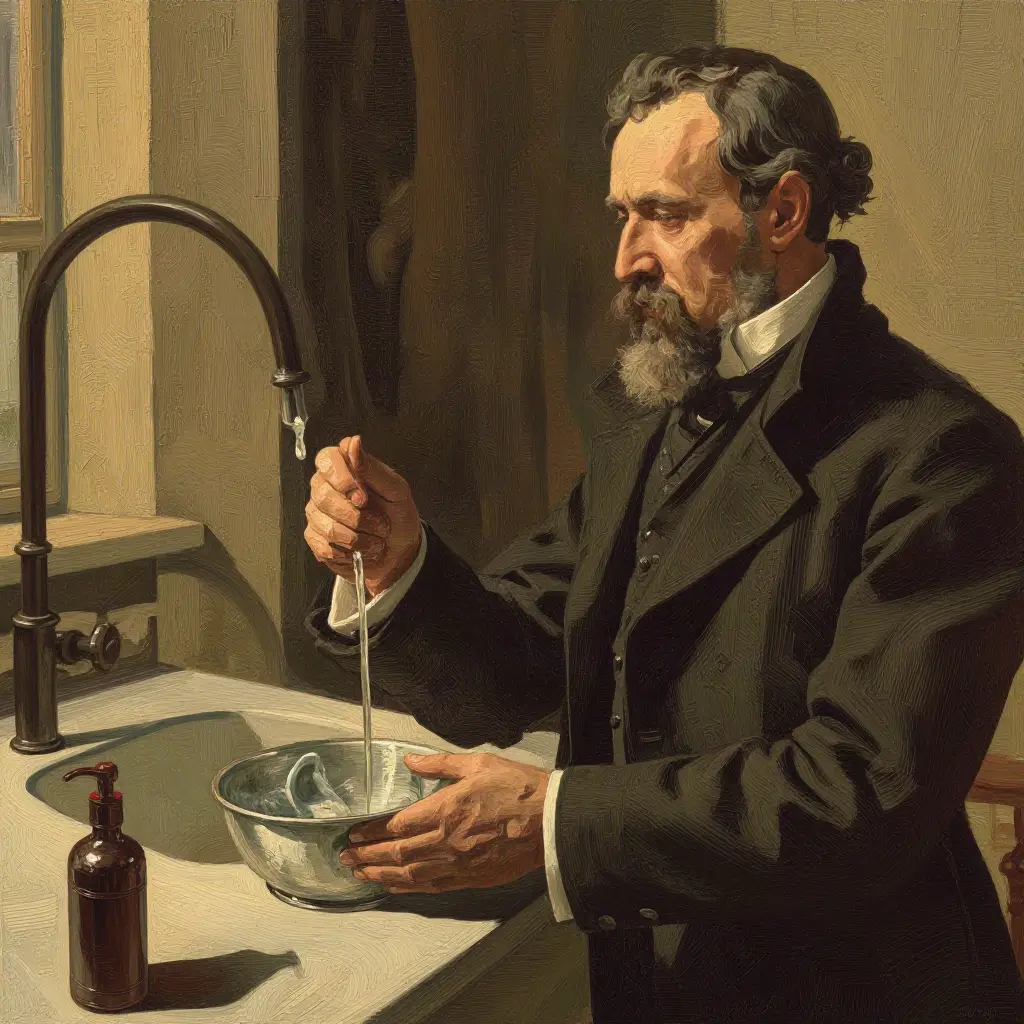
Semmelweis and the Case for Handwashing
In 1847, a Vienna doctor showed that handwashing cut deaths in his maternity ward from over 18% to nearly 1%, but his peers rejected him.
A Tale of Two Wards
Frequently Asked Questions
Why was there such a difference in death rates between the two clinics?
The First Clinic was staffed by doctors and medical students who performed autopsies on deceased patients before delivering babies. The Second Clinic was run by midwives who did not handle cadavers. This unknowingly transferred infectious material, which Semmelweis called 'cadaveric particles', from the dead to the mothers.
What was the handwashing solution Semmelweis used?
He mandated a chlorinated lime solution. He chose it specifically because it was powerful enough to remove the persistent odor of decay from the doctors' hands, which he correctly associated with the presence of the infectious material.
Why did other doctors reject Semmelweis's discovery?
Many doctors were offended by the suggestion that they, as gentlemen, could have unclean hands and be the cause of their patients' deaths. Semmelweis also couldn't provide a modern scientific explanation for his theory, as his work predated the widespread acceptance of germ theory by decades.
Learn more
To continue the story, download the Chunks Microlearning app
Or get it straight away:
 Download on iOS
 Download on Android