
In late 1818, a 30-year-old German philosopher named Arthur Schopenhauer published his masterwork, 'The World as Will and Representation.' He claimed it contained a single thought that solved the riddle of existence. He believed his work revealed the true, inner nature of the world, something his predecessor Immanuel Kant had declared unknowable. But the world wasn't ready for his revelation. The book, dated 1819 on its title page, failed so completely that the publisher eventually sold the unsold copies as waste paper. Schopenhauer, undeterred, was convinced he had unlocked a fundamental truth about reality. What was this one, powerful thought that promised to explain everything, and why did it lead him to such a dark conclusion about human life?
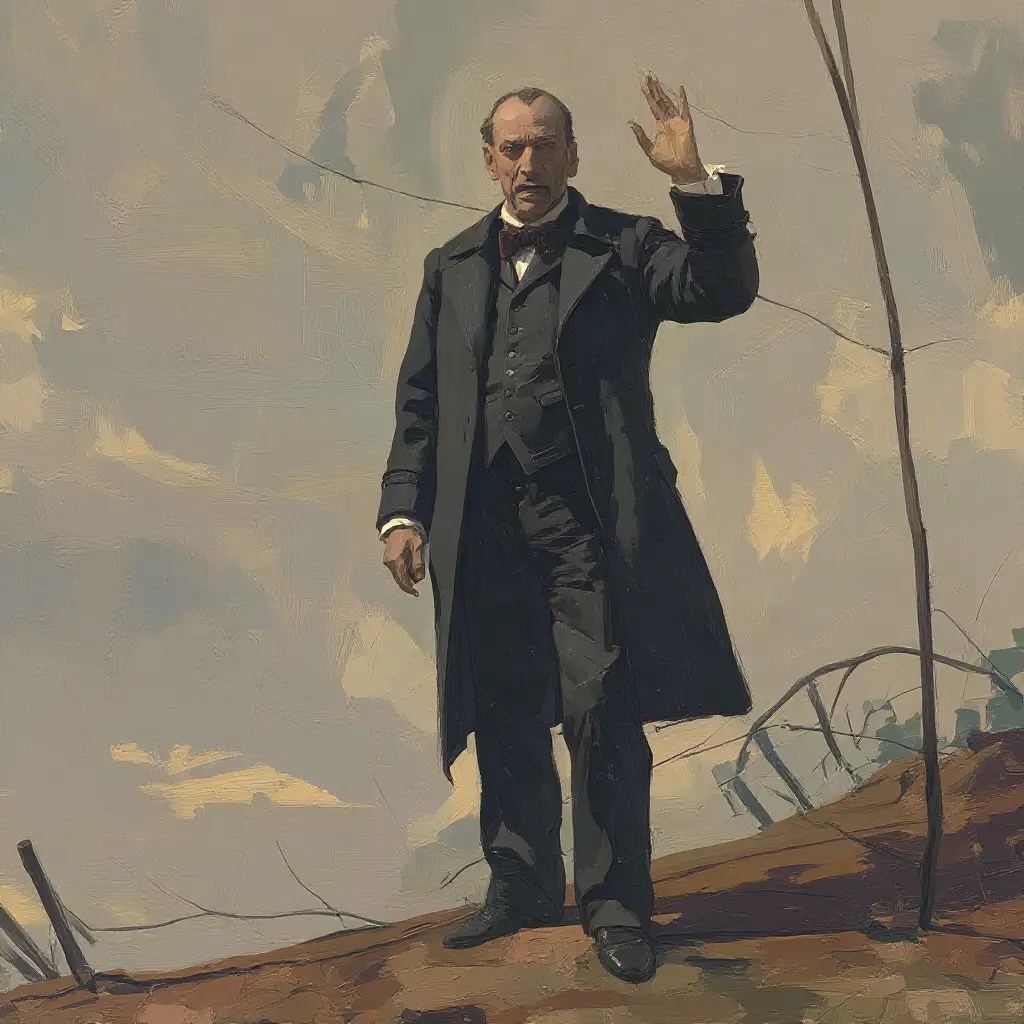
Schopenhauer's Pessimism
In 1818, Schopenhauer published a book claiming a single thought solved existence: the world is a blind, insatiable Will that causes suffering.
A Single Thought
Frequently Asked Questions
What is the core idea of Schopenhauer's philosophy?
Schopenhauer argued the world has two sides: 'Representation,' the world of objects we see, and 'Will,' a single, blind, striving force that is the inner nature of everything. Because this Will is an insatiable hunger, he concluded that life is fundamentally a cycle of suffering.
Did Schopenhauer offer any escape from this suffering?
Yes, he proposed two paths. The first is a temporary escape through art and music, which allow us to momentarily quiet our desires. The second, more permanent solution, is an ascetic 'denial of the will to live,' finding peace by extinguishing all desire, similar to the concept of Nirvana in Buddhism.
What did Schopenhauer believe about morality?
His ethics were based on compassion, or 'Mitleid.' He believed that since the same universal Will lives in all beings, the separation between individuals is an illusion. To harm another is to harm oneself, a recognition he summarized with the Sanskrit phrase 'Tat Tvam Asi' ('That Thou Art').
Learn more
To continue the story, download the Chunks Microlearning app
Or get it straight away:
 Download on iOS
 Download on Android