
Around 2334 BCE, a man named Sargon established the first empire in history. He had risen from obscurity, serving as cupbearer to the king of the Sumerian city-state of Kish. He was not royal; the Sumerian King List records him as the son of a gardener. Yet he seized the throne, overthrowing his master under circumstances lost to legend. He immediately adopted a new name: Sharru-kin, or 'The Legitimate King', a choice historians believe was meant to mask his non-royal birth. He then abandoned Kish and founded his own capital, Agade, a city whose precise location remains a mystery.
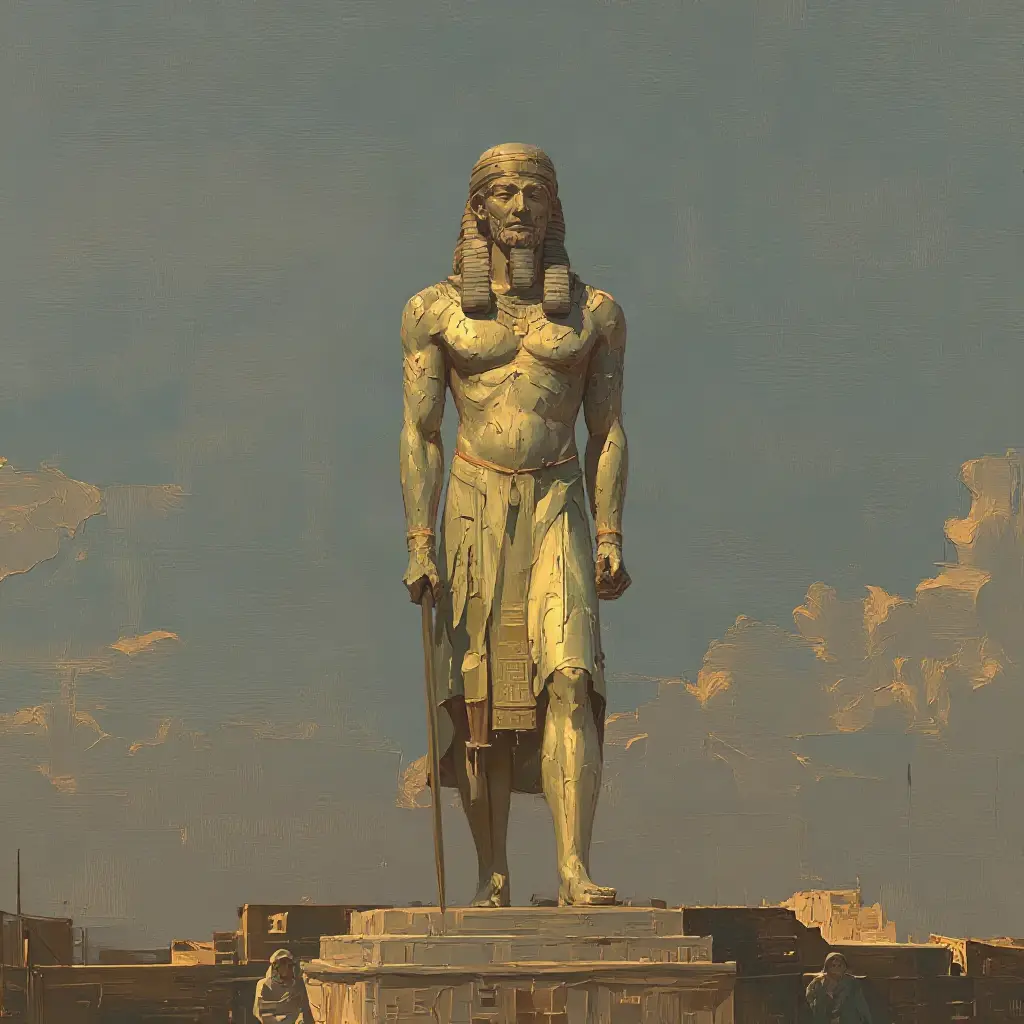
Sargon of Akkad
Sargon of Akkad rose from cupbearer to create the world's first empire, uniting Mesopotamia with a standing army and a new capital, Agade.
Chapter 1
The Cupbearer King
0:40
Frequently Asked Questions
Who was Sargon of Akkad?
Sargon of Akkad was the ruler who founded the Akkadian Empire around 2334 BCE. He rose from obscure origins as a cupbearer in the city of Kish to conquer the Sumerian city-states, creating the world's first multi-ethnic empire.
What makes Sargon's empire the 'first' empire?
Sargon's empire is considered the first because it was a large, multi-ethnic, centrally-ruled state created through conquest. He replaced local rulers with his own Akkadian governors and standardized economic practices, which was a new model of governance.
Who was Enheduanna?
Enheduanna was Sargon's daughter and the High Priestess of the city of Ur. She is historically significant as the world's first known author to sign her name to her work, a series of religious hymns. Her appointment was a key part of Sargon's strategy to unify his empire's different cultures.
Learn more
To continue the story, download the Chunks Microlearning app
Or get it straight away:
 Download on iOS
 Download on Android