
In late AD 79, a strange cloud appeared over Mount Vesuvius. From 34 kilometers away, the Roman author Pliny the Younger saw it rise, describing it as looking like an ‘umbrella pine’ tree, with a tall trunk and spreading branches. This event has long been dated to August 24, but evidence now points to a later date in October. Archaeologists have found autumn fruits like pomegranates and traces of heavy wool clothing worn by residents. An inscription mentioning a date equivalent to October 17 also suggests the city was still alive then. What began in the early afternoon was the first phase of a catastrophic eruption, blasting a column of ash and pumice 30 kilometers into the stratosphere. For the towns below, time was running out.
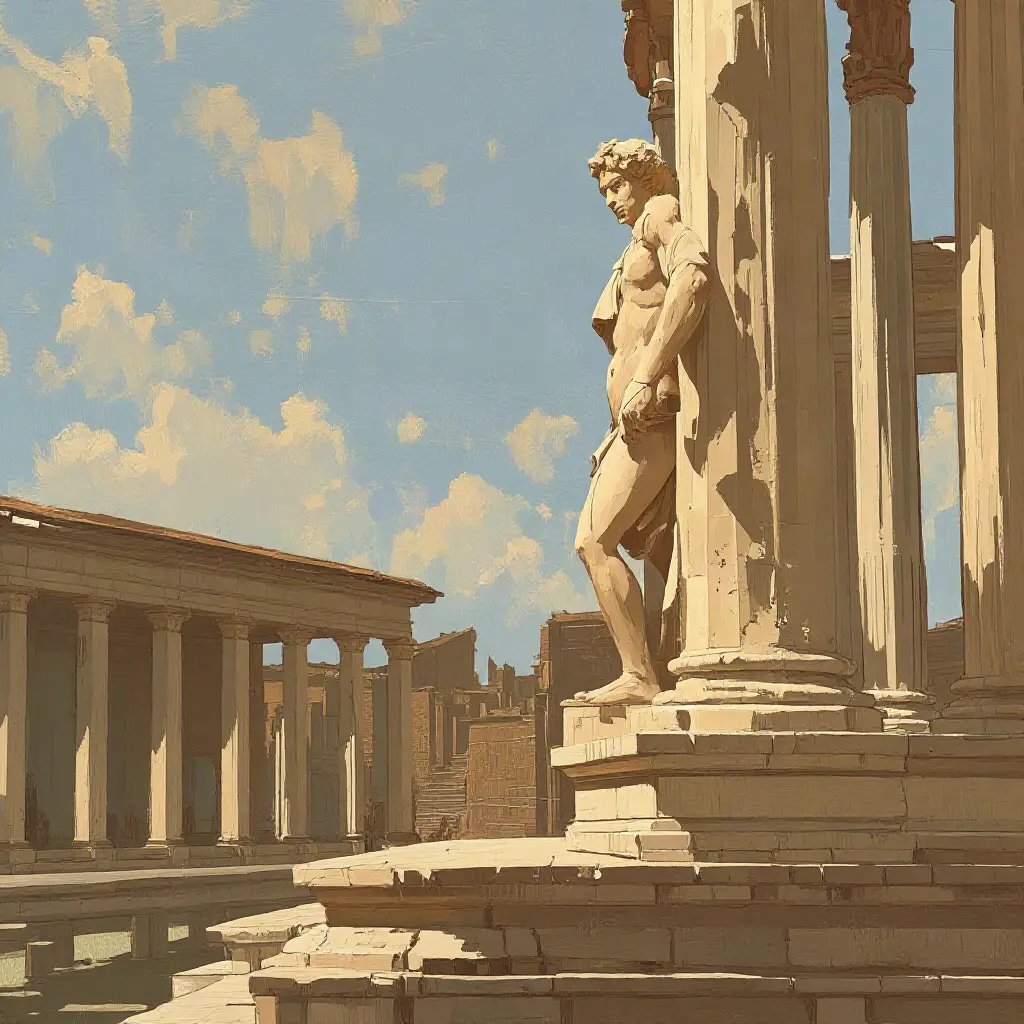
Pompeii
The AD 79 eruption of Vesuvius buried Pompeii, a catastrophe witnessed and recorded by Roman author Pliny the Younger.
Chapter 1
The Umbrella Pine
0:51
Frequently Asked Questions
What actually killed the people of Pompeii?
Most of the 2,000 victims who remained in Pompeii were killed by the final pyroclastic surges. They died from asphyxiation caused by inhaling fine ash and toxic gases, combined with the intense heat of the surge, which was around 250 degrees Celsius.
Why is the town of Herculaneum so well-preserved?
Herculaneum was buried almost instantly under 20 meters of hot volcanic mud and rock. This created an airtight seal that carbonized organic materials instead of destroying them, preserving wooden furniture, textiles, and even food.
How were the famous plaster casts of the victims made?
In 1863, archaeologist Giuseppe Fiorelli realized that the victims' bodies had left hollow voids in the hardened volcanic ash. By carefully pouring liquid plaster into these cavities, he created detailed casts that captured the final poses and even facial expressions of the people of Pompeii.
Learn more
To continue the story, download the Chunks Microlearning app
Or get it straight away:
 Download on iOS
 Download on Android