
The story of Persephone, as told in the ancient Homeric Hymn to Demeter, begins in a meadow. Persephone, daughter of the harvest goddess Demeter, was picking flowers with the daughters of Oceanus on the Nysian plain. She was drawn away from her companions by a spectacular, hundred-headed narcissus, a flower grown by Gaia as a trap. This was all part of a plan arranged by Zeus, who had secretly promised his daughter to Hades, king of the dead. Suddenly, the earth opened up in a chasm. Hades erupted from the underworld in a golden chariot drawn by immortal horses. He seized the screaming maiden and carried her away in his golden chariot, her cries echoing across the mountains and sea as she was taken into the darkness.
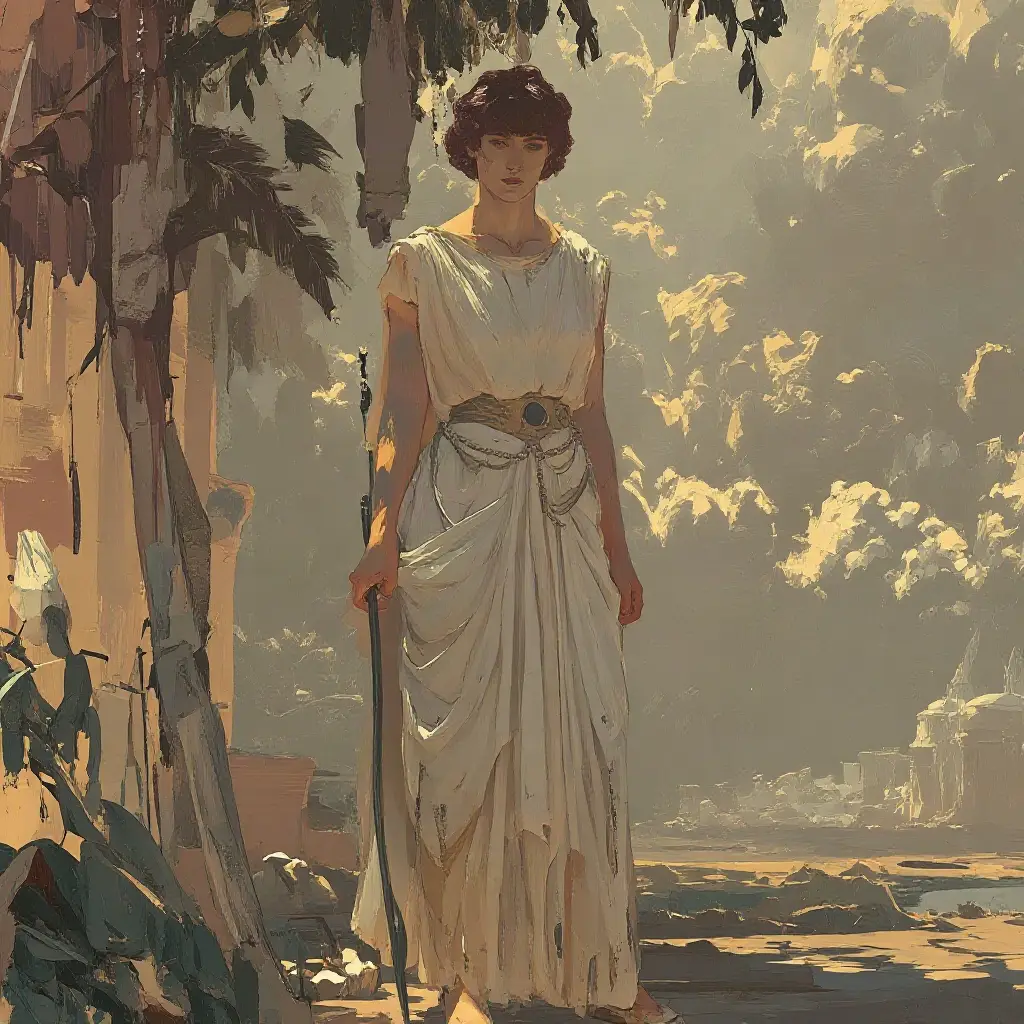
Persephone and Hades
The myth of Persephone, whose abduction by Hades led her mother Demeter to create a global famine, explaining the cycle of the seasons to the Greeks.
Chapter 1
The Hundred-Headed Flower
0:51
Part of
Frequently Asked Questions
Why did Hades kidnap Persephone in the first place?
Hades abducted Persephone because his brother, Zeus, had secretly promised her to him as a bride. This arrangement was made without the knowledge or consent of Persephone's mother, Demeter.
How did this myth explain the changing of the seasons?
Persephone was bound to spend one-third of the year in the underworld with Hades. During this time, her mother Demeter grieves, causing the earth to become barren and creating winter. Persephone's return to the upper world marks the arrival of spring.
What were the Eleusinian Mysteries?
The Eleusinian Mysteries were a secret religious cult established by Demeter at Eleusis. These annual rites, which were forbidden to be revealed, promised initiates a better life after death by explaining the cycle of life, death, and rebirth.
To continue the story, download the Chunks Microlearning app
Or get it straight away:
 Download on iOS
 Download on Android