
In early 1654, a professional gambler, the Chevalier de Méré, approached the brilliant mathematician Blaise Pascal. He had a puzzle from an unfinished game of dice: how should the stakes be divided fairly between two players when the game stops early? This question, known as the 'Problem of Points,' fascinated Pascal. He corresponded with fellow mathematician Pierre de Fermat to solve it, and in doing so, laid the groundwork for modern probability theory. Pascal’s key insight was that the value of any bet depends not just on the size of the prize, but also on the likelihood of winning it. This simple idea, born from a gambling dispute, would soon be applied to the biggest question of all.
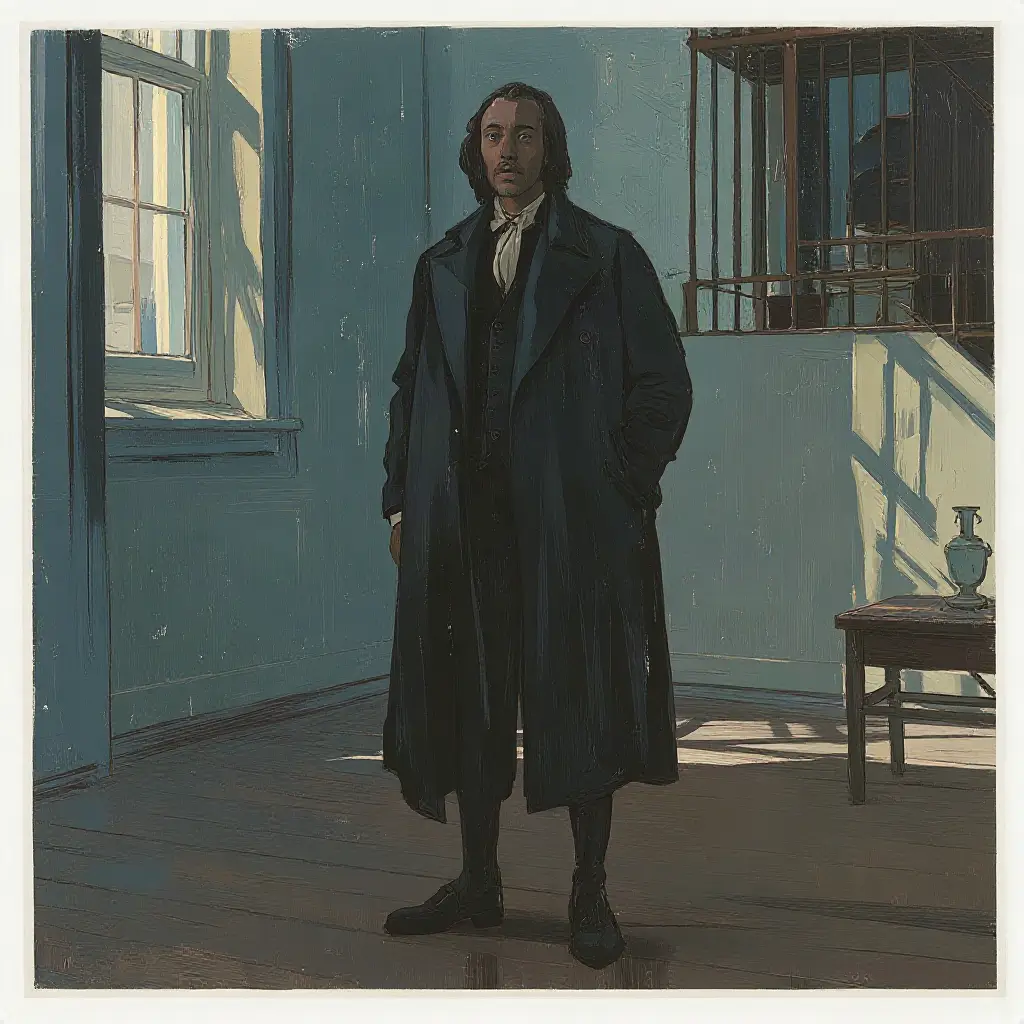
Pascal's Wager
Blaise Pascal's argument that believing in God is the rational bet, a concept born from a 1654 gambling dispute that founded probability theory.
Chapter 1
The Gambler's Riddle
0:48
Frequently Asked Questions
What is Pascal's Wager in simple terms?
It argues that since we can’t prove or disprove God’s existence, we should bet that God exists. If we’re right, we gain infinite happiness, or heaven. If we’re wrong, we lose nothing, making it the only rational choice according to Pascal’s logic.
Who was Blaise Pascal?
Blaise Pascal was a 17th-century French mathematician, physicist, and religious philosopher. He made foundational contributions to probability theory before a profound mystical experience in 1654 led him to focus on theology and philosophy until his death at age 39.
What is the main problem with Pascal's Wager?
The most common objection is the 'Many Gods' problem, pointed out by Denis Diderot. It argues that the wager doesn't tell you which god to believe in. Betting on the Christian God might anger a different, real god, making the bet incredibly risky.
Learn more
To continue the story, download the Chunks Microlearning app
Or get it straight away:
 Download on iOS
 Download on Android