
In the mythical age of gods, Osiris ruled as the first benevolent king of Egypt. He found the people in a state of barbarism and transformed them into a settled civilization. He taught them how to cultivate grain and produce wine, establishing laws and the first religious cults. Under his rule, cosmic order, or 'maat', prevailed over chaos. His skin was often depicted as green or black, symbolizing the fertile Nile silt and the renewal of life. While Osiris traveled, his wife, the goddess Isis, ruled so skillfully that his jealous brother, Set, the god of chaos, could find no way to disrupt the kingdom. But Set’s envy festered, and he began to plot against the perfect king who had brought peace to the land.
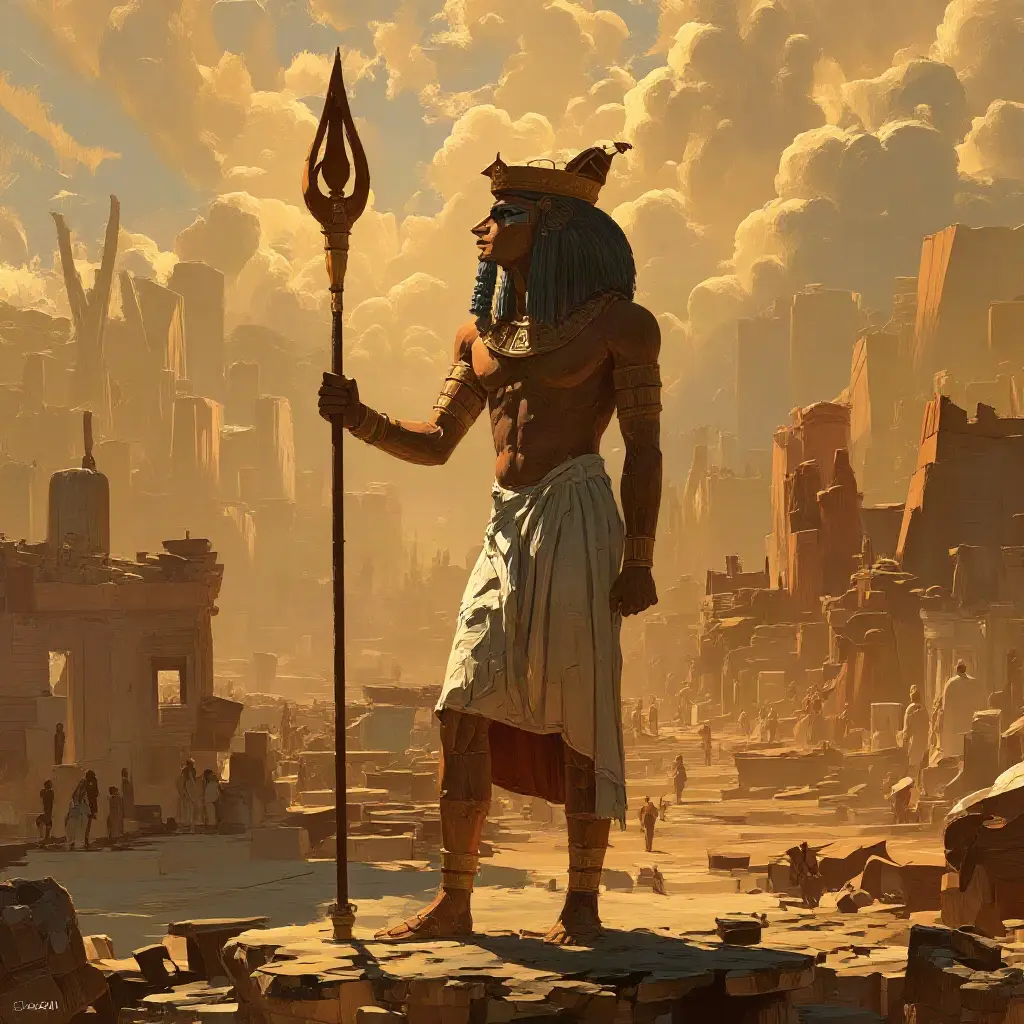
Osiris and Isis
The Egyptian myth of Osiris: his murder, Isis's quest to restore him, and his final role as eternal judge of the dead.
Chapter 1
The First King
0:50
Frequently Asked Questions
Why was Osiris murdered by his brother Set?
The god of chaos, Set, grew jealous of his brother's successful reign. He tricked Osiris into a chest built to his exact measurements during a banquet, sealed it shut, and cast it into the Nile to drown him and usurp the throne.
How did Isis find and restore Osiris's body?
Isis found the chest inside a tree trunk in Byblos. After bringing it back, Set found the body and scattered it in 14 pieces. Isis and her sister Nephthys searched Egypt and reassembled him, performing the first mummification to make him whole again.
What was Osiris's role in the Egyptian afterlife?
After his resurrection, Osiris became the king of the underworld and the supreme judge of the dead. He presided over the 'weighing of the heart' ceremony, where a soul's heart was weighed against the feather of truth to determine if they could enter paradise.
Learn more
To continue the story, download the Chunks Microlearning app
Or get it straight away:
 Download on iOS
 Download on Android