
In 1763, a family carriage bumped along the roads of Europe. Inside was Leopold Mozart with his two gifted children: 11-year-old Nannerl and 7-year-old Wolfgang. This was the start of a grand tour to showcase their musical talents. For three and a half years, they performed for Europe's royalty. At the Palace of Versailles, they entertained King Louis XV. In London, they played for King George III and Queen Charlotte. The young Wolfgang became a sensation, a 'Wunderkind,' captivating audiences across the continent. He proved his abilities by playing complex keyboard pieces flawlessly, even with his hands completely hidden under a cloth.
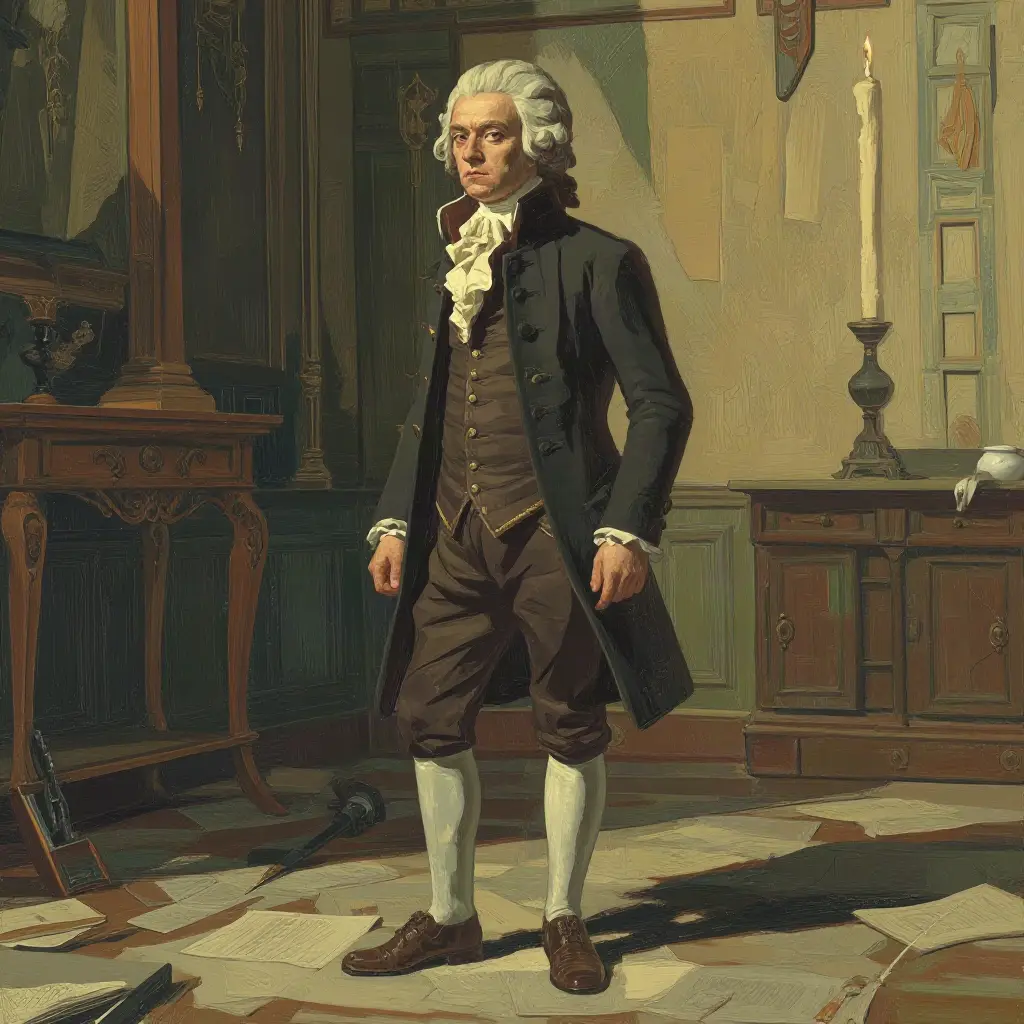
Mozart
Mozart's life from child prodigy to freelance composer in Vienna, and the truth behind his mysterious Requiem and common grave.
Chapter 1
The Wunderkind on Tour
0:41
Frequently Asked Questions
Was Mozart really poisoned by his rival, Antonio Salieri?
No, this is a popular myth. Historical records show Mozart and Salieri were professional colleagues who respected each other's work and even collaborated. The poisoning story was a fictional invention, made famous by a play and later the film 'Amadeus'.
Why was Mozart buried in a common grave if he was famous?
Mozart was buried in a 'common grave' as was standard for the middle class in Vienna in 1791. An imperial decree mandated simple, unmarked burials for almost all citizens to promote hygiene. It was not a sign of poverty or lack of respect.
What are some of Mozart's most famous works?
It is difficult to choose, but his opera 'The Marriage of Figaro', his late works like 'Symphony No. 40', and his unfinished 'Requiem' are among his most celebrated. His full catalog includes over 600 works, including 22 operas and 41 symphonies.
Learn more
To continue the story, download the Chunks Microlearning app
Or get it straight away:
 Download on iOS
 Download on Android