
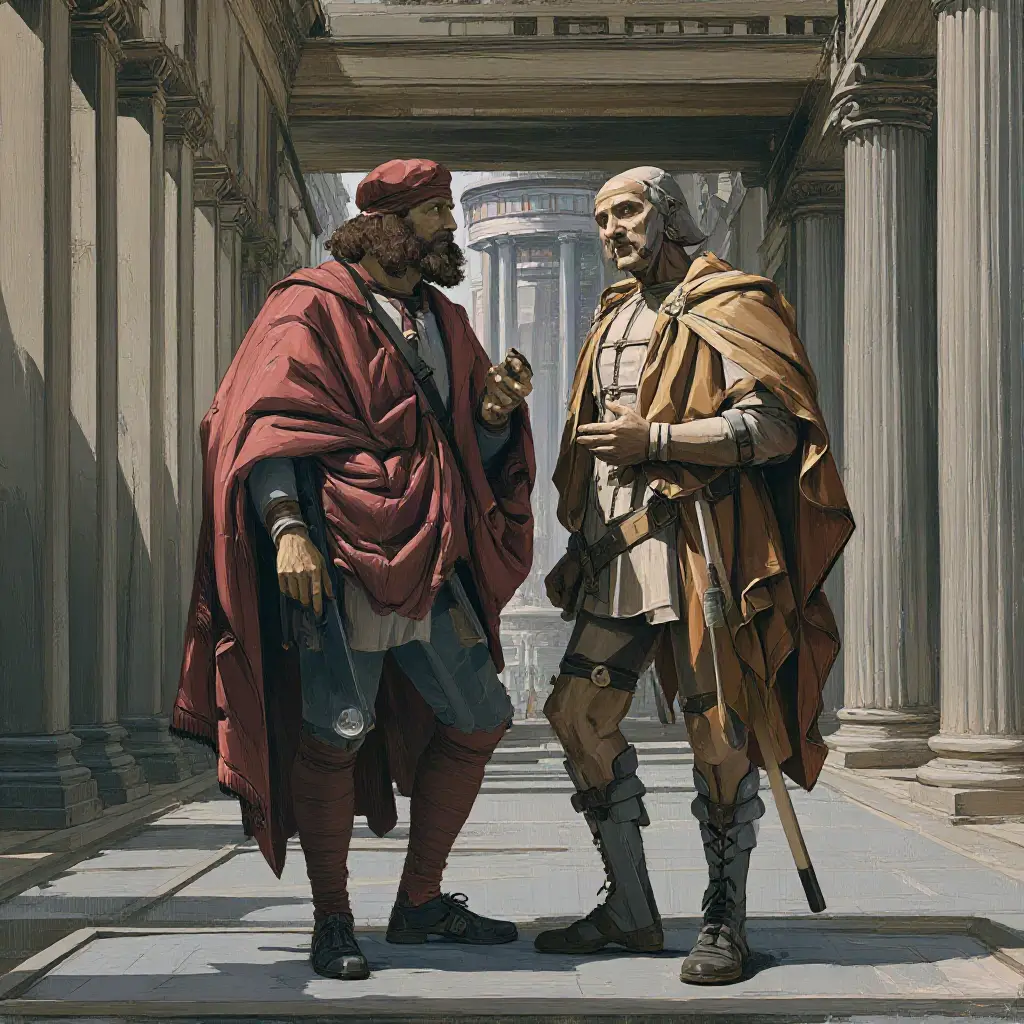
In November 1512, Niccolò Machiavelli's world collapsed. For 14 years, he had been a high-ranking diplomat for the Republic of Florence, managing foreign policy and leading missions across Europe. But when Spanish troops helped the powerful Medici family overthrow the republic, Machiavelli was cast out. A formal decree stripped him of his position and barred him from even entering the government palace for a year. He had championed a citizen militia of 12,000 men to defend the city, believing hired mercenaries were untrustworthy. Now, with the republic gone, his political career was over, forcing him from the role of an active statesman into that of a powerless observer.
Machiavelli and The Prince
Dismissed in 1512 and tortured in 1513, Machiavelli wrote The Prince to reveal how power is truly won and kept.
Chapter 1
The Fall of the Diplomat
0:44
Frequently Asked Questions
What does it mean to be 'Machiavellian'?
The term 'Machiavellian' is a synonym for cunning, deceit, and the idea that 'the ends justify the means'. It emerged after Machiavelli's death and was associated with his advice in The Prince, which argued a ruler must sometimes use immoral methods to maintain power. The term is often used negatively to describe a ruthless and manipulative person.
Did Machiavelli really believe it's better to be feared than loved?
Yes, he argued it is "far safer to be feared than loved." He reasoned that love is a bond people can break when it suits them, but fear is maintained by the dread of punishment. However, he also warned that a ruler must avoid being hated, primarily by not confiscating his subjects' property or interfering with their women.
Was Machiavelli only in favor of dictators?
No. While The Prince is an analysis of how a single ruler can maintain power, Machiavelli's longer work, 'Discourses on Livy', argues for the superiority of republics. He believed a state that draws on the collective power of its people is stronger, more stable, and better at adapting than one ruled by a single prince.
Learn more
To continue the story, download the Chunks Microlearning app
Or get it straight away:
 Download on iOS
 Download on Android