
In the 6th century BCE, a man known as Laozi served as the royal archivist for China’s Zhou dynasty. His name meant 'Old Master', and from his post in the capital city of Luoyang, he watched the kingdom fall into corruption and decline. Disgusted, he decided to leave civilization behind forever. According to legend, he mounted a water buffalo and began a solitary journey toward the western wilderness, carrying nothing but his wisdom. He was an old man turning his back on a world he believed had lost its way. The state was in what the historian Sima Qian later called an 'irreversible decline,' and Laozi wanted no part of it. His journey west would have an unexpected consequence for the world.
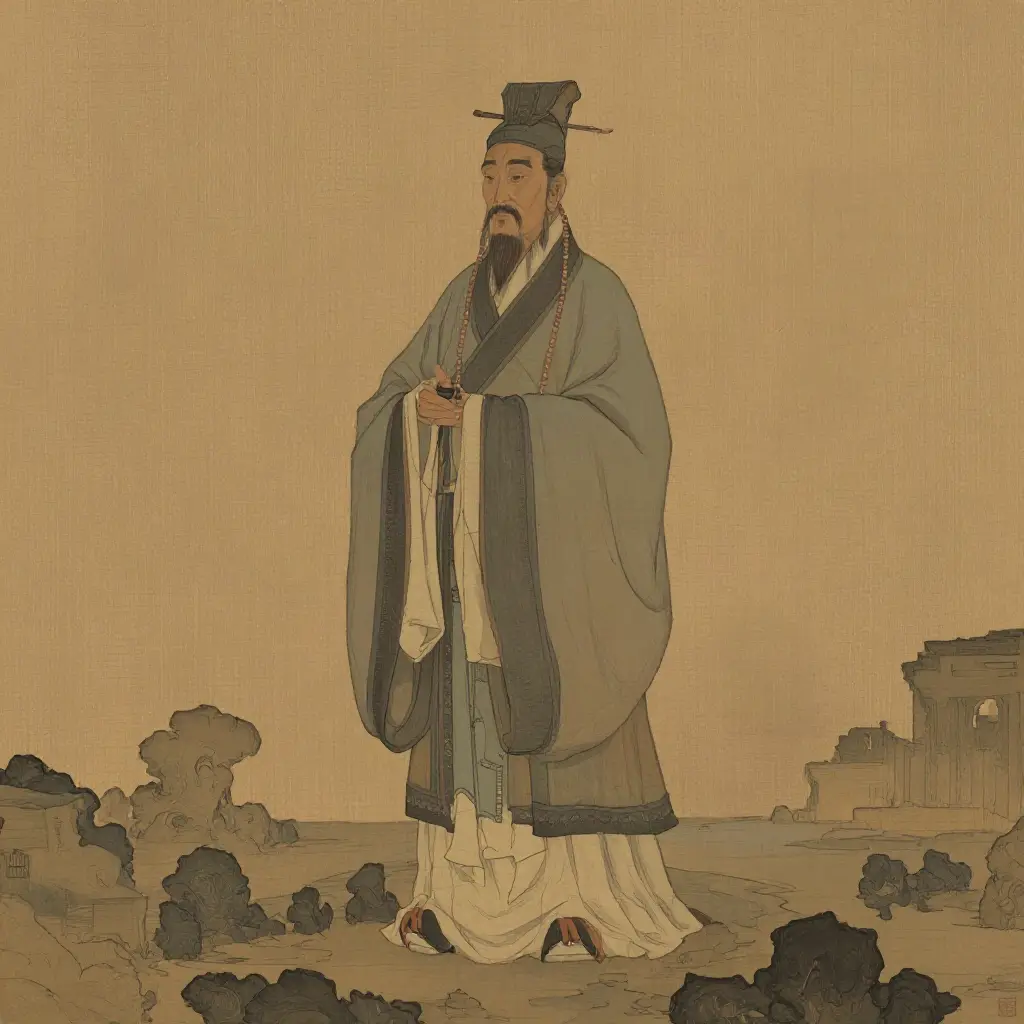
Laozi and the Dao
The Dao De Jing teaches the 'Dao', the way things naturally go. Its author, Laozi, may not have been a single person at all.
Chapter 1
The Old Master Leaves
0:49
Frequently Asked Questions
Who was Laozi?
According to legend, Laozi was a royal archivist in 6th century BCE China who wrote the Dao De Jing. However, many historians believe he was not a single person, but that 'Laozi' was a title for multiple anonymous sages whose teachings were collected over time.
What is the Dao?
The Dao is the central concept in Daoism, meaning 'the Way'. It is described as the natural, underlying force of the universe that guides all things effortlessly. The Dao De Jing states that its true nature cannot be captured by words or names.
What does 'wu wei' mean?
'Wu wei' translates to 'effortless action' or 'non-action'. It does not mean being lazy, but rather acting in a way that is natural and in harmony with the Dao, without forcing a particular outcome. It is often compared to how water flows around obstacles rather than fighting them.
Learn more
To continue the story, download the Chunks Microlearning app
Or get it straight away:
 Download on iOS
 Download on Android