
In 1550, the scholar Roger Ascham visited Bradgate House to find the family out hunting. But thirteen-year-old Lady Jane Grey was inside, reading Plato’s Phaedo in the original Greek. Ascham was astonished. Jane, a student of the tutor John Aylmer, was fluent in Latin, Greek, and Italian, and was already one of the most learned teenagers in Europe. She confessed to Ascham that her studies were her only escape from the harsh discipline of her parents, who subjected her to verbal taunts and physical “pinches.” This intense education, combined with correspondence with continental reformers, forged a deep and unshakable Protestant conviction in the young girl. It was this faith that would soon place her at the center of a dangerous political storm.
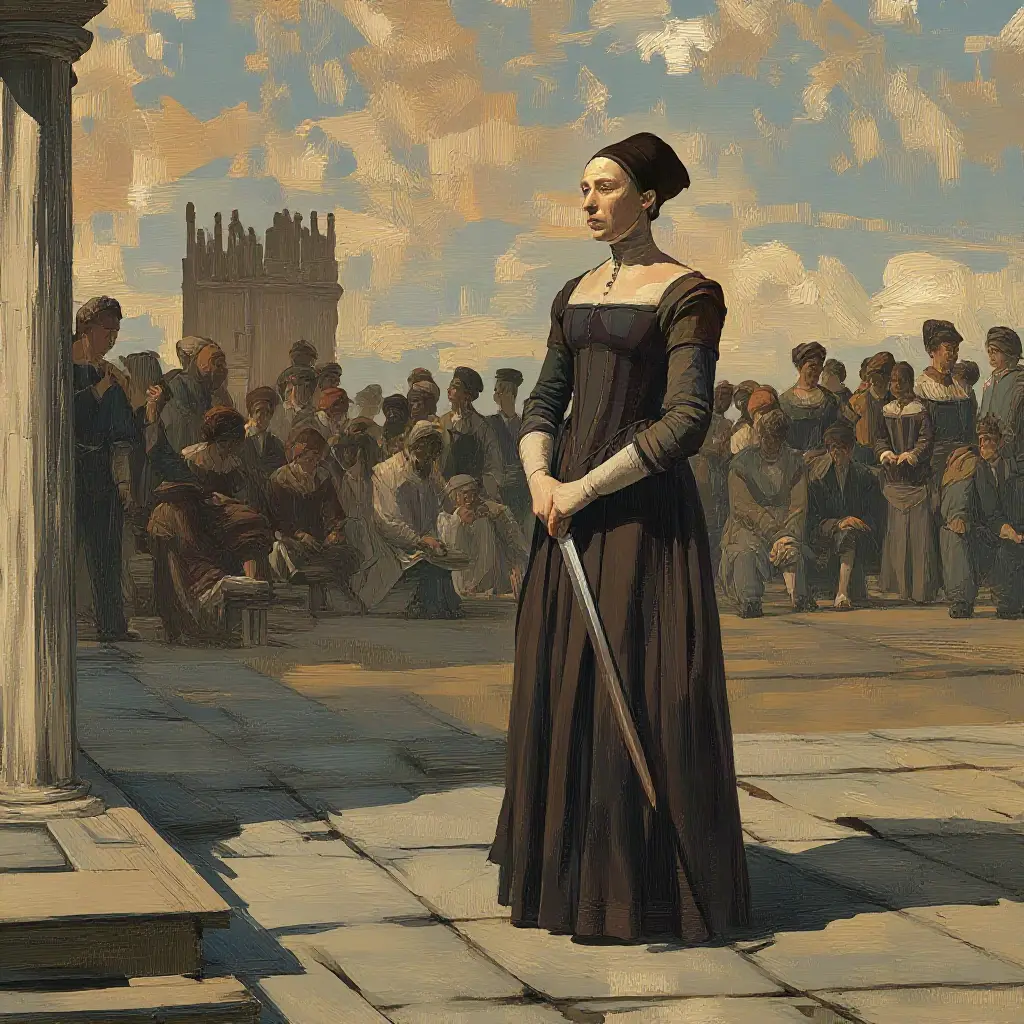
Lady Jane Grey
England's nine-day queen: the story of a sixteen-year-old scholar made queen in 1553 and executed seven months later.
The Greek Scholar
Part of
Frequently Asked Questions
Why was Lady Jane Grey chosen to be queen instead of Mary or Elizabeth?
King Edward VI was a devout Protestant and feared his Catholic half-sister, Mary, would undo the English Reformation. To prevent this, he wrote the 'Device for the Succession,' a document that illegally bypassed both Mary and Elizabeth to name his Protestant cousin, Jane, as his heir.
How long was Lady Jane Grey actually queen for?
Lady Jane Grey's reign was famously short, lasting only nine days. She was proclaimed queen on July 10, 1553, but the Privy Council switched its allegiance to Mary I, who was proclaimed the rightful queen on July 19, 1553.
Why was Lady Jane Grey executed?
Queen Mary I initially intended to spare Jane's life. However, a Protestant uprising called Wyatt's Rebellion in 1554 made it too risky to keep Jane alive, as she could be used as a figurehead for future rebellions against Mary's rule.
To continue the story, download the Chunks Microlearning app
Or get it straight away:
 Download on iOS
 Download on Android