
For nearly seventeen years, Karl Marx was a familiar figure in London's British Museum Reading Room. Arriving at 9:00 AM and staying until the library closed in the evening, the German exile was compiling his life's work: a scientific critique of capitalism. He and his family lived in constant poverty, often facing eviction and illness. The work itself was physically painful. Marx suffered from severe skin boils, once telling his friend Friedrich Engels the bourgeoisie would have cause to remember his carbuncles. On September 14, 1867, he finally published the first volume of his book, Capital. It was the only one he would live to see in print, but he was certain it contained the secrets to capitalism's undoing.
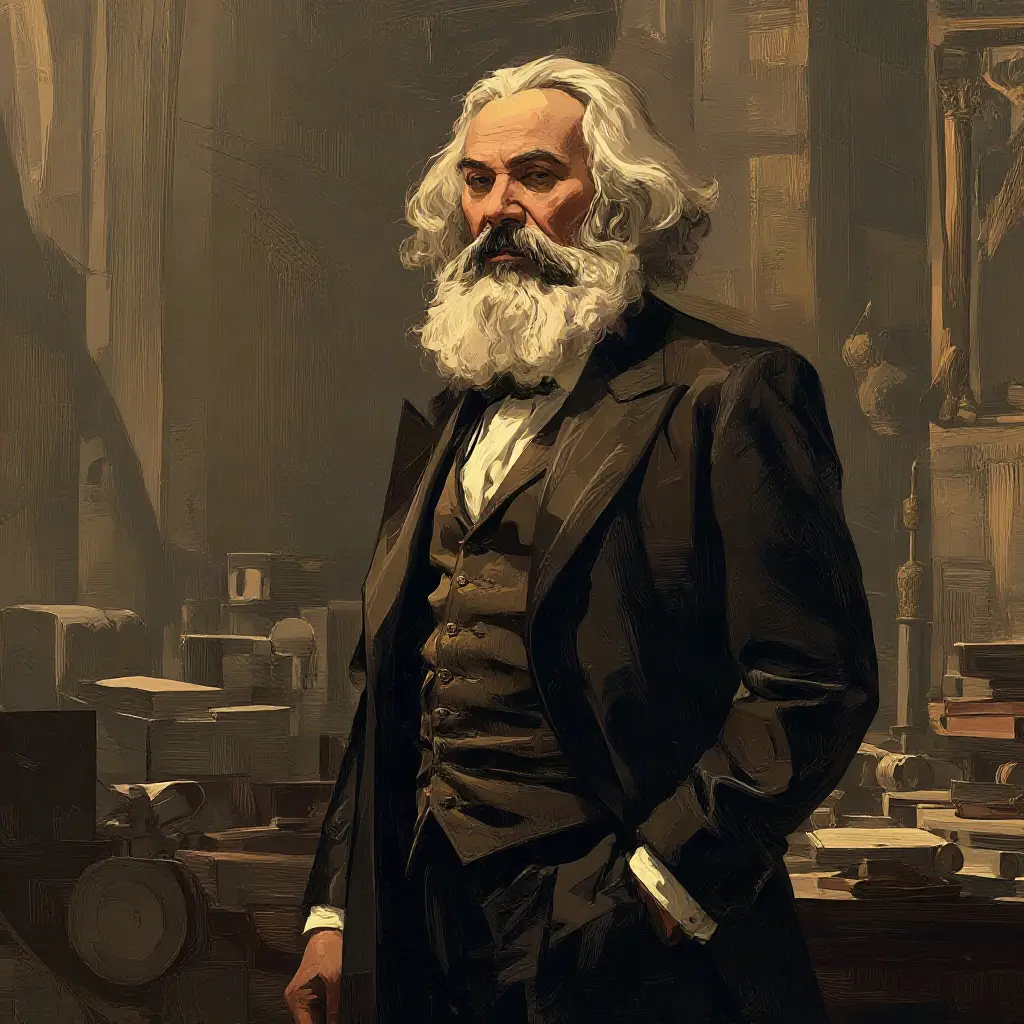
Karl Marx and Capital
Karl Marx's Capital argued profit comes from unpaid labor. This is his theory of class conflict and why capitalism was doomed to fail.
Chapter 1
The Man in the Museum
0:48
Frequently Asked Questions
What did Karl Marx mean by 'surplus value'?
Surplus value is the new value created by a worker that is above and beyond the cost of their own wage. Marx argued that a worker might produce enough value to cover their day's pay in a few hours, but they work for a full day. The value created in those extra, unpaid hours is surplus value, which the owner takes as profit.
Why did Marx think capitalism would eventually fail?
Marx identified several internal contradictions. He argued competition would force owners to replace workers with machines, causing the overall rate of profit to fall. He also predicted increasingly severe crises of overproduction, where workers are paid too little to buy the vast quantities of goods being made, leading to economic collapse.
Did Marx's predictions about a workers' revolution come true?
Not as he expected. Marx anticipated revolutions in advanced industrial countries like Britain. Instead, Marxist-inspired revolutions took hold in largely rural societies like Russia and China. In the West, many governments introduced welfare programs and labor laws, which softened the harsh conditions Marx believed would lead to revolt.
Learn more
To continue the story, download the Chunks Microlearning app
Or get it straight away:
 Download on iOS
 Download on Android