
In the early 1770s, the Prussian philosopher Immanuel Kant was shaken from what he called his 'dogmatic slumber'. The man responsible was the Scottish thinker David Hume. Until then, Kant had been a rationalist, believing pure reason could unlock reality’s secrets. But Hume posed a devastating challenge. He argued that humans never actually see a 'cause'—we only see one event follow another and, out of habit, assume a connection. This simple observation threatened the very foundation of science, reducing natural laws to mere psychological habits. If cause and effect were just an illusion, how could any objective knowledge be possible? Stunned, Kant retreated into over a decade of intense study, determined to find an answer.
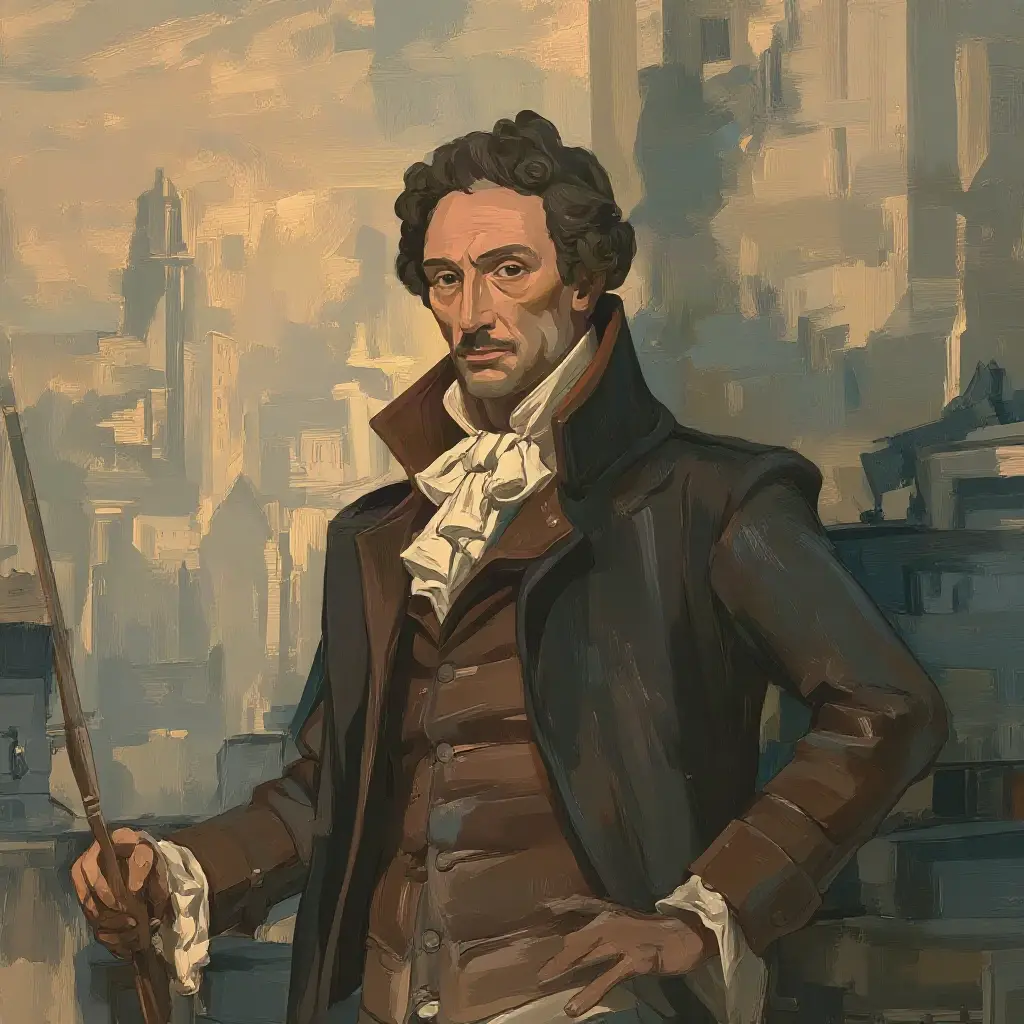
Kant's Copernican Revolution
Immanuel Kant's idea that the mind shapes how we experience the world: space, time and cause are the lenses we see through.
Chapter 1
The Dogmatic Slumber
0:46
Frequently Asked Questions
Why did Kant call his idea a 'Copernican Revolution'?
Kant used the analogy of Nicolaus Copernicus, who explained planetary motion by having the Earth orbit the Sun. Similarly, Kant suggested that instead of our minds conforming to objects, objects must conform to the structure of our minds. This shift made the mind an active creator of experience, not a passive observer.
What did Kant mean by the 'thing-in-itself'?
The 'thing-in-itself' (Ding an sich) is Kant's term for reality as it exists independently of human perception. It is part of the 'noumenal' world, which is forever inaccessible to our senses and understanding. Everything we experience is a 'phenomenon,' a version of reality already filtered by our minds.
Is it true Kant lived a very structured life and rarely traveled?
Yes, Immanuel Kant was famous for his extreme discipline in his hometown of Königsberg. His daily routine was so predictable that neighbors were said to set their watches by his afternoon walk. The farthest he ever traveled was about 100 kilometers (62 miles) from his home.
Learn more
To continue the story, download the Chunks Microlearning app
Or get it straight away:
 Download on iOS
 Download on Android