
In early 44 BC, the Roman Senate gave Julius Caesar a new title: 'Dictator Perpetuo', or dictator for life. This shattered Roman tradition, where a dictatorship was a temporary, six-month emergency measure. Caesar’s permanent appointment looked like the end of the Republic. The fear of monarchy grew during the Lupercalia festival that February. There, Caesar’s key ally, Mark Antony, publicly offered him a golden crown. Caesar refused it three times to the cheers of the crowd. But for many senators, the act was a calculated test of the public's desire for a king. They saw the Republic slipping away, being replaced by the rule of one man.
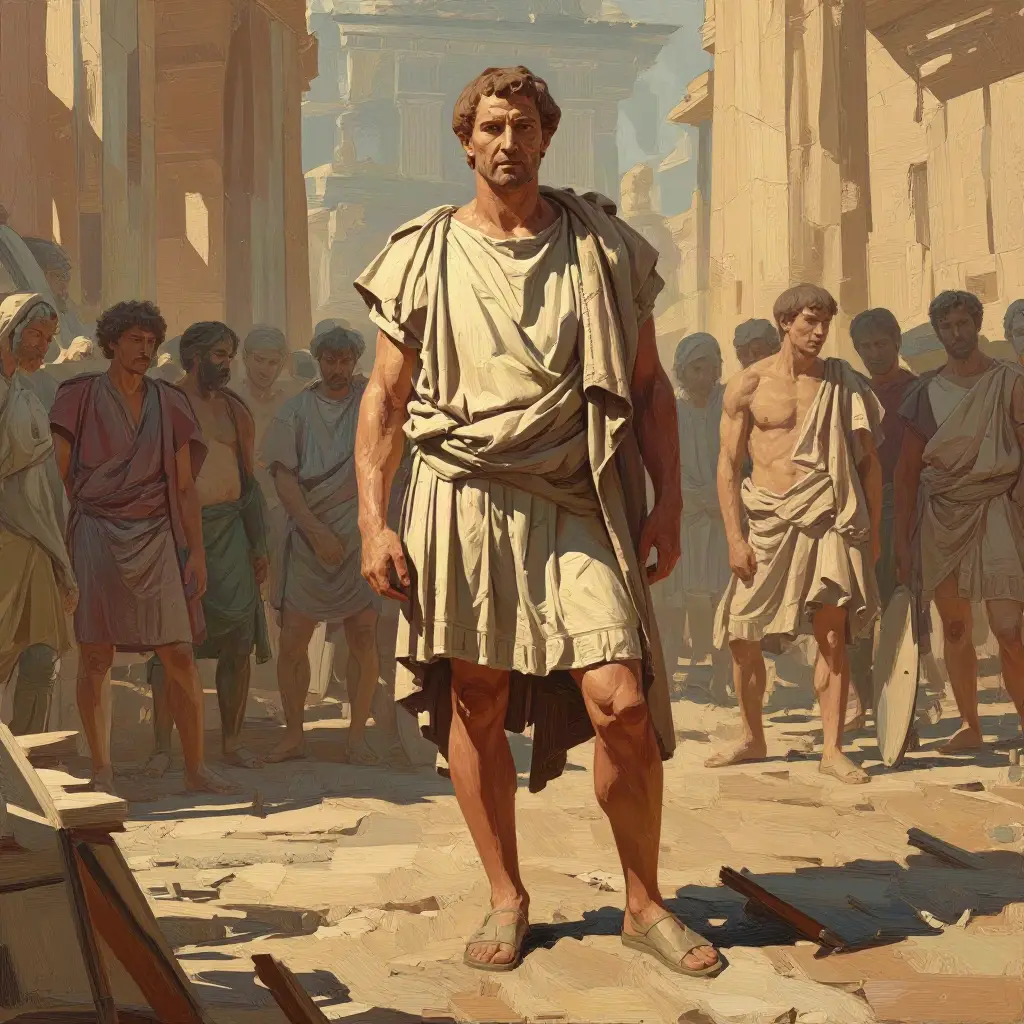
Julius Caesar
The assassination of Julius Caesar on the Ides of March, 44 BC, and how it led to the end of the Roman Republic he was accused of destroying.
Chapter 1
Dictator for Life
0:43
Frequently Asked Questions
Did Caesar really say 'Et tu, Brute?'?
It's unlikely. The famous line comes from Shakespeare's play. The Roman historian Suetonius reported that Caesar either said nothing or spoke in Greek, saying 'Kai su, teknon?', which means 'You too, child?'.
Why did the senators assassinate Caesar?
A group of senators feared Caesar was destroying the Roman Republic. After being named 'Dictator for life' and seeing his image on coins, they believed he intended to become a king, ending centuries of the Republic's traditional system of rotating power.
What happened to the assassins?
Their plan backfired completely. Mark Antony turned the public against them by reading Caesar's will, which left money and his private gardens to the citizens. The assassins, including Brutus and Cassius, were forced to flee Rome and were eventually defeated in a civil war by Octavian and Mark Antony.
Learn more
To continue the story, download the Chunks Microlearning app
Or get it straight away:
 Download on iOS
 Download on Android