
In the 6th century BCE, a prince named Vardhamana lived in a palace in Kundagrama, India. He had wealth, power, and a royal family. But he was troubled by the endless cycle of worldly suffering and rebirth. At the age of 30, he made a decision that would change the course of religious history. He abandoned his palace, his wealth, and his family to become a wandering ascetic. He sought to 'cross the river' of rebirth and find a path to liberation. For his intense spiritual discipline, he would later be known by a new name, Mahavira, which means 'Great Hero'. His journey, however, had only just begun.
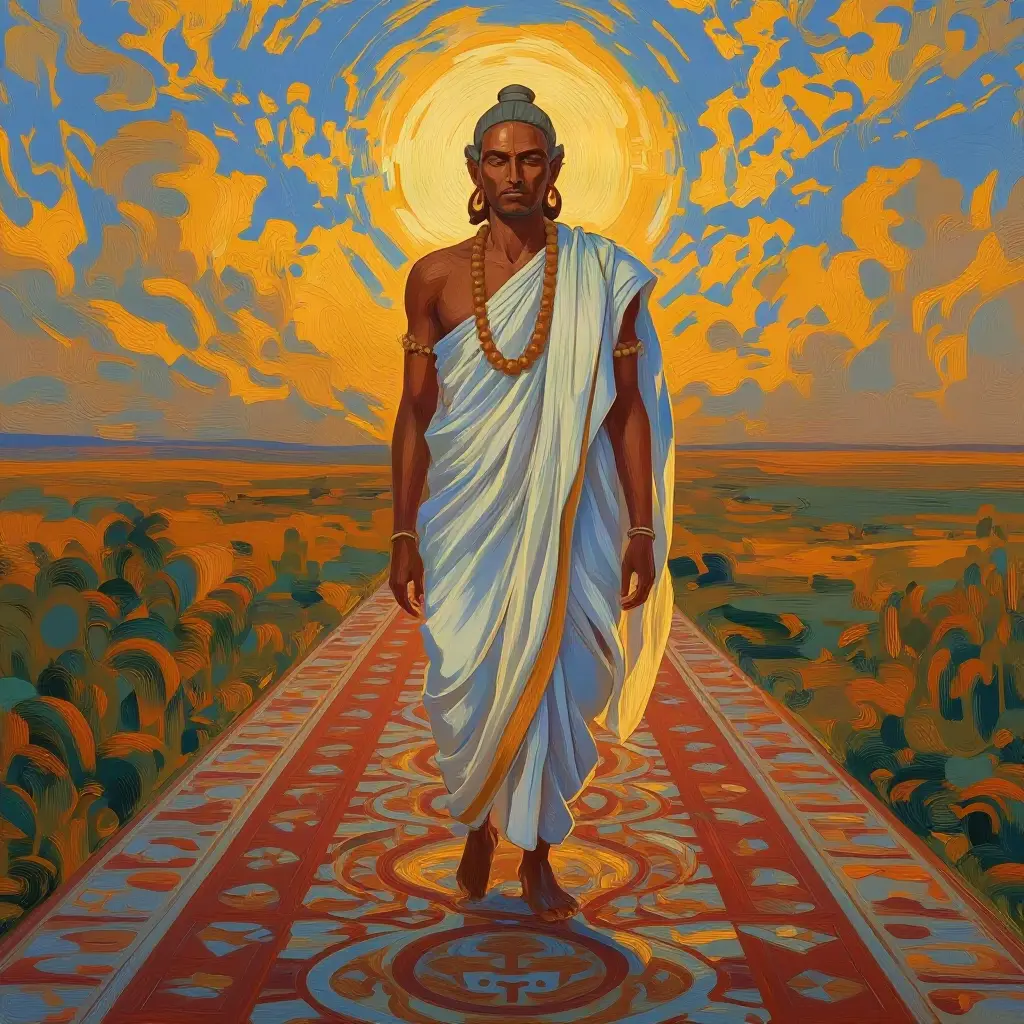
Jainism and the Path of Non-Violence
Jainism, the ancient Indian religion that makes non-violence its highest rule, and how it shaped the young Mahatma Gandhi.
Chapter 1
The Prince Who Walked Away
0:44
Frequently Asked Questions
What is the core principle of Jainism?
The core of Jainism is Ahimsa, or total non-violence. This principle mandates avoiding harm to all living souls, which Jains believe exist in animals, plants, and even microscopic organisms.
Who was Mahavira?
Mahavira was the 24th Tirthankara, or 'ford-maker', who is credited with giving Jainism its definitive form in the 6th century BCE. Born a prince, he renounced his wealth and family at age 30 to become a wandering ascetic.
Why are some Jains so strict about their diet?
Jains practice a strict vegetarian diet to uphold the principle of Ahimsa. They avoid root vegetables like potatoes and onions because harvesting them kills the entire plant and the many microorganisms living in the surrounding soil.
Learn more
To continue the story, download the Chunks Microlearning app
Or get it straight away:
 Download on iOS
 Download on Android