
In 1348, Tunis was a center of learning, and 16-year-old Ibn Khaldun was one of its brightest students. Then the Black Death arrived. The plague tore through the Maghreb, killing so many that he later wrote the 'entire inhabited world' had changed, as if a 'new creation' had begun. In 1349, the disease claimed both of his parents and many of his teachers, bringing his formal education to a sudden end. This devastation convinced him that history, as a simple list of kings and battles, could not explain a world so completely broken. Soon after, he entered the world of politics, taking his first government job as a seal-bearer for the Sultan of Tunis.
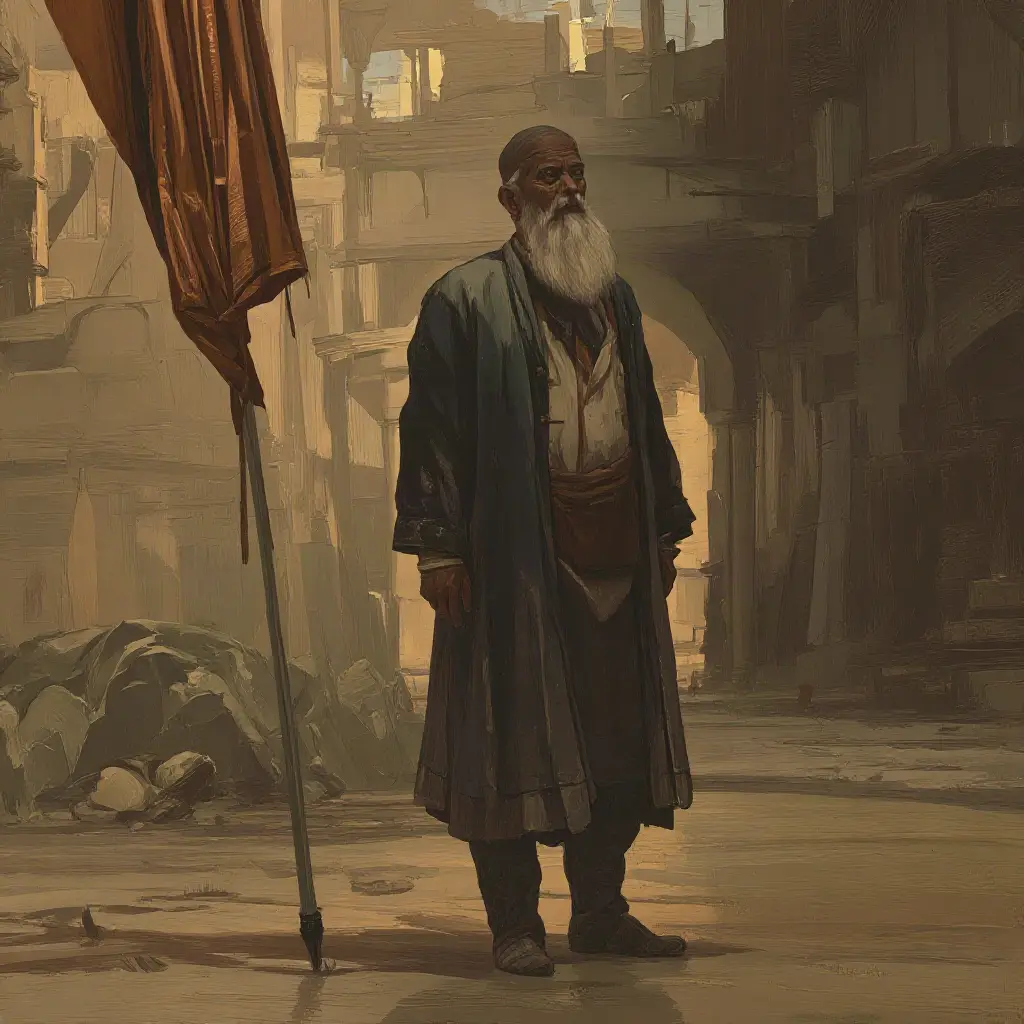
Ibn Khaldun
Ibn Khaldun, the 14th-century North African statesman and historian whose Muqaddimah set out a theory of how dynasties rise and fall through group solidarity, or asabiyyah.
Chapter 1
A New Creation
0:46
Part of
Frequently Asked Questions
What is the Muqaddimah?
The Muqaddimah, or 'Introduction,' is the first volume of Ibn Khaldun's world history, written in 1377. It aimed to uncover the universal laws governing human societies, such as the rise and fall of civilizations. It is considered a foundational text of sociology, history, and economics.
What is Asabiyyah?
Asabiyyah is a concept Ibn Khaldun identified, meaning group solidarity or social cohesion. He argued it was the essential force that allows a group, often from the desert or periphery, to conquer a more settled civilization. This solidarity naturally fades over three generations, leading to the dynasty's eventual collapse.
Did Ibn Khaldun really meet Tamerlane?
Yes. In 1401, the elderly Ibn Khaldun was lowered from the walls of besieged Damascus to negotiate with the Mongol conqueror Tamerlane. He spent 35 days in Tamerlane's camp, discussing history and geography before the city was ultimately sacked.
To continue the story, download the Chunks Microlearning app
Or get it straight away:
 Download on iOS
 Download on Android