
In the late 4th century AD, Alexandria was the intellectual heart of the Roman Empire. At its center was a woman who had surpassed her male contemporaries: the philosopher Hypatia. She was the daughter of the mathematician Theon, the last known member of the city’s great research institute. Hypatia inherited his world, becoming the first woman to lead Alexandria's famed Neoplatonic school. She would walk through the city wearing a 'tribon', the dark cloak of a male philosopher, to give public lectures on Plato and Aristotle. Students came from as far as Syria to hear her speak. Her dignity and self-control were so admired that she moved freely among the city's male elite. Her influence would soon put her on a collision course with the city's new religious authority.
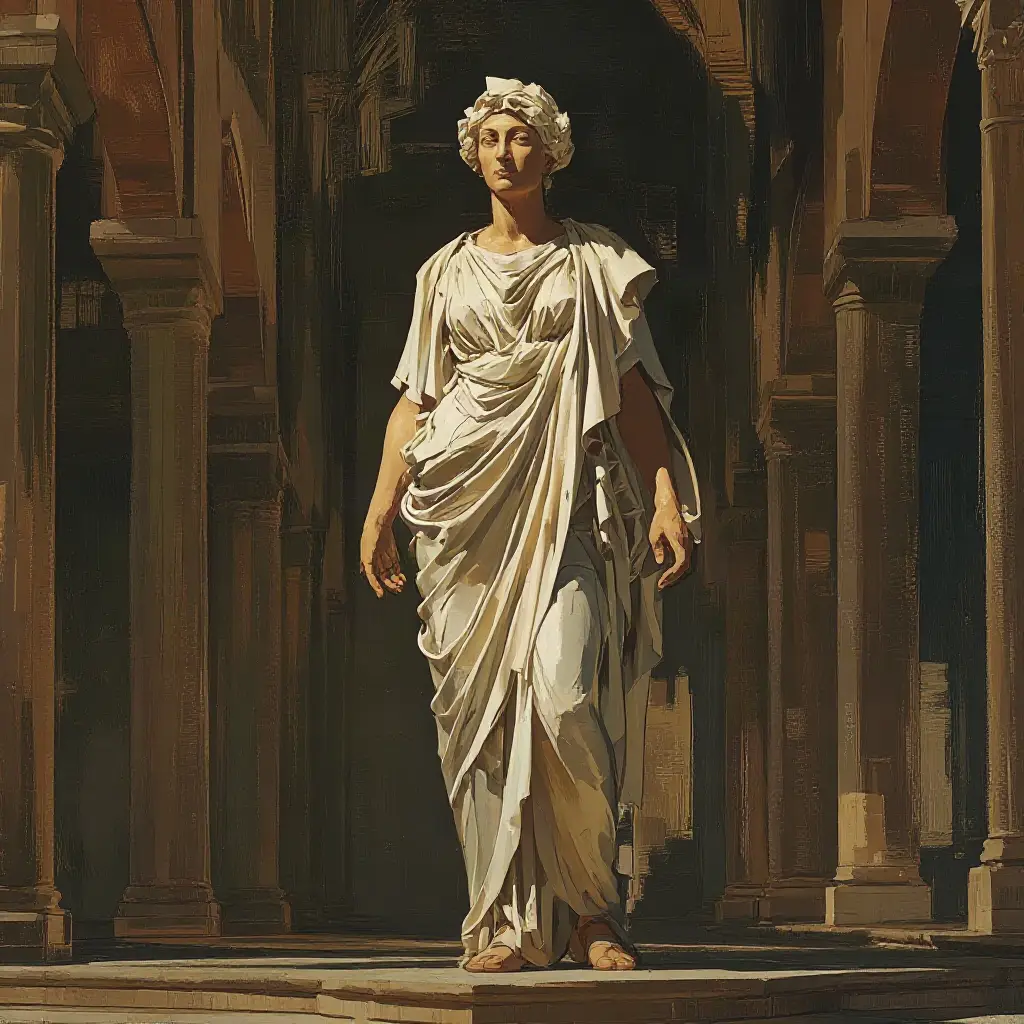
Hypatia of Alexandria
The story of Hypatia, the 4th-century philosopher killed by a mob in 415, separating the historical woman from the later legend.
The Philosopher's Cloak
Frequently Asked Questions
Who was Hypatia of Alexandria?
Hypatia was a Greek mathematician and philosopher who lived in Alexandria in the late 4th and early 5th centuries. The daughter of the mathematician Theon, she became the first woman known to lead the city's prestigious Neoplatonic school, teaching students from across the Roman Empire.
Why was Hypatia murdered?
Hypatia's murder was primarily political. She was a close and influential advisor to the Roman Prefect Orestes, who was locked in a bitter power struggle with the Patriarch of Alexandria, Cyril. A mob of Cyril's supporters, believing she was preventing a reconciliation, ambushed and killed her.
Did Hypatia's death end Greek learning in Alexandria?
No, this is a common myth. While her murder was a tragic event, the Neoplatonic school in Alexandria that she had led continued to function for two more centuries. Her death did not mark the end of classical learning in the city.
Learn more
To continue the story, download the Chunks Microlearning app
Or get it straight away:
 Download on iOS
 Download on Android