
In 1830, the artist Katsushika Hokusai was 70 years old, impoverished, and deeply in debt. Having recently lost his second wife and recovered from a minor stroke, he was also struggling to pay off his grandson’s ruinous gambling debts. At an age when most artists would have retired, he received a major commission from the publisher Nishimuraya Yohachi. The project was a series of woodblock prints titled 'Thirty-six Views of Mount Fuji', designed to appeal to a growing boom in domestic travel. Hokusai, signing the work with one of his many names, 'Iitsu', began work on the series that would produce his most famous image. It was a commercial venture born from personal desperation.
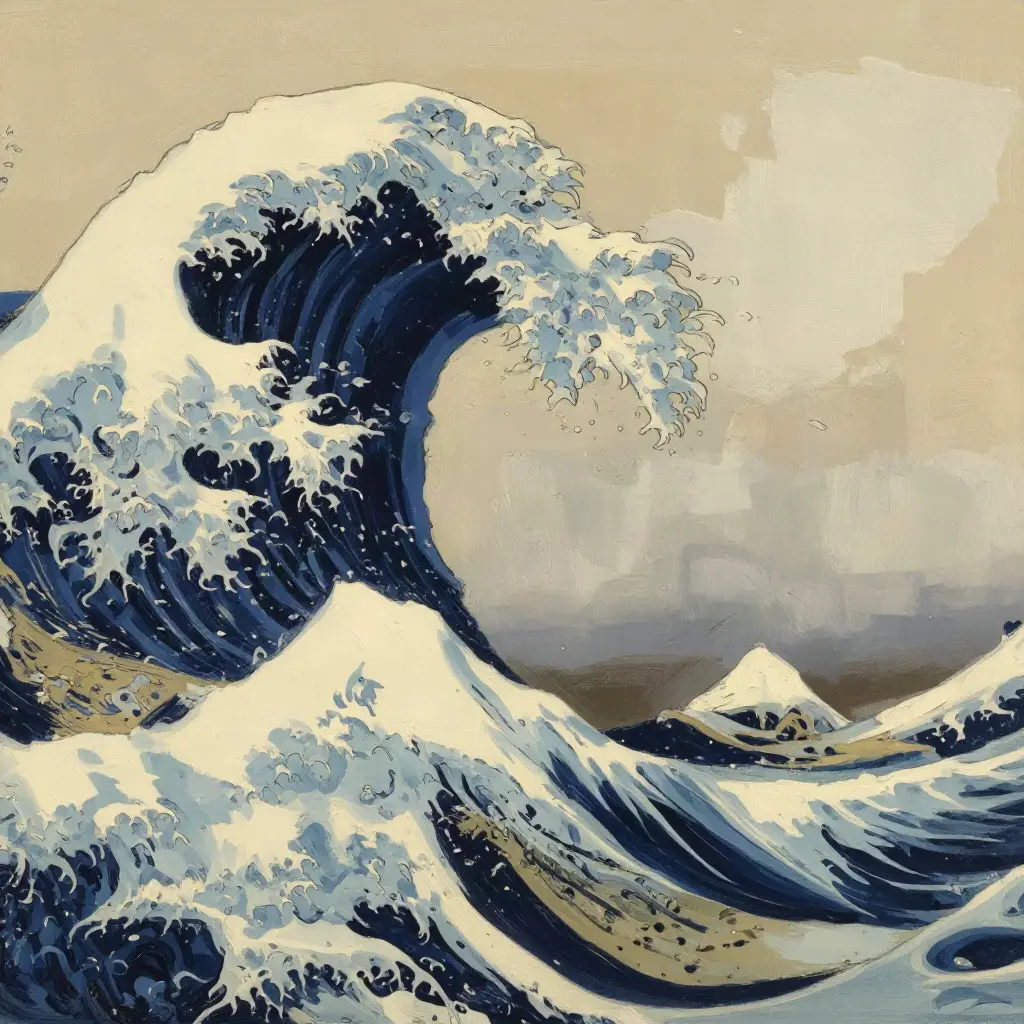
Hokusai's Great Wave
The story of Hokusai's 1831 woodblock print, made with a new Prussian blue pigment and sold for the price of a bowl of noodles.
Chapter 1
The Artist's Debt
0:46
Part of
Frequently Asked Questions
How much did The Great Wave print originally cost?
Ukiyo-e prints were designed to be affordable for ordinary people. A single print, like The Great Wave, cost about 16 mon, which was roughly the price of a bowl of noodles at the time.
Was the blue in The Great Wave a traditional Japanese color?
No, the vibrant blue was a key innovation. The print featured a synthetic pigment called Prussian Blue, known in Japan as 'Bero-ai'. It was imported from Europe and was much more vivid and fade-resistant than traditional plant-based indigo.
How did Hokusai's prints get to Europe?
After Japan ended its isolation in the 1850s, the prints arrived in Europe in an unusual way. They were so common in Japan that they were often used as scrap paper to wrap and cushion porcelain for export.
Learn more
To continue the story, download the Chunks Microlearning app
Or get it straight away:
 Download on iOS
 Download on Android