
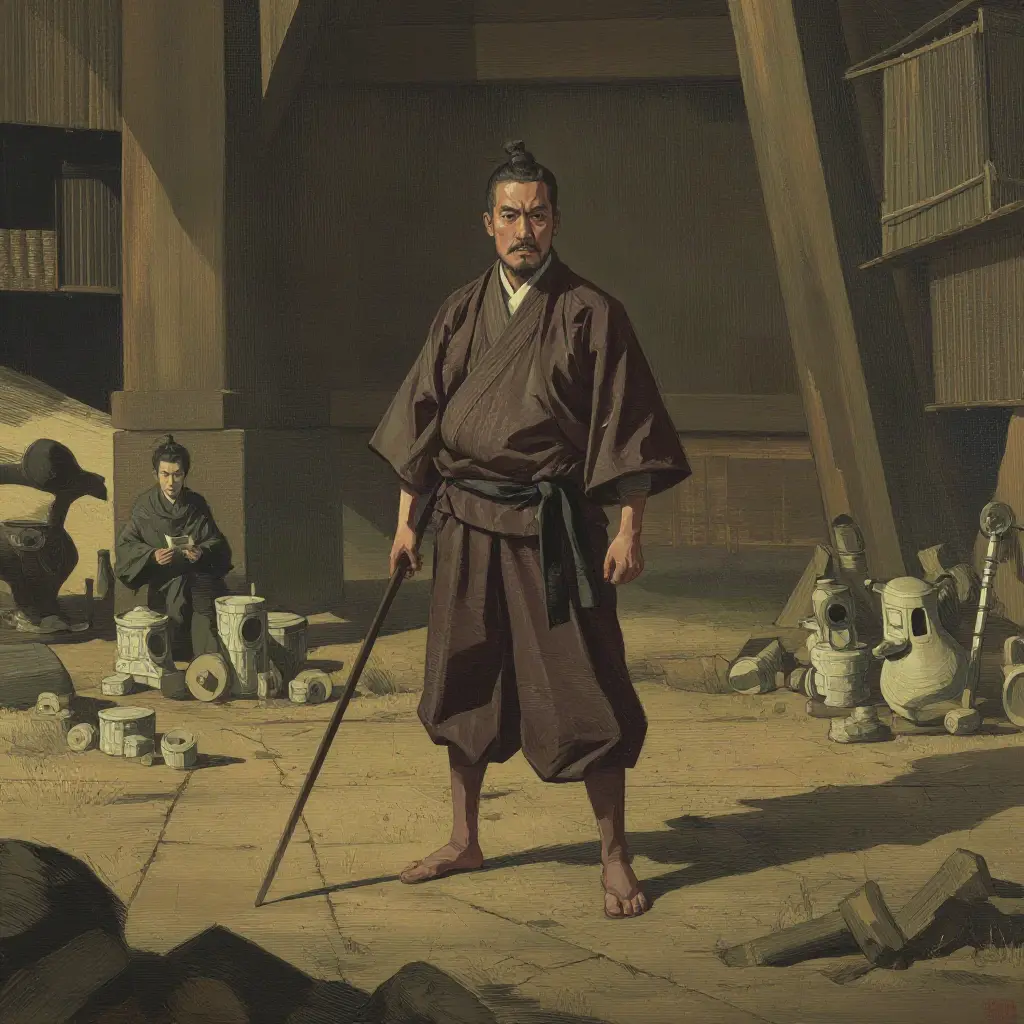
In an era of endless war, Japan was ruled by powerful samurai lords. Toyotomi Hideyoshi was not one of them. Born a peasant’s son in 1537, he had no family name and began his career as a common foot soldier. He found service with the ambitious warlord Oda Nobunaga. A popular legend says Hideyoshi first earned his master’s attention on a cold morning by warming Nobunaga’s sandals in his own robe. Whether true or not, his talent was undeniable. He rose quickly through the ranks, proving himself a capable leader. By 1573, the man once known as a nameless peasant had been promoted to a daimyo, a lord in his own right, and took the name Hashiba Hideyoshi.
Hideyoshi Unifies Japan
From a peasant's son to Japan's supreme ruler, this is the story of Toyotomi Hideyoshi, who ended more than a century of civil war.
Chapter 1
The Sandal-Bearer
0:48
Part of
Frequently Asked Questions
Was Hideyoshi really a peasant?
Yes. He was born the son of an 'ashigaru' or peasant foot soldier and lacked a family name at birth, which was a clear sign of his commoner status in Japan's hierarchical society. His rise to power is one of the most famous examples of social mobility in Japanese history.
Why couldn't Hideyoshi become Shogun?
The title of Shogun, Japan's supreme military leader, was hereditary and reserved for members of certain noble samurai clans. Because Hideyoshi was born a commoner, he was ineligible. He instead secured the title of 'Kanpaku' (Imperial Regent), the highest civil office, to legitimize his rule.
What happened to Hideyoshi's family after he died?
Hideyoshi left his young son, Hideyori, in the care of a council of powerful lords. However, after his death, one of those lords, Tokugawa Ieyasu, moved to seize power. Ieyasu defeated the forces loyal to the Toyotomi clan, established his own shogunate, and finally destroyed the dynasty at the Siege of Osaka in 1615.
Learn more
To continue the story, download the Chunks Microlearning app
Or get it straight away:
 Download on iOS
 Download on Android