
Around 306 BCE, the philosopher Epicurus bought a property on the outskirts of Athens. It wasn't another grand public school like those of Plato or Aristotle. He called it "The Garden," and it was a private community dedicated to a radical idea: that the highest good in life is pleasure. But this wasn't the pleasure of wild indulgence. It was 'ataraxia'—a state of profound tranquility, free from fear and pain. A motto reportedly carved at the entrance read: ‘Dear Guest, here you will do well to tarry; here our highest good is pleasure.’ Inside, Epicurus and his followers sought not luxury, but a quiet life, a goal that would define his philosophy for centuries to come.
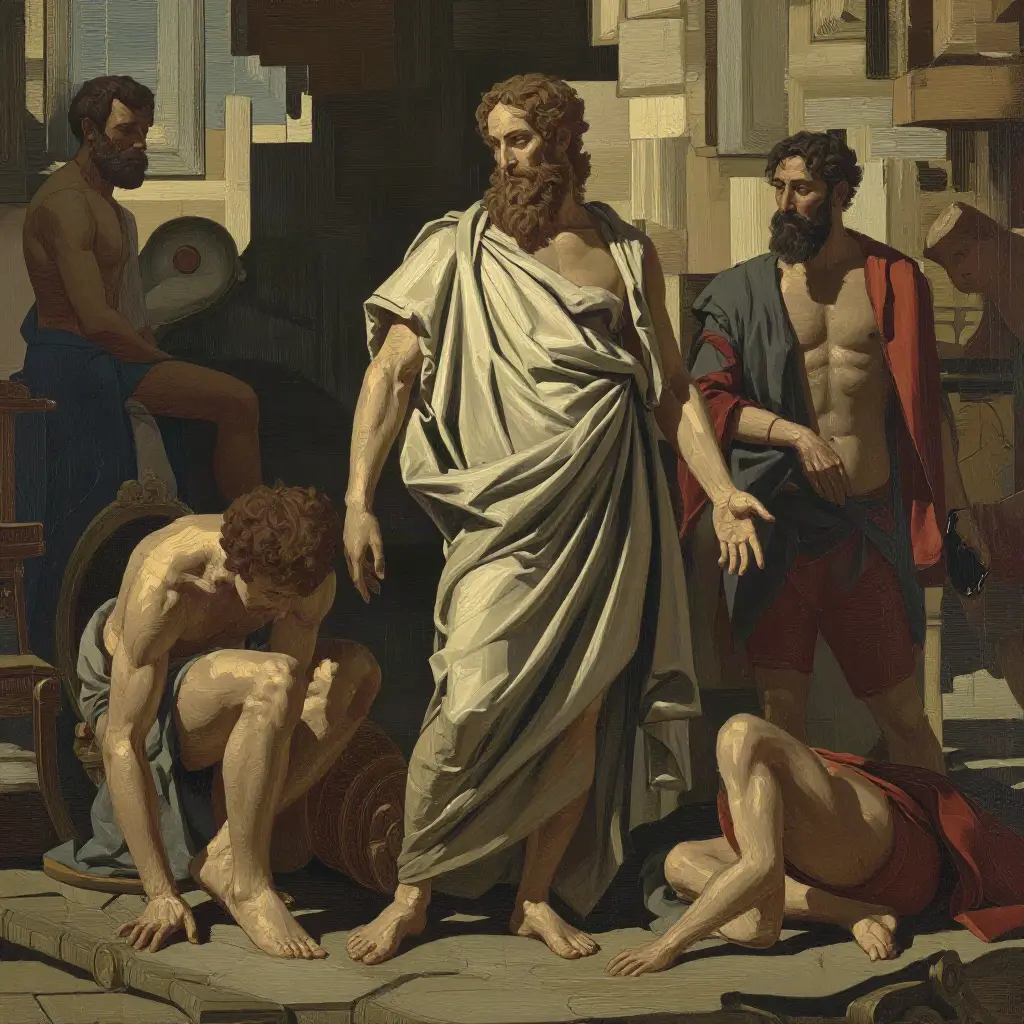
Epicurus and the Philosophy of Pleasure
The Greek philosopher Epicurus taught that the good life means calm and freedom from fear rather than indulgence. This is how his ideas were slandered, then revived through Lucretius's poem.
Chapter 1
The Garden of Tranquility
0:47
Frequently Asked Questions
What did Epicurus actually mean by 'pleasure'?
For Epicurus, pleasure was not about luxury or indulgence. It was 'ataraxia,' a state of tranquility and freedom from fear, and 'aponia,' the absence of physical pain. The highest pleasure was found in a simple, peaceful life.
Did Epicurus believe in gods?
Yes, but he taught that the gods were perfect, self-sufficient beings made of atoms, just like everything else. They lived in the spaces between worlds and were completely indifferent to human affairs, so there was no reason to fear them.
Why were Epicureans considered heretics in the Middle Ages?
Epicureanism taught that the soul was physical and dissipated after death, meaning there was no afterlife or divine judgment. This directly contradicted Christian doctrine, leading figures like Dante to place Epicureans in Hell as heretics.
Learn more
To continue the story, download the Chunks Microlearning app
Or get it straight away:
 Download on iOS
 Download on Android