
Born into slavery around 50 AD, the man we know as Epictetus began his life as property. His name was not his own, but a Greek word for 'gained' or 'acquired.' He served in the household of Epaphroditus, the administrative secretary to the Emperor Nero, a dangerous position in a volatile court. Epictetus witnessed firsthand how fragile even the highest political power could be. Living in Hierapolis, a city in modern-day Turkey, his status was that of an object. But his master, who had himself been a slave, recognized his servant's extraordinary intellect. In an act that changed the course of philosophy, Epaphroditus granted the young slave a rare privilege: permission to study with a master of Stoicism.
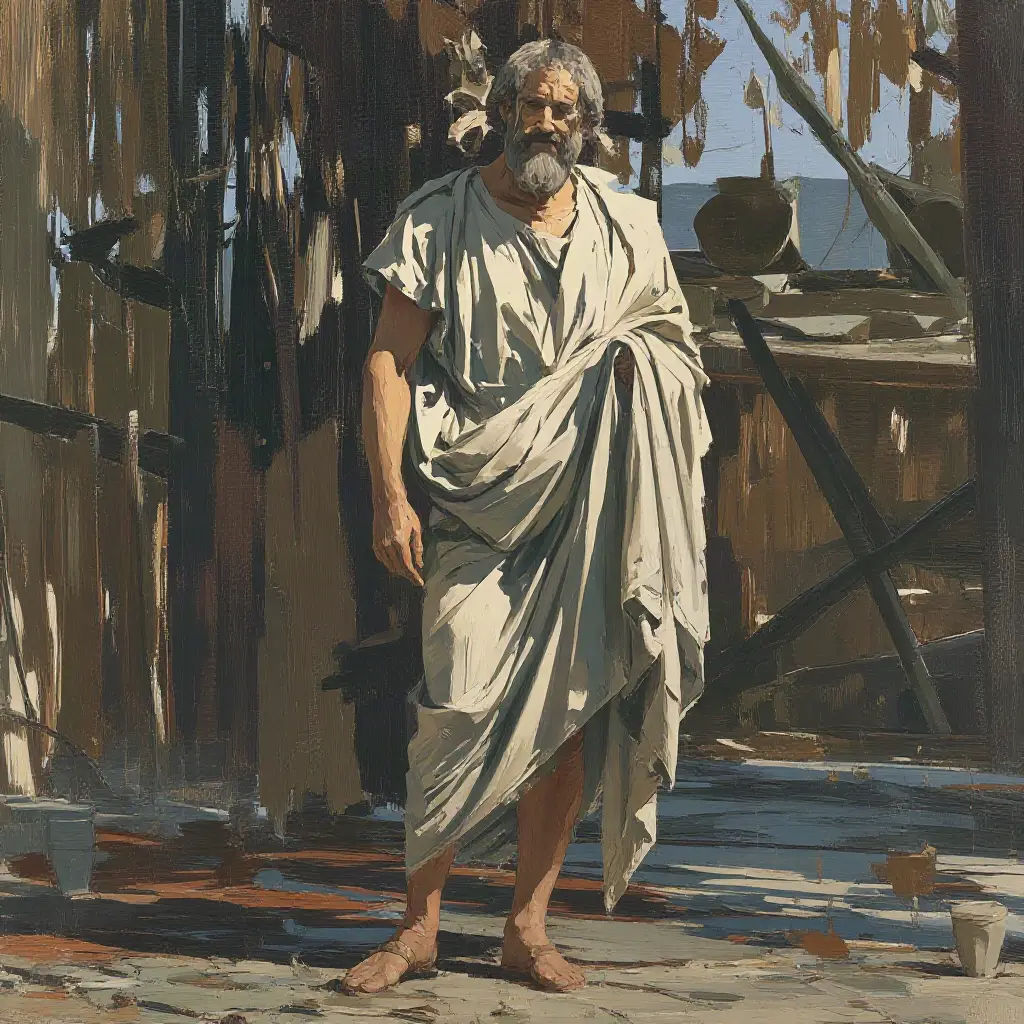
Epictetus
The enslaved man who became a great Stoic teacher, whose ideas on control would one day guide the Roman Emperor Marcus Aurelius.
Chapter 1
The Acquired Man
0:48
Frequently Asked Questions
What was Epictetus's central idea?
His central idea was the 'Dichotomy of Control.' He taught that peace of mind comes from separating what is in our power (our judgments, desires, and intentions) from what is not (our possessions, our reputation, or the weather), and then focusing only on the former.
How do we know what Epictetus taught if he never wrote a book?
His teachings survive thanks to his student, Arrian. Arrian recorded Epictetus's lectures verbatim, compiling them into works known as the 'Discourses' and a summary called the 'Enchiridion' or 'Handbook', ensuring his philosophy was not lost.
Was Epictetus really a slave?
Yes, he was born into slavery in Hierapolis around 50 AD. His very name was not a proper name but a Greek term meaning 'acquired,' denoting his status as property in the household of a powerful Roman official named Epaphroditus.
Learn more
To continue the story, download the Chunks Microlearning app
Or get it straight away:
 Download on iOS
 Download on Android