
In September 1931, the crew of the British fishing trawler 'Colinda' were working 40 kilometres off the Norfolk coast. Hauling in their nets, they brought up a large, dark lump of peat from a depth of 37 metres. The skipper, Pilgrim E. Lockwood, struck the chunk with a shovel and heard a strange metallic 'clang'. Inside the peat, he found a perfectly preserved, 8.5-inch barbed harpoon carved from antler. Later analysis proved the tool was from the Mesolithic period, lost thousands of years ago when the North Sea was still dry land. It was the first solid proof of a lost world hidden beneath the waves, a world that geologists had only predicted existed.
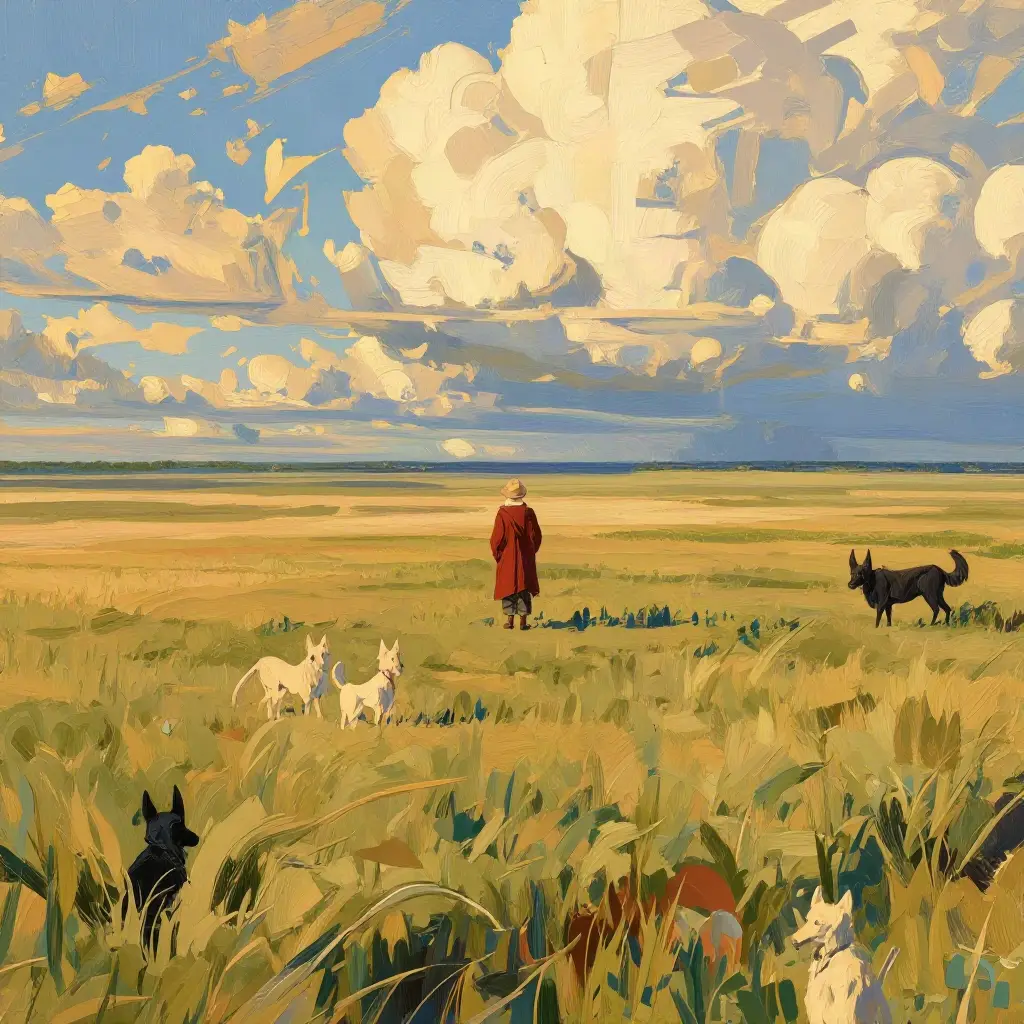
Doggerland
The story of Doggerland, the land that once joined Britain to Europe, revealed by a harpoon found in a fisherman's net in 1931.
Chapter 1
A Clang in the Deep
0:46
Frequently Asked Questions
What exactly was Doggerland?
Doggerland was a vast plain of dry land that connected Great Britain to mainland Europe during the last Ice Age. At its largest, it covered roughly 250,000 square kilometres of what is now the North Sea basin, featuring hills, valleys, and forests.
Who lived on Doggerland?
The region was inhabited by Mesolithic hunter-gatherers of the Maglemosian culture. They were skilled artisans who used barbed harpoons made from deer antlers and tiny flint blades called microliths to hunt fish and game.
What ultimately destroyed Doggerland?
After the Ice Age, rising sea levels gradually submerged the plain over thousands of years. The final blow came around 6200 BC, when a massive submarine landslide off Norway triggered a tsunami that devastated the last remaining islands.
Learn more
To continue the story, download the Chunks Microlearning app
Or get it straight away:
 Download on iOS
 Download on Android