
In 1910, a German meteorologist named Alfred Wegener was looking at a world map. He was struck by something others had noticed but dismissed: the coastlines of South America and Africa seemed to fit together like pieces of a giant puzzle. This simple observation sparked a revolutionary idea. On January 6, 1912, Wegener stood before a geological association and proposed his theory of 'continental displacement'. He argued that today’s continents were once a single, massive landmass that had broken apart and drifted across the globe. He gave this ancient supercontinent a name: Pangaea, Greek for 'all Earth'. The geologists in the room were skeptical. It was a radical challenge to the accepted view of a static Earth. What evidence could a weatherman possibly have?
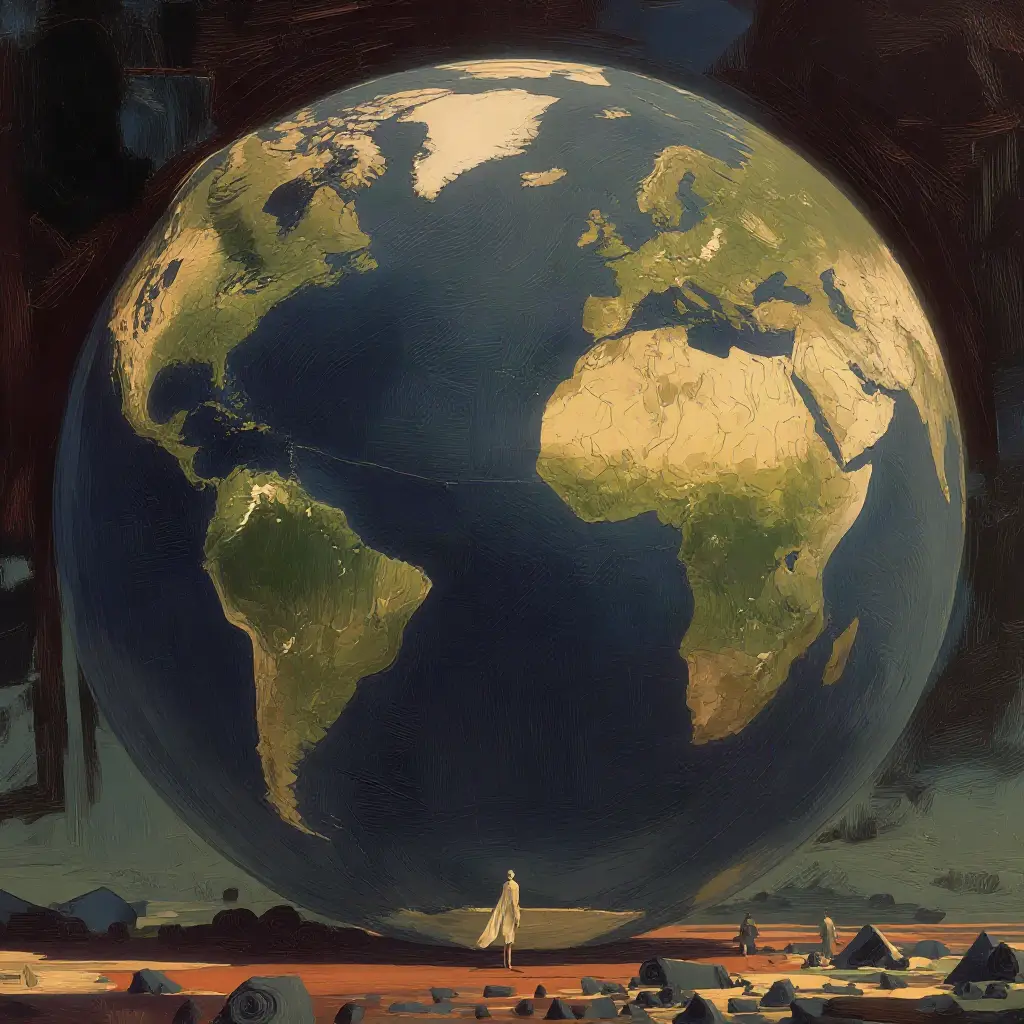
Continental Drift
In 1912, Alfred Wegener proposed that continents drift. Geologists rejected him, and he died with his theory unproven on the Greenland ice.
The Puzzle Piece
Frequently Asked Questions
What was Pangaea?
Pangaea was the name Alfred Wegener gave to the supercontinent he proposed existed millions of years ago. The name means 'all Earth' in Greek. Wegener theorized that this single landmass broke apart and its pieces drifted to their current positions as the continents we know today.
Why was Alfred Wegener's theory of continental drift rejected at first?
The main reason for its rejection was that Wegener, a meteorologist, could not propose a convincing physical mechanism to explain how entire continents could move. Established geologists also resisted the idea because it challenged the fundamental principles of their field. Physicists calculated that his proposed forces were impossibly weak.
What evidence finally proved the theory of continental drift?
The theory was finally proven by discoveries made on the ocean floor decades after Wegener's death. In the 1950s, Marie Tharp mapped a massive rift valley down the middle of the Atlantic Ocean. In 1963, geologists discovered magnetic 'stripes' on the seafloor that provided a historical record of the floor spreading apart from the central ridge, pushing the continents with it.
Learn more
To continue the story, download the Chunks Microlearning app
Or get it straight away:
 Download on iOS
 Download on Android