
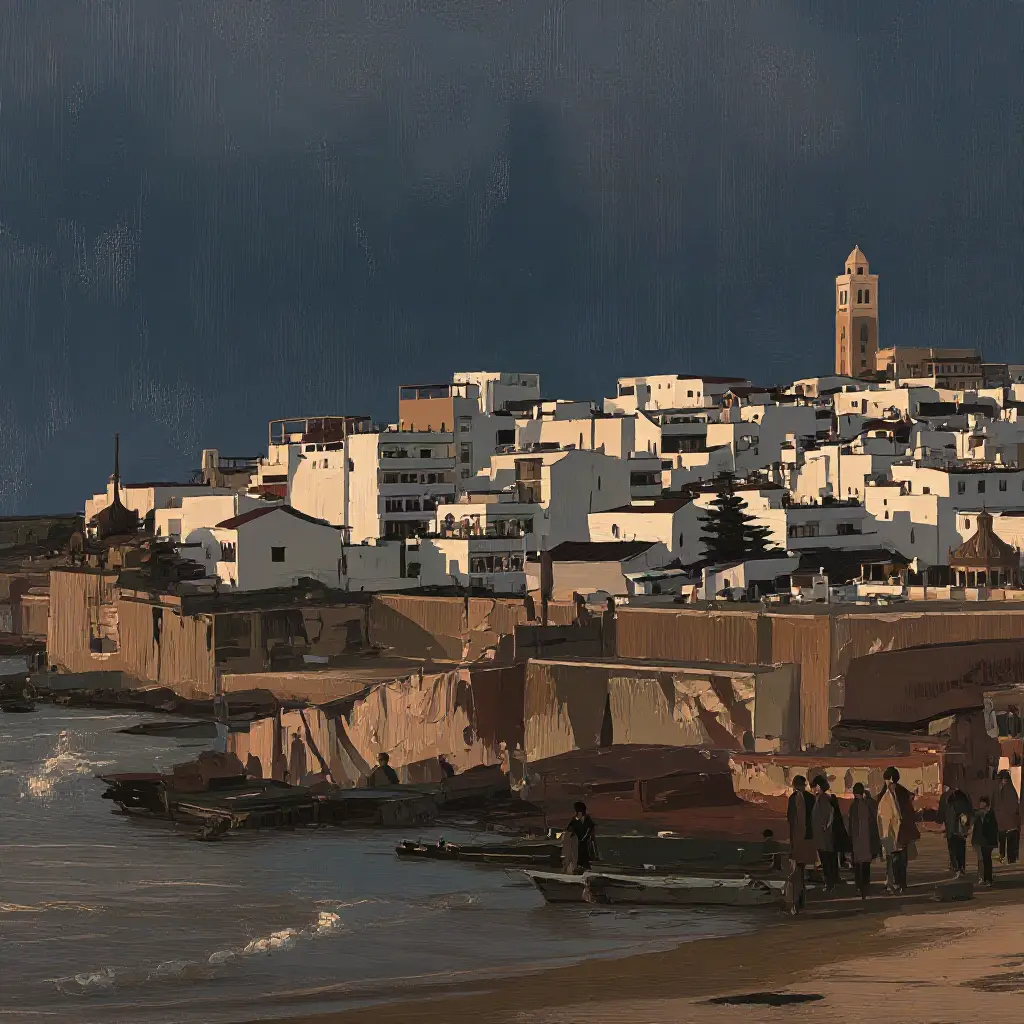
In the summer of 1415, a massive Portuguese fleet set sail from Lisbon. King John I commanded around 200 ships, pretending they were on a diplomatic mission. Their true target was the city of Ceuta, a wealthy Muslim port on the North African coast. For centuries, it had been a key hub for trade. On August 21, the Portuguese force of 45,000 men stormed the city, conquering it in a single day of fighting. This victory marked a major first step in European overseas expansion. Among the conquerors was the king's young son, Prince Henry, later known as the Navigator. His knighthood in the captured city signaled the start of a new era, one where Portugal aimed to control the sea routes to gold and spices.
Ceuta: Spain's Contested African Enclave
The story of Ceuta, the Spanish city in Africa, from its 1415 conquest to its modern role as a flashpoint for migration and diplomacy.
Chapter 1
The First Step of an Empire
0:51
Part of
Frequently Asked Questions
Why is Ceuta part of Spain?
Ceuta's population chose to remain loyal to the Spanish crown in 1640 when Portugal regained its independence from Spain. This was formalized in the 1668 Treaty of Lisbon, and the city has been a Spanish territory ever since.
Why does Morocco claim Ceuta?
Morocco views Ceuta as an occupied territory and a remnant of European colonialism in Africa. It considers the city, which it calls 'Sebta', an integral part of its own territory and seeks to complete its national borders.
What is the Ceuta border fence?
The Ceuta border fence is a heavily fortified barrier separating the Spanish city from Morocco, first built in 1993. It is one of only two land borders between the European Union and Africa and has become a major focus of migration into Europe.
Learn more
To continue the story, download the Chunks Microlearning app
Or get it straight away:
 Download on iOS
 Download on Android