
The story of humanity’s first siblings begins with Adam and Eve's sons, whose names foreshadowed their destinies. The firstborn was Cain, a name from the Hebrew verb 'to acquire'. His younger brother was Abel, or 'Hebel', which means 'breath' or 'vapor'—something fleeting. Some ancient traditions even suggest they were twins. They established the first division of labor, representing the two great lifestyles of the ancient Near East. Cain became a 'tiller of the ground' like his father, a farmer tied to the soil. Abel became a 'keeper of sheep', a nomadic shepherd who moved with his flock. This difference in vocation set the foundation for the conflict that would follow between the settled farmer and the wandering herder.
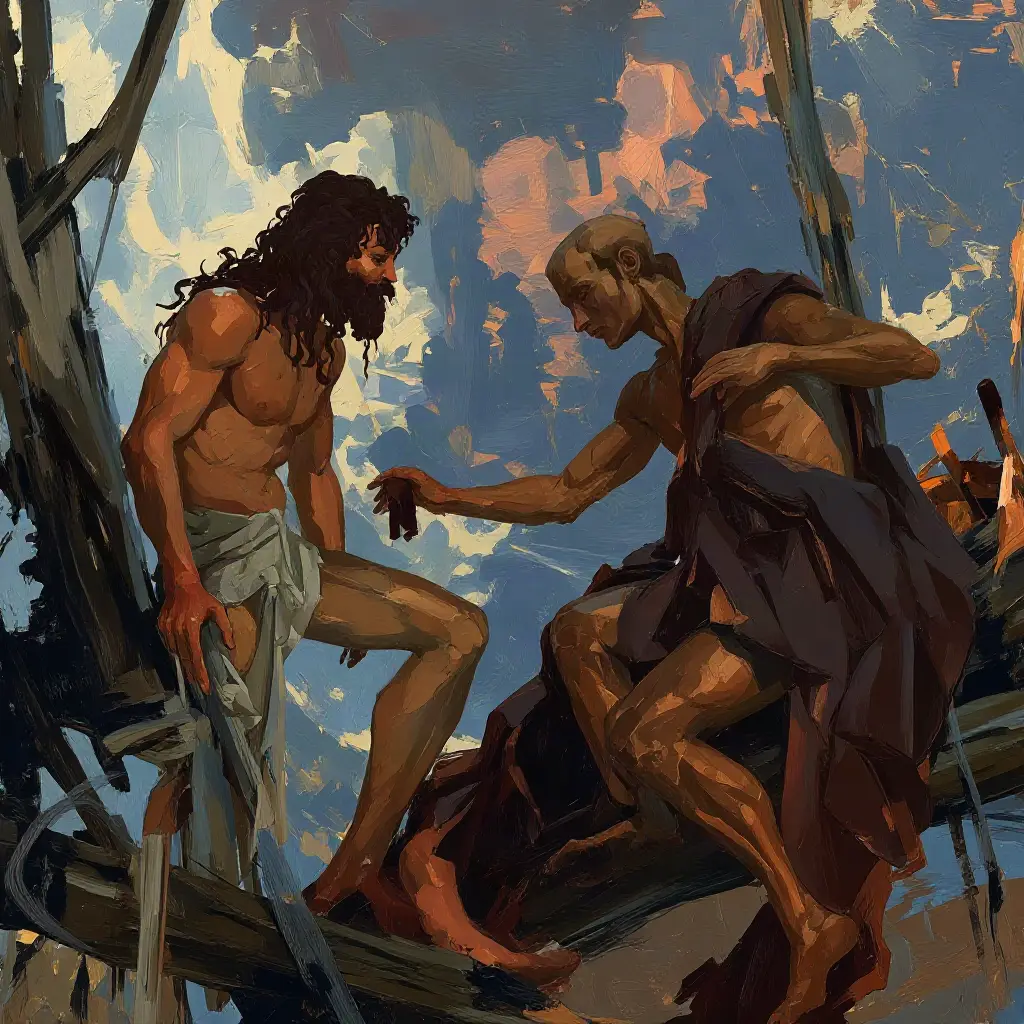
Cain and Abel: The First Murder
The story of Cain and Abel from Genesis 4, Adam and Eve's sons whose rival offerings end in the first murder, alongside details later Jewish and Islamic traditions added.
Chapter 1
The First Brothers
0:48
Part of
Frequently Asked Questions
What do the names Cain and Abel mean in the original Hebrew?
Cain's name, 'Qayin', is a pun on the verb 'qanah', meaning 'to acquire', reflecting his mother's joy at his birth. Abel's name, 'Hebel', literally translates to 'breath' or 'vapor', symbolizing his tragically short and fleeting life.
Why did God reject Cain's offering?
The Book of Genesis does not give an explicit reason, leaving it a test of character. However, Jewish Midrashic texts like Bereshit Rabba suggest Cain brought inferior produce, such as spoiled fruit, while Abel offered the very best of his flock, the 'firstlings'.
What was the 'Mark of Cain'?
The 'Mark of Cain' was not a curse, but a sign of divine protection. After being sentenced to be a wanderer, Cain feared others would kill him. In response, God placed a mark, or 'ot', on him to warn that anyone who killed him would face a sevenfold vengeance.
Learn more
To continue the story, download the Chunks Microlearning app
Or get it straight away:
 Download on iOS
 Download on Android