

Who was Johannes Gutenberg?
Johannes Gutenberg (c. 1400–1468) was a German inventor from Mainz who developed the movable-type printing press, enabling books to be produced far faster and more cheaply than before. His most celebrated work, the Gutenberg Bible, was the first printed Bible. His invention spread across Europe and had a profound impact on the Renaissance, the Reformation, and the mass spread of literature.
German inventor who revolutionized communication by developing the movable-type printing press around 1440. His invention made books affordable and accessible, sparking the spread of literacy, the Renaissance, and the Protestant Reformation.
Don't stop at the facts — continue Johannes Gutenberg's story in free narrated chapters on Chunks.
 Download on iOS
 Download on Android
Quick facts
- Born
- 1400
- Birthplace
- Mainz
- Died
- 1468
- Place of death
- Mainz
- Nationality
- Holy Roman Empire
- Occupation
- Inventor, typographer, engraver
Johannes Gutenberg: key facts
- Johannes Gutenberg was born around 1400 in Mainz, a wealthy city along the Rhine in what is now Germany, and died there in 1468.
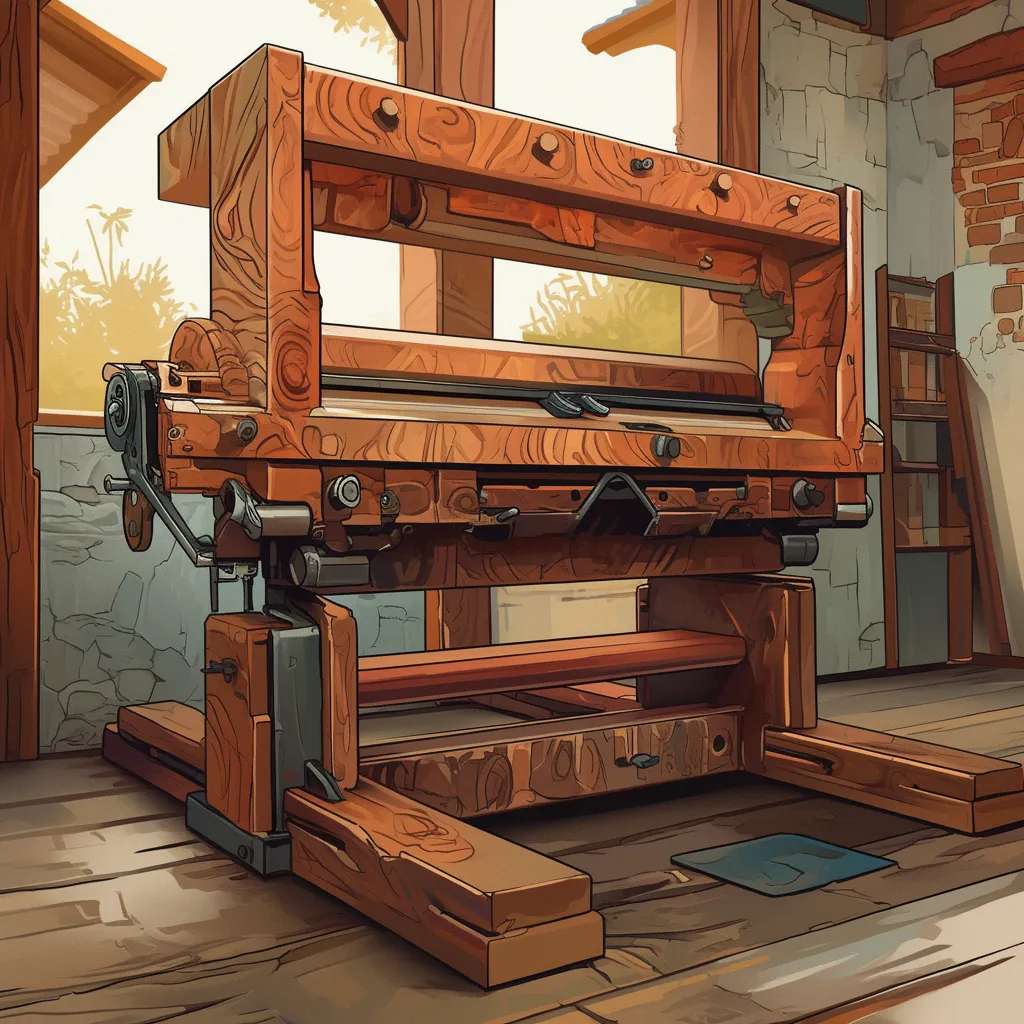
- Gutenberg invented a movable-type printing press that used an oil-based ink, an adjustable mould, and a type-metal alloy of lead, tin, and antimony that melted at a relatively low temperature for faster casting.
- His major work, the Gutenberg Bible completed in 1455, was the first printed Bible; about 180 copies were produced, and 48 substantially complete copies are known to survive today.
- Gutenberg's press triggered an information revolution that historians credit as essential to the Renaissance, the Reformation, and the rise of the humanist movement across Europe.
- In 1999, the A&E Network ranked Gutenberg the most influential person of the second millennium, and Time-Life magazine had already named his invention the most important of the millennium in 1997.
- Gutenberg faced a serious legal setback when his financier Johann Fust sued him around 1456 and won control of the Bible printing workshop, leaving Gutenberg effectively bankrupt.
- To mark the 500th anniversary of his birth, the Gutenberg Museum dedicated to the history of early printing was founded in his hometown of Mainz in 1900.
A Patrician Son in a City of Conflict
Johannes Gutenberg was born in Mainz, a prosperous city along the Rhine, most likely around 1400, though scholars have placed his birth anywhere between 1393 and 1406. His full name, Johannes Gensfleisch zur Laden zum Gutenberg, reflected the family's properties in Mainz; the Gutenberg name itself came from the Hof zum Gutenberg, a large Gothic residence that his father had inherited. His father, Friele Gensfleisch zur Laden, was a patrician and merchant, probably involved in the cloth trade, and later served in roles connected to the city mint.
Gutenberg's mother, Else Wyrich, was the daughter of a shopkeeper and therefore not of patrician lineage. Historians believe this mattered enormously: because of his mother's commoner status, Gutenberg could not follow his father into the mint, and according to the historian Ferdinand Geldner, this exclusion may have pushed him toward an unconventional path as an inventor. Family life was also disrupted by political violence. A conflict between Mainz's patrician class and the guild craftsmen forced the family to flee the city in 1411, and again in January 1413, taking refuge in nearby Eltville, where his mother had inherited a house.
Goldsmith, Gem Polisher, and Early Experimenter in Strasbourg
Almost nothing is documented about Gutenberg's childhood and early education. He is assumed to have studied at the University of Erfurt, where a student named Johannes de Altavilla — Altavilla being the Latin form of Eltville — was enrolled in 1418. By March 1434, a letter places Gutenberg in Strasbourg, where he had relatives on his mother's side and was enrolled in the city militia as a goldsmith. In 1437, records show him instructing a wealthy tradesman in polishing gems, though where he had learned this skill is unknown.
It was in Strasbourg, around 1439, that Gutenberg became involved in a commercial scheme to produce polished metal mirrors for pilgrims traveling to Aachen, where a religious relic exhibition had been planned. A flood delayed the exhibition by a year, leaving investors unable to recover their money. This misadventure left Gutenberg in financial difficulty but did not halt his experimentation. By 1440, he is said to have unveiled a secret process he called Aventur und Kunst, meaning enterprise and art, widely understood as a reference to his early printing work, though the precise details of what he had developed at that stage remain unclear.
Building the Press and Printing the Bible
Gutenberg returned to Mainz by 1448 and secured a loan from his brother-in-law Arnold Gelthus, likely to fund printing equipment. By 1450, a press was in operation and had already printed at least one German poem. To finance a more ambitious project, Gutenberg convinced a wealthy moneylender named Johann Fust to loan him 800 guilders, and later borrowed another 800 guilders from Fust specifically to begin printing the Bible. Peter Schöffer, a former scribe from Paris who became Fust's son-in-law, joined the enterprise and is credited with designing some of the earliest typefaces used in the shop.
Work on the Bible began in 1452, with the press also producing other texts at the same time, including Latin grammars and thousands of indulgences for the church. In 1455, Gutenberg completed his 42-line Bible, now known as the Gutenberg Bible. Around 180 copies were printed, roughly three-quarters on paper and the remainder on vellum. Copies sold for 30 florins each, about three years' wages for a clerk, yet this was far cheaper than a handwritten manuscript, which could take a single scribe over a year to complete. The Bible was widely praised for its aesthetic and technical quality, and 48 substantially complete copies are known to survive today.
The Fust Lawsuit and a Disputed Technique
In 1456, Gutenberg's partnership with Fust collapsed into a legal dispute. Fust demanded repayment of the full amount loaned, which with interest had grown to around 2,026 guilders, and accused Gutenberg of misusing the funds. An archbishop's court ruled in Fust's favor, handing control of the Bible printing workshop to Fust. Gutenberg was left effectively bankrupt. He appears to have retained or restarted a smaller printing operation, and is believed to have supplied type for a Bible printed in Bamberg around 1459, but because none of his printed works carried his name or a date, firm attribution is difficult.
The exact mechanics of how Gutenberg made his movable type have also been contested. The standard account holds that he used a metal punch hammered into a copper bar to create a reusable matrix, from which identical type pieces could be cast. However, research published in 2001 by physicist Blaise Agüera y Arcas and librarian Paul Needham found irregularities in Gutenberg's type that suggest the letters were not produced from a single consistent matrix. They proposed that Gutenberg may instead have pressed shapes into a soft material such as sand, meaning each mold was destroyed after a single casting. Under this interpretation, the fully reusable matrix system may not have been adopted until the 1470s, roughly two decades after Gutenberg's Bible was completed.
Recognition, Death, and a Transformed World
Gutenberg's final years brought a measure of official recognition. On 18 January 1465, Archbishop Adolph von Nassau granted him the title of Hofmann, or gentleman of the court, along with a stipend, an annual court outfit, and allocations of grain and wine. Gutenberg died in 1468 and was buried in the Franciscan church in Mainz. The church and its cemetery were later destroyed, and his grave has been lost. A portrait did not appear until 1567, in a biography of famous Germans by Heinrich Pantaleon, and was almost certainly an imaginary reconstruction.
The impact of Gutenberg's press spread rapidly across Europe and fundamentally altered how information moved through society. The printing press enabled the mass circulation of texts, making books far more affordable and consistent than handwritten manuscripts. Martin Luther's Ninety-five Theses were printed and distributed widely, and the broadsheet — one of the press's commercial products — contributed to the eventual rise of the newspaper. In 1999, the A&E Network ranked Gutenberg the most influential person of the second millennium, and Time-Life magazine had already named his invention the most important of the same period in 1997. To mark the 500th anniversary of his birth, the Gutenberg Museum was founded in Mainz in 1900 and continues to document the history of early printing.
Johannes Gutenberg: timeline
- c. 1400Born in Mainz, a wealthy city along the Rhine, to patrician father Friele Gensfleisch zur Laden and his second wife Else Wyrich.
- 1418A student named Johannes de Altavilla — Altavilla being the Latin form of Eltville am Rhein — enrolled at the University of Erfurt, assumed to be Gutenberg.
- 1434A letter confirms Gutenberg was living in Strasbourg, where he had relatives on his mother's side and was enrolled in the local militia as a goldsmith.
- 1439Gutenberg was involved in a failed venture producing polished metal mirrors for pilgrims to Aachen, after a flood delayed the city's planned relic exhibition.
- 1440In Strasbourg, Gutenberg is said to have perfected and unveiled his secret of printing, described in records as Aventur und Kunst — enterprise and art.
- 1450Back in Mainz with a functioning press, Gutenberg secured a loan of 800 guilders from moneylender Johann Fust to support his printing enterprise.
- 1452Work on the Bible project began after Gutenberg borrowed a further 800 guilders from Fust, while the press simultaneously printed other texts including Latin grammars.
- 1455Gutenberg completed his 42-line Bible — the Gutenberg Bible — printing approximately 180 copies, three quarters on paper and the remainder on vellum.
- 1456Johann Fust sued Gutenberg at the archbishop's court, winning control of the Bible printing workshop and leaving Gutenberg effectively bankrupt.
- 1465Archbishop Adolph von Nassau recognised Gutenberg's achievements, granting him the title Hofmann along with a stipend, court outfit, grain, and wine.
- 1468Gutenberg died in Mainz and was likely buried as a tertiary in the Franciscan church there; the church was later destroyed and his grave is now lost.
Listen: stories featuring Johannes Gutenberg
Narrated chapters from the Chunks Microlearning app. Read a preview here, or listen to the full story in the app.
Continue Johannes Gutenberg's story
You've read the summary — hear the full story as narrated 5-minute chapters on Chunks, alongside 200+ figures and events from history, philosophy and science. Free to start on iOS and Android.