
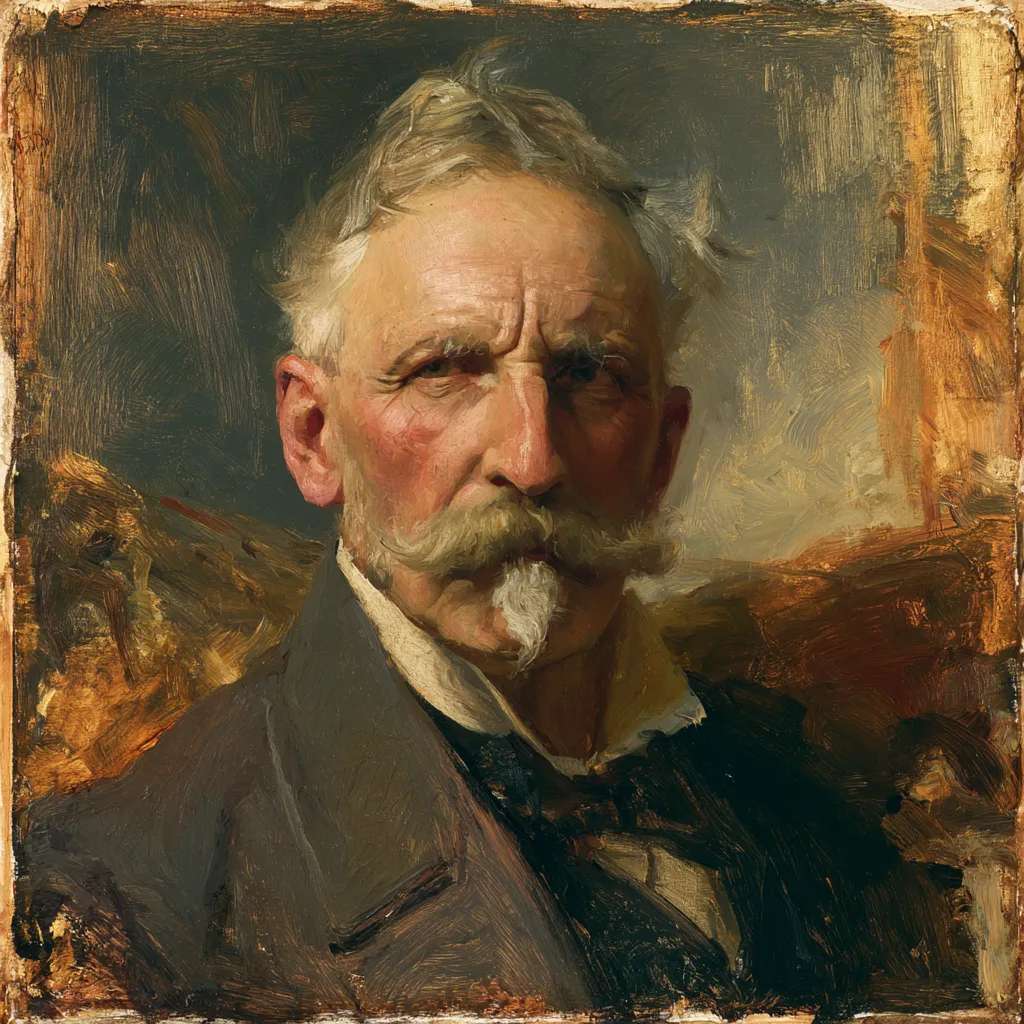
Who was Arthur Zimmermann?
Arthur Zimmermann (5 October 1864 – 6 June 1940) was a German diplomat and State Secretary for Foreign Affairs who is best known for sending the Zimmermann Telegram in 1917, a secret message proposing a military alliance between Germany and Mexico against the United States. The telegram's exposure helped bring the US into World War I. He was the first non-aristocrat to serve as German foreign secretary.
German Foreign Secretary during World War I who sent the infamous Zimmermann Telegram proposing a military alliance with Mexico against the United States.
Don't stop at the facts — continue Arthur Zimmermann's story in free narrated chapters on Chunks.
Or get it straight away:
 Download on iOS
 Download on Android
Quick facts
- Born
- 5 October 1864
- Birthplace
- Olecko
- Died
- 6 June 1940
- Place of death
- Berlin
- Nationality
- Kingdom of Prussia, Weimar Republic
- Occupation
- Politician, diplomat, jurist
Arthur Zimmermann: key facts
- Arthur Zimmermann was born on 5 October 1864 in Marggrabowa, East Prussia (present-day Olecko, Poland), and died of pneumonia in Berlin on 6 June 1940.
- Zimmermann served as State Secretary for Foreign Affairs of the German Empire from 22 November 1916 until his resignation on 6 August 1917, succeeding Gottlieb von Jagow.
- Zimmermann was the first non-aristocrat to serve as Germany's foreign secretary.
- The Zimmermann Telegram, sent in January 1917, proposed a military alliance with Mexico, offering financial support and help reclaiming Texas, New Mexico, and Arizona if the United States entered World War I against Germany.
- On 29 March 1917, Zimmermann confirmed the telegram's authenticity in a speech to the Reichstag, ending speculation that British intelligence had forged it.
- Zimmermann was involved in arranging for Lenin and other Russian émigré revolutionaries to travel by train through Germany to Russia in 1917, aiming to destabilize the Tsarist government and secure peace on the Eastern Front.
- Zimmermann worked with Irish nationalist Roger Casement from late 1914 to support the Irish rebellion, though German efforts to land rifles and troops ultimately failed to effectively aid the Easter Rising of April 1916.
From East Prussia to the Diplomatic Service
Arthur Zimmermann was born on 5 October 1864 in Marggrabowa, East Prussia, a town in the Kingdom of Prussia that is today known as Olecko and lies in the Mazury region of Poland. He studied law between 1884 and 1887 at universities in Königsberg and Leipzig, afterward working for a period as a junior lawyer before earning a doctorate in law. In 1893 he moved into diplomacy, entering the consular service in Berlin rather than following a conventional legal career.
In 1896 Zimmermann was posted to China, reaching Canton by 1898, and by 1900 he had risen to the rank of consul. His years in the Far East placed him in China during the Boxer Rebellion, giving him direct experience of a major international crisis. He returned to Germany in 1902 as part of a transfer to the Foreign Office, and a portion of that journey home took him by rail across the continental United States — a fact he would later invoke, somewhat misleadingly, to claim special knowledge of American affairs. He became Under Secretary of State in 1911 and steadily took on more of the day-to-day negotiations that his cautious superior left to him.
The First Non-Aristocrat to Lead German Foreign Policy
On 22 November 1916, Zimmermann was confirmed as State Secretary for Foreign Affairs, succeeding Gottlieb von Jagow. The appointment was historically notable: Zimmermann was the first person without aristocratic status to hold the position of German foreign secretary. For years before his formal appointment he had already been carrying a large share of his superior's workload in negotiations with foreign envoys, so the transition represented recognition of a role he had in practice long been performing.
His involvement in German decision-making reached back to the very outbreak of the war. As acting secretary he participated in the deliberations of 1914 in which Kaiser Wilhelm II and Chancellor Theobald von Bethmann Hollweg resolved to back Austria-Hungary following the assassination of Archduke Franz Ferdinand at Sarajevo. Zimmermann later distanced himself from the label attached to those discussions, arguing that it was ultimately the Kaiser's opinion that had been decisive, though he and Bethmann Hollweg had both concurred with that judgment.
Covert Strategies: Ireland, India, and Revolutionary Russia
Beyond the war's visible fronts, Zimmermann was deeply involved in efforts to destabilize Germany's enemies from within. In late 1914 the Irish nationalist Roger Casement visited him, and together they discussed landing 25,000 soldiers in western Ireland along with 75,000 rifles. The German general staff refused to commit those forces, but Germany still managed to ship 20,000 rifles aboard a vessel sailing under Norwegian colours, renamed the Aud. That cargo never reached the rebels — the ship failed to link up and was scuttled — yet the expectation of German support contributed to the planning of the Easter Rising in Dublin in April 1916. Although the Rising was suppressed, its political consequences eventually helped produce the Irish War of Independence and the formation of the Irish Free State.
Zimmermann was also involved in plans to support rebellions in India and to assist the Bolsheviks in undermining Tsarist Russia. In March 1917, with the Russian front near collapse, he moved to accelerate a separate peace with Russia. Among the measures he arranged was allowing Lenin and other émigré revolutionaries to travel through German territory by train to return to Russia. The strategic logic was clear: a Russian exit from the war would free German armies in the east to reinforce the western front.
The Telegram to Mexico and Its Consequences
In January 1917, as Germany prepared to resume unrestricted submarine warfare, Zimmermann sent a coded telegram to the German ambassador in Mexico with instructions to propose a military alliance to the government of President Venustiano Carranza. The offer was extraordinary: if the United States entered the war against Germany, Mexico should join the German side, attempt to bring Japan into the alliance, and attack the United States. In exchange Germany promised financial support and help recovering the territories of Texas, New Mexico, and Arizona — land Mexico had lost to the United States decades earlier.
British intelligence intercepted and decoded the telegram, and on 24 February 1917 it was delivered to the American ambassador in Britain, Walter Hines Page, who passed it to President Wilson two days later. When the US government released the text to the press on 1 March, some newspapers, particularly those of the Hearst press, suggested it was a British forgery designed to drag the United States into the war. That argument collapsed on 29 March, when Zimmermann addressed the Reichstag and confirmed the telegram was genuine. By that point several American ships had already been torpedoed. On 2 April, President Wilson asked Congress to declare war on Germany, and on 6 April Congress approved the resolution by a wide margin — 82 to 6 in the Senate.
Mexico never acted on the proposal. A general appointed by Carranza to evaluate the feasibility of reclaiming the three named states concluded that such a takeover would likely provoke a future war with the United States, that Mexico could not absorb a large Anglo population, and that Germany would be unable to supply the necessary arms. Carranza formally declined Zimmermann's proposals on 14 April 1917.
Resignation, Peace Efforts, and Final Years
In the months before his departure from office, Zimmermann participated in a serious, if ultimately unsuccessful, diplomatic initiative. At the end of June 1917, the Bavarian Nuncio Eugenio Pacelli — later to become Pope Pius XII — arrived on a fact-finding mission. In meetings with Pacelli and his colleague Uditore Schioppa, Zimmermann and Bethmann Hollweg outlined terms for a negotiated peace: no territorial annexations, an independent Poland, evacuation of occupied French and Belgian territory, and the cession of Alsace-Lorraine to France, with Germany receiving only the return of its former colonies. Neither man remained in office long enough to pursue these plans further.
On 6 August 1917, Zimmermann resigned as foreign secretary, with the Zimmermann Telegram cited among the causes of his departure. He was succeeded by Richard von Kühlmann. Zimmermann lived for more than two decades after leaving office, dying in Berlin on 6 June 1940 from pneumonia.
Arthur Zimmermann: timeline
- 1864Born in Marggrabowa, East Prussia, in the Kingdom of Prussia, the town now known as Olecko in Poland.
- 1884–87Studied law in Königsberg and Leipzig, later completing a doctorate of law after a period as a junior lawyer.
- 1893Entered the consular service in Berlin, beginning a career in diplomacy.
- 1896Arrived in China, rising to the rank of consul by 1900 and witnessing the Boxer Rebellion firsthand.
- 1902Returned to Germany and joined the Foreign Office, part of his journey home made by railroad across the continental United States.
- 1911Appointed Under Secretary of State at the Foreign Office, taking on a large share of negotiations with foreign envoys.
- 1914Participated in deliberations with Kaiser Wilhelm II and Chancellor Bethmann Hollweg to support Austria-Hungary following the assassination of Archduke Franz Ferdinand.
- 1916Became State Secretary for Foreign Affairs, succeeding Gottlieb von Jagow and becoming the first non-aristocrat to hold the position of German foreign secretary.
- 1917Confirmed the authenticity of the Zimmermann Telegram in a speech to the Reichstag, ending speculation that British intelligence had forged the document.
- 1917The United States declared war on Germany after Congress approved the resolution by a wide margin, with the Zimmermann Telegram among the cited grievances.
- 1917Resigned as State Secretary for Foreign Affairs, succeeded by Richard von Kühlmann, with the Zimmermann Telegram one of the causes of his departure.
- 1940Died of pneumonia in Berlin.
Listen: stories featuring Arthur Zimmermann
Narrated chapters from the Chunks Microlearning app. Read a preview here, or listen to the full story in the app.
Continue Arthur Zimmermann's story
You've read the summary — hear the full story as narrated 5-minute chapters on Chunks, alongside 200+ figures and events from history, philosophy and science. Free to start on iOS and Android.