
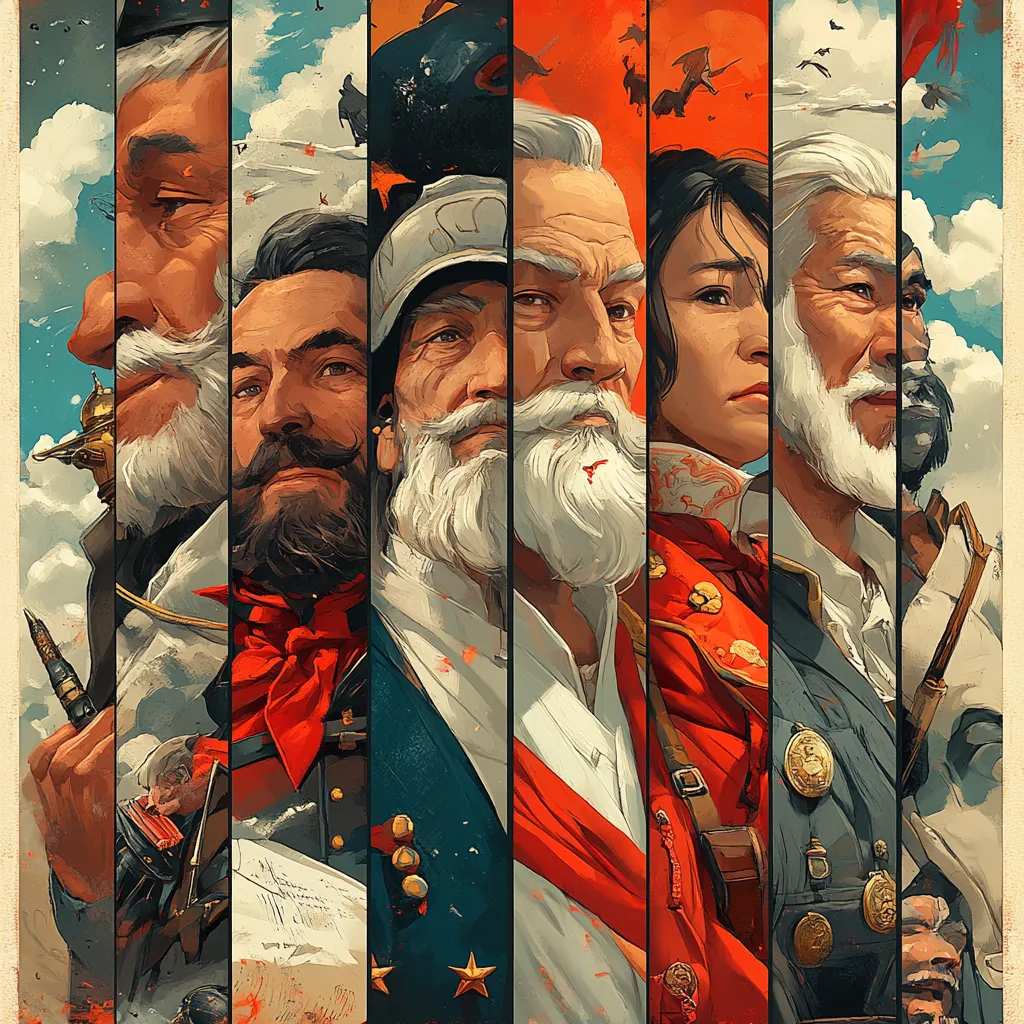
Introducing Character Cards!

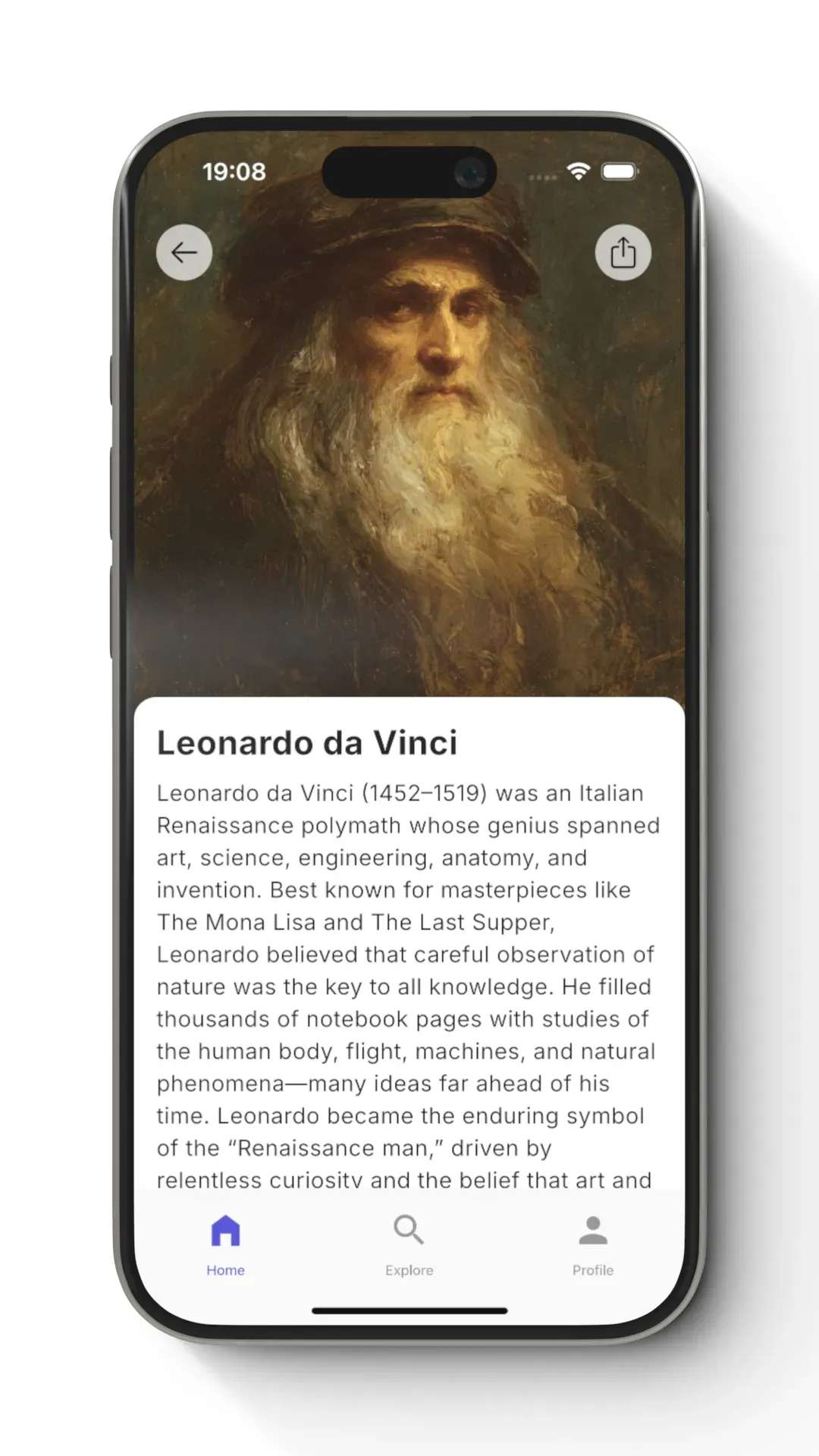
Alongside the growing collection of stories and story packs, I've added a feature I'm really excited about: Character Cards.
What are Character Cards?
Character Cards are designed for those moments when a story sparks your curiosity and you want to know more about the person behind it. Each card steps outside the main story and gives you a thoughtfully written overview of a historical figure — who they were, why they matter, and what makes them fascinating beyond the specific event you just read about.
For example, if you're reading a story about the Renaissance and Leonardo da Vinci comes up, his Character Card might explore his work as a painter, inventor, anatomist, and engineer. It gives you the broader picture without requiring you to leave the app or fall down a Wikipedia rabbit hole.
Why I built this
One thing I noticed while using Chunks myself was that the most interesting part of many stories was the people. You'd read about a historical event and think "who actually was this person?" The story might mention them briefly, but there's so much more to know.
Character Cards solve that. They sit alongside stories as a companion feature — you're never forced to read them, but when curiosity strikes, they're right there. Each card includes:
- A written overview covering their life, achievements, and historical significance
- Key facts like birth/death dates, nationality, and what they're known for
- External links pointing to trusted, fact-checked articles and resources for deeper reading
The external links are important to me. I want Chunks to be a starting point for learning, not a dead end. If a Character Card about Marie Curie makes you want to read more about her Nobel Prize-winning research, you should be able to do that in one tap.
Who's included?
The Character Card library is growing alongside the story library. Right now you'll find cards for figures across history, philosophy, science, literature, and mythology — from Einstein and Gandhi to Churchill, Cleopatra, and Odysseus. As new stories are added, new Character Cards follow.
Try it out
Character Cards are available now in the latest version of Chunks on iOS and Android. I'm excited for you to try them, and as always I'm happy to hear feedback at hello@chunks.app.
Thanks,
Andy.

Founder of Chunks Microlearning. Software engineer with 15 years of experience.


 Download on iOS
 Download on Android