
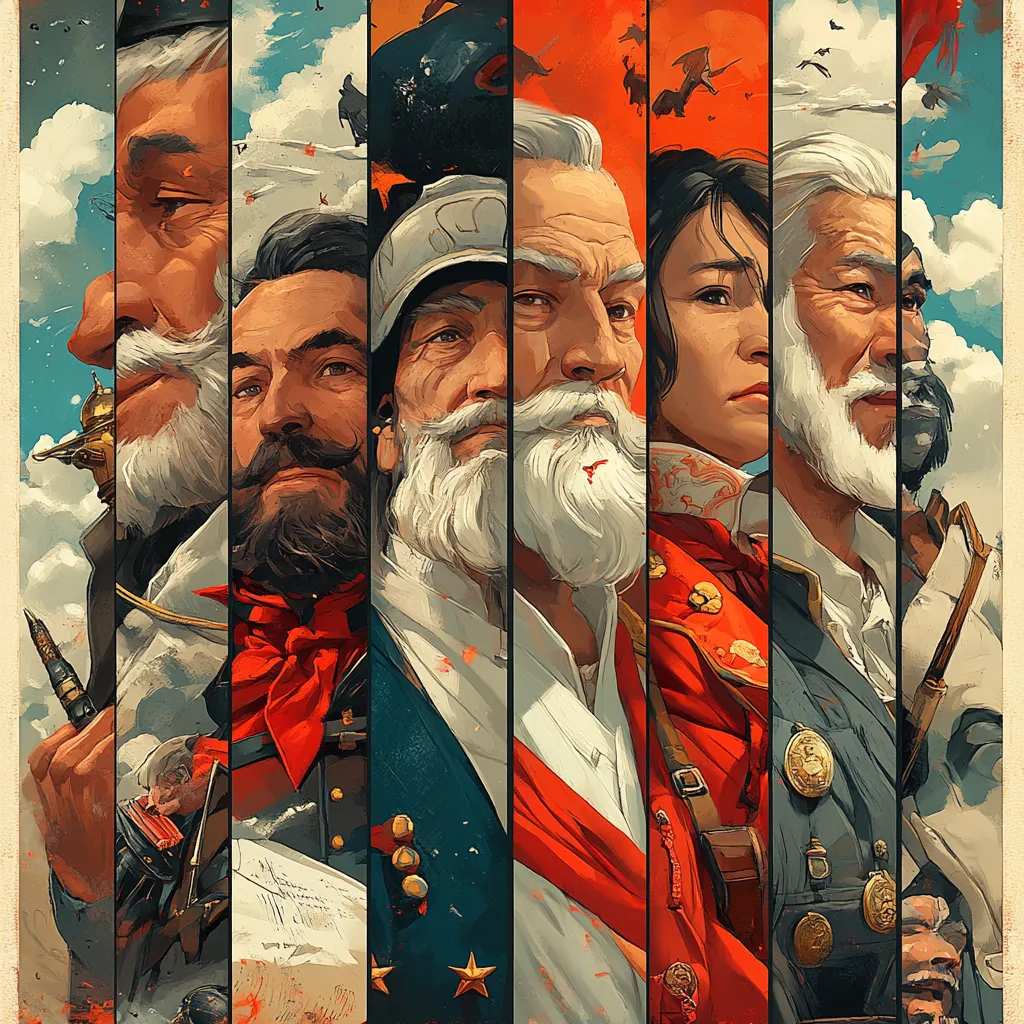
What Were the Janissaries? Meaning, History & Ottoman Elite Corps


On 15 June 1826, in an event the Ottomans called the Vaka-i Hayriye — the "Auspicious Incident" — Sultan Mahmud II destroyed the Janissary corps, the most feared infantry force in Europe for nearly four centuries. Two hundred years on, the Janissaries remain one of history's strangest and most consequential military institutions: an elite army built entirely from enslaved Christian boys, who rose to become kingmakers and were ultimately wiped out by the very dynasty they were created to serve.
This is the story of who the Janissaries were, how they were recruited, why they became so powerful, and how their 200-year-old destruction reshaped the Ottoman Empire.
Who the Janissaries Were
The Janissaries (from the Turkish yeniçeri, meaning "new soldier") were the elite standing infantry of the Ottoman Empire. They were created in the 14th century, probably under Sultan Murad I around the 1360s–1380s, at a time when most armies in Europe and the Middle East were temporary feudal levies that disbanded after each campaign.
That was the first thing that made the Janissaries extraordinary: they were a professional standing army, paid a regular salary, drilled year-round, and loyal directly to the Sultan rather than to regional lords. While European kings were still relying on knights who served a fixed number of days a year, the Ottomans had a permanent, disciplined, full-time fighting force. It is one of the main reasons the empire expanded so rapidly across the Balkans and the Mediterranean.
They were also among the earliest infantry forces to adopt firearms on a large scale. By the 15th and 16th centuries Janissaries were using muskets and were instrumental in Ottoman victories from the conquest of Constantinople in 1453 to the long wars against the Habsburgs.
The Devshirme: An Army of Enslaved Children
The most unsettling feature of the Janissary system was how it was staffed. The corps was recruited through the devshirme — a "blood tax" levied on the empire's Christian subjects, mainly in the Balkans.
Roughly every few years, Ottoman officials would travel through Christian villages and take a quota of boys, typically between the ages of 8 and 18. The boys were converted to Islam, taken from their families permanently, and put through years of rigorous training. The most capable were funnelled into the imperial administration — some rose to become provincial governors or even Grand Vizier, the empire's most powerful office. The rest became Janissaries.
By the logic of the time this was, paradoxically, also a route to power. A peasant boy taken in the devshirme could end up commanding armies or running a province — a degree of social mobility unavailable to almost anyone in contemporary Christian Europe. But it was mobility purchased through enslavement and forced conversion, and it was deeply resented by the families subjected to it.
Janissaries were technically the Sultan's slaves (kapıkulu, "servants of the Porte"). They were forbidden, in the early centuries, to marry, grow beards, or learn a trade. Their entire identity was the corps. That total dependence was the point: cut off from family, region, and faith of birth, they were meant to be loyal to nothing but the Sultan.
From Loyal Guard to Kingmakers
The system worked brilliantly — until it didn't. Over time, the very privileges that bound the Janissaries to the Sultan turned them into an independent political force.
As a paid, organised, armed body permanently stationed in the capital, the Janissaries held enormous leverage. By the 17th century they had won the right to marry and enrol their own sons, the ban on outside trades had eroded, and membership became a hereditary privilege that came with a salary and tax exemptions. Many "Janissaries" were now effectively shopkeepers drawing army pay, far more interested in protecting their perks than in fighting.
Worse, from the Sultan's point of view, they discovered they could remove rulers. A Janissary revolt — often signalled by the symbolic overturning of their cooking cauldrons — could topple a Grand Vizier or even depose and kill a Sultan. They engineered the murder of Sultan Osman II in 1622 and the overthrow of several others. For two centuries the corps acted less like an army and more like a praetorian guard that the throne feared. Repeated attempts to reform or modernise the military ran straight into Janissary resistance, because reform threatened their privileges.
The Auspicious Incident of 1826
By the early 19th century the Ottoman Empire was falling dangerously behind the modernising armies of Europe and Russia, and the Janissaries — now a bloated, mutinous, militarily obsolete institution — were the single greatest obstacle to reform. An earlier reforming Sultan, Selim III, had tried to build a modern "New Order" army and was deposed and killed by the Janissaries for it in 1807–08.
Sultan Mahmud II learned from that. He spent years quietly preparing — building a loyal modern artillery corps and cultivating allies among the religious establishment and the wider population, who had grown to despise the Janissaries.
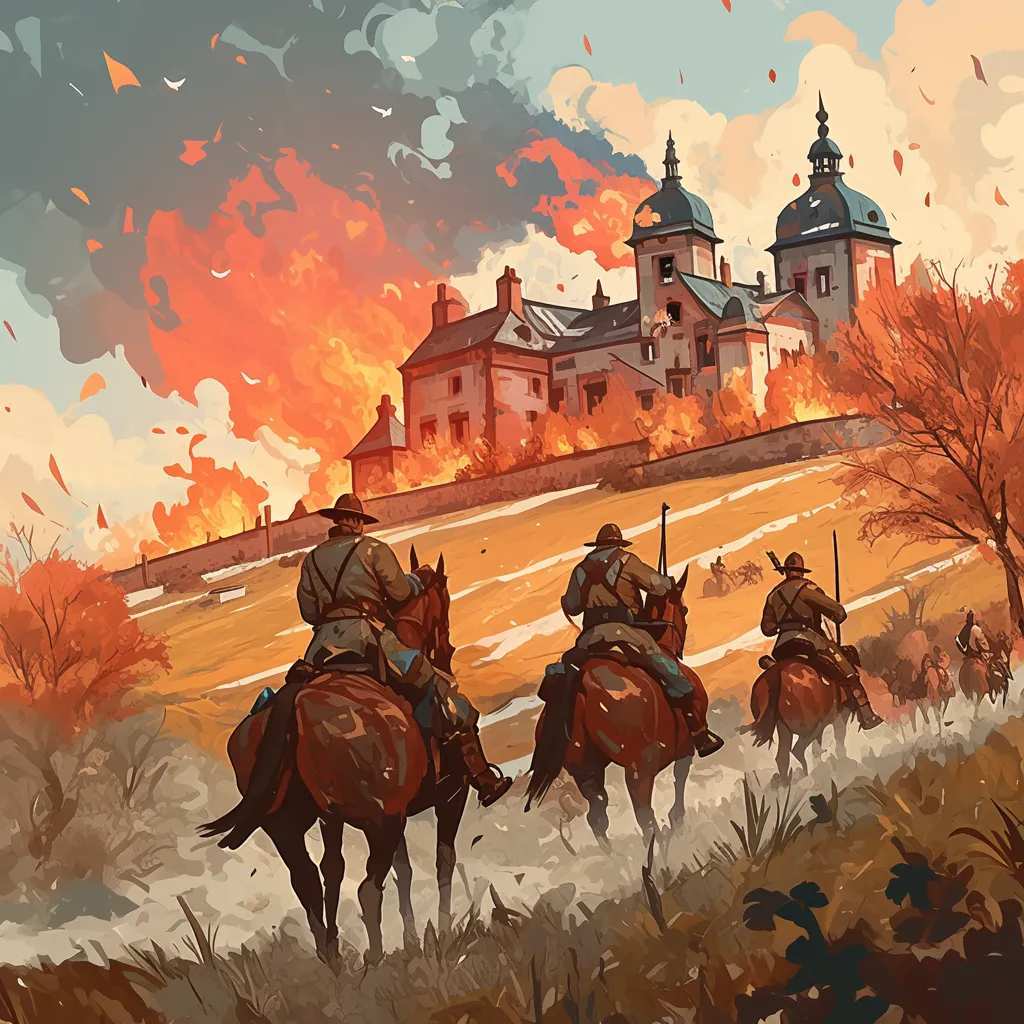
In June 1826 he announced the formation of a new, European-style army. The Janissaries revolted as expected, on the night of 14–15 June, overturning their cauldrons and marching on the palace. This time Mahmud was ready. He unfurled the Prophet's sacred banner, rallying the populace against the rebels, and turned his artillery on the Janissary barracks in Istanbul. Thousands were killed — many burned in their barracks or executed in the days that followed. The corps was formally abolished, its name banned, and even the Bektashi dervish order associated with it was suppressed.
The Ottomans called it the Vaka-i Hayriye, the "Auspicious Incident," because to the reforming state it was a liberation. After 200 years of being held hostage by its own elite soldiers, the dynasty was finally free to modernise.
What the Janissaries' End Changed
The destruction of the Janissaries cleared the way for the Tanzimat — the sweeping 19th-century Ottoman reforms of the military, law, and administration. A new conscript army was built along European lines. In that narrow sense, 1826 was indeed auspicious.
But the corps' violent end also removed an institution that had, for centuries, been central to how the empire actually functioned. Their elimination is often read as a symbol of the Ottoman Empire's long, painful attempt to reinvent itself in the face of European power — a transformation that ultimately came too late to save the empire, which collapsed less than a century later after the First World War.
The Janissaries sit at the intersection of so much of what makes history compelling: institutional ambition, the corrupting drift of unchecked power, and the long shadow that a single decision can cast. If you enjoy this kind of story, you might also like our pieces on why the Roman Empire fell and who Genghis Khan really was, or the wider question of how to learn history effectively.
Frequently Asked Questions
Who were the Janissaries?
The Janissaries were the elite standing infantry of the Ottoman Empire, created in the 14th century. They were among the first professional, full-time, salaried armies in the world and were notable for adopting firearms early. Uniquely, they were recruited as enslaved Christian boys through the devshirme system, converted to Islam, and trained to be loyal directly to the Sultan.
What was the devshirme?
The devshirme was the Ottoman "blood tax" — a system of periodically taking Christian boys, mainly from the Balkans, converting them to Islam, and training them for service to the state. The most talented entered the imperial administration; the rest became Janissaries. It was simultaneously a form of enslavement and, paradoxically, one of the few routes to high social mobility in the empire.
Why were the Janissaries disbanded?
By the 19th century the Janissaries had become a hereditary, privileged, and militarily obsolete force that repeatedly blocked reform and even deposed sultans. They were the main obstacle to modernising the Ottoman army. Sultan Mahmud II destroyed the corps in 1826 to clear the way for a modern European-style military.
What was the Auspicious Incident?
The Auspicious Incident (Vaka-i Hayriye) was the violent suppression of the Janissary corps by Sultan Mahmud II on 15 June 1826. When the Janissaries revolted against the creation of a new army, Mahmud rallied the population and used artillery to crush them, killing thousands and formally abolishing the corps after nearly 400 years.
Why was it called "auspicious"?
It was called auspicious from the perspective of the Ottoman state, which had been effectively held hostage by the mutinous Janissaries for two centuries. Their destruction freed the dynasty to pursue the military and administrative reforms it believed were essential for survival — so the regime framed the bloody event as a fortunate, even providential, turning point.

Founder of Chunks Microlearning. Software engineer with 15 years of experience.



 Download on iOS
 Download on Android