
Why Microlearning Works (and Why I Built Chunks Around It)

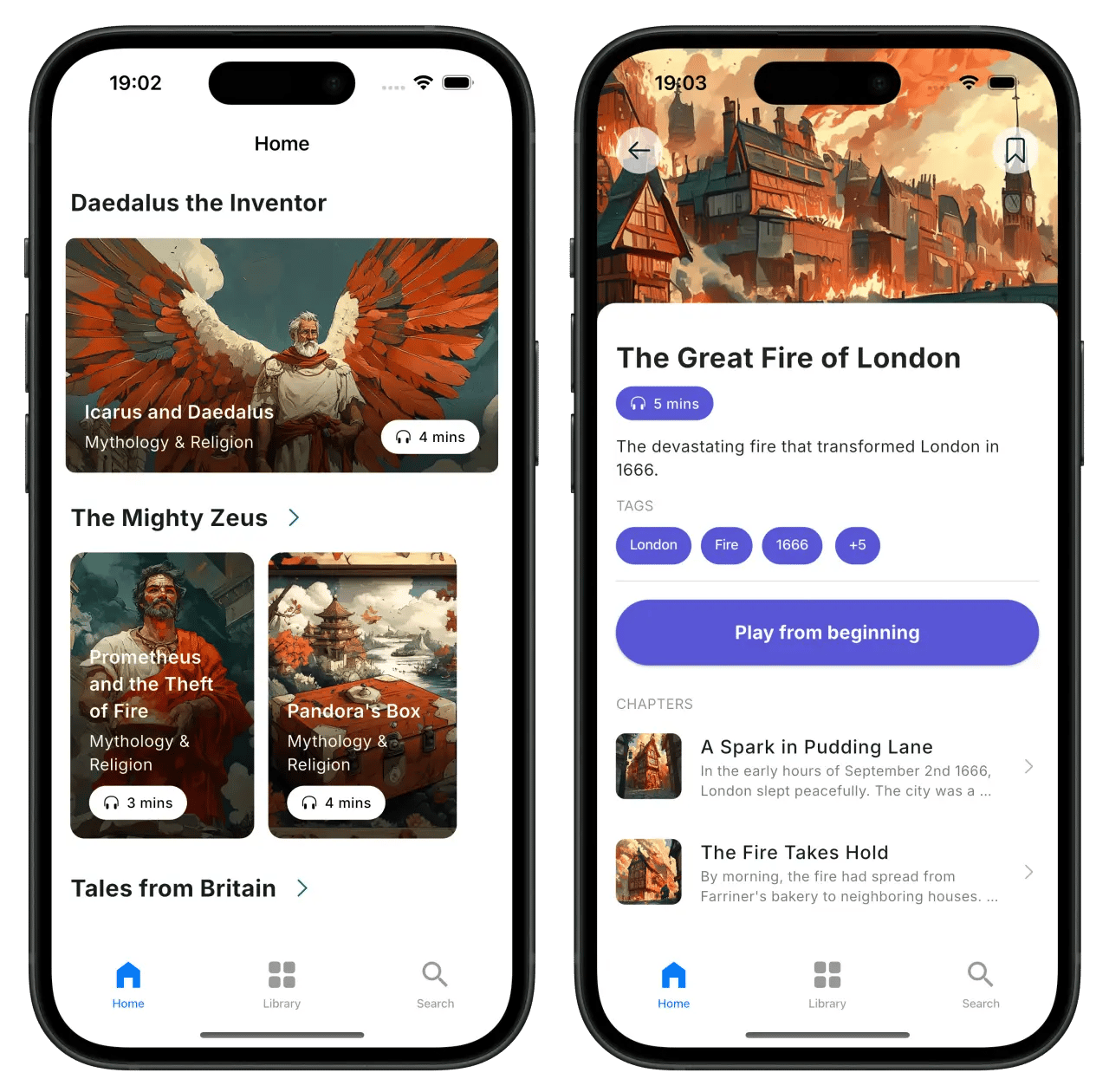
As I mentioned in the previous blog post, when I started working on Chunks, the whole idea was simple: I wanted a way to learn something meaningful in the tiny spaces of my day. The same spaces I usually filled with doomscrolling. Five minutes waiting for my coffee to brew, or the ten minutes I spend on the tram. Those moments add up.
That's where microlearning comes in. It turns small pockets of time into learning
opportunities.
Initially, I made it for myself as a tool to use, not really thinking of it being a product that I should share with others. After a while, and after getting good feedback from friends and family, I started wondering: is there actually scientific evidence behind this? Turns out, there really is.
What is microlearning?
Microlearning is an educational approach that delivers content in short, focused segments — typically between 3 and 10 minutes. Instead of sitting through a 45-minute lecture or reading a full textbook chapter, you learn one concept at a time in a format designed to fit into your day.
It's not a new idea. The concept builds on decades of research into how memory works, particularly the spacing effect first described by psychologist Hermann Ebbinghaus in the 1880s. Ebbinghaus found that information is retained more effectively when learning is distributed over time rather than crammed into a single session.
What's changed is that smartphones have made microlearning practical in a way it never was before. You always have a learning tool in your pocket.
The research behind it
A 2023 systematic review by Pratama et al., published in the Journal of Mathema, analysed multiple studies on microlearning effectiveness and found that "microlearning can significantly improve both learning outcomes and retention, with a surprisingly strong effect size." The review examined studies across different educational contexts and consistently found that shorter, focused lessons outperformed traditional formats for knowledge retention.
(Read the full study)
Another study by Siregar et al. (2023), published in the East Asian Journal of
Multidisciplinary Research, highlights something I personally love about this approach: microlearning naturally fits lifelong and informal learning. The researchers note that microlearning is particularly effective for self-directed learners because it reduces cognitive load — the amount of mental effort required to process new information. When you're learning in small chunks, your brain isn't overwhelmed, and you're more likely to actually remember what you read. (Read the full study)
There's also strong evidence from corporate training research. A 2018 study published in the Journal of Applied Psychology by Carpenter, Witherby, and Tauber found that spacing learning across multiple short sessions improved long-term retention by up to 20% compared to massed practice (cramming). This aligns with what I've seen anecdotally — people who use Chunks for a few minutes daily tell me they remember stories weeks later.
Why short sessions work better than long ones
There are a few reasons why 5-10 minute sessions tend to outperform longer study periods:
Attention span is finite. Research consistently shows that sustained attention starts declining after about 10-15 minutes of focused activity. A widely cited study by Bradbury (2016) in Academic Medicine found that student attention during lectures drops significantly after the first 10 minutes. Microlearning works with your attention span instead of fighting against it.
Cognitive load matters. Cognitive Load Theory, developed by educational psychologist John Sweller, explains that working memory has a limited capacity. When you try to absorb too much information at once, you exceed that capacity and retention drops. By breaking content into smaller pieces, microlearning keeps cognitive load manageable.
Completion is motivating. There's a psychological benefit to finishing something. When you complete a short chapter, you get a small sense of accomplishment that motivates you to come back. This is much harder to achieve with a 2-hour course that you abandon halfway through.
Repetition across days beats repetition in one sitting. The spacing effect is one of the most robust findings in cognitive science. Reviewing material across multiple days creates stronger memory traces than reviewing the same material multiple times in one session.
Microlearning vs. traditional learning
This isn't about replacing formal education. University courses, textbooks, and deep study all have their place. Microlearning fills a different gap — the informal, self-directed learning that happens outside of structured settings.
Think of it this way: you're probably not going to sit down for a 3-hour study session on the California Gold Rush after work. But you might read or listen to a 7-minute story about it while waiting for your food to arrive. And you'll probably remember it.
The most effective learning strategies often combine both approaches. A 2021 meta-analysis by Baumgartner, Kolling, and Averell, published in Psychological Bulletin, found that distributed practice (learning spread across time) consistently produces better long-term retention than massed practice, regardless of the subject matter or the age of the learner.
Why I built Chunks around this
When I started building Chunks, I wasn't thinking about learning science. I just wanted to stop wasting time on my phone and replace it with something better. But as I dug into the research, I realised the format I'd chosen — short, self-contained stories broken into chapters — aligns almost perfectly with what the evidence says works.
Each story in Chunks is broken into chapters that are about 1-2 minutes long, with the whole story usually around 5-10 minutes. You can finish one on a commute, in a waiting room, or before bed. The content spans history, philosophy, literature, science, art, music, nature, and health — all topics where a single well-told
story can genuinely change how you see the world.
Every story is personally researched and reviewed by me before it gets published. I use AI as a drafting tool, but the fact-checking, editing, and quality control is manual. If education is the goal, accuracy matters.
The doomscrolling trade-off
The average person spends over 2 hours a day on social media, according to data from DataReportal's 2024 Global Overview Report. Much of that time is passive scrolling — content that doesn't inform, challenge, or stick with you.
If Chunks can replace even 10-15 minutes of that daily scrolling with something intentional, that's roughly 90 hours of learning per year. That's enough time to read about dozens of historical events, explore philosophical ideas you've never encountered, or understand scientific concepts you've always been curious about.
That trade-off is what motivated me to build Chunks, and it's what keeps me working on it.
If you haven't tried the app yet, you can download it on iOS and Android. And as always, if you have ideas for topics or features, feel free to email me at hello@chunks.app.
Thanks for reading,
Andy

Founder of Chunks Microlearning. Software engineer with 15 years of experience.

 Download on iOS
 Download on Android