
In the 5th century BCE, Athens stands at the peak of its power. Its streets echo with debate and drama, its temples shine with new marble. Democracy blooms, and the arts flourish in bustling marketplaces and on grand stages. Yet, among this brilliance, much of Athenian life revolves around reputation, public speaking, and persuasion. Professional teachers called Sophists gain fame by training citizens in the art of argument, often valuing the ability to convince over the search for truth. Wisdom is linked to status, gold, or heritage, and many believe that public approval marks the wise man. There is philosophy, yes, but it centers on speculating about nature; earth, water, fire, not on how to live a good or just life. Few people question their beliefs. This is Athens; restless, confident, and not yet ready for a man who will turn its values inside out by simply asking, “Why?”
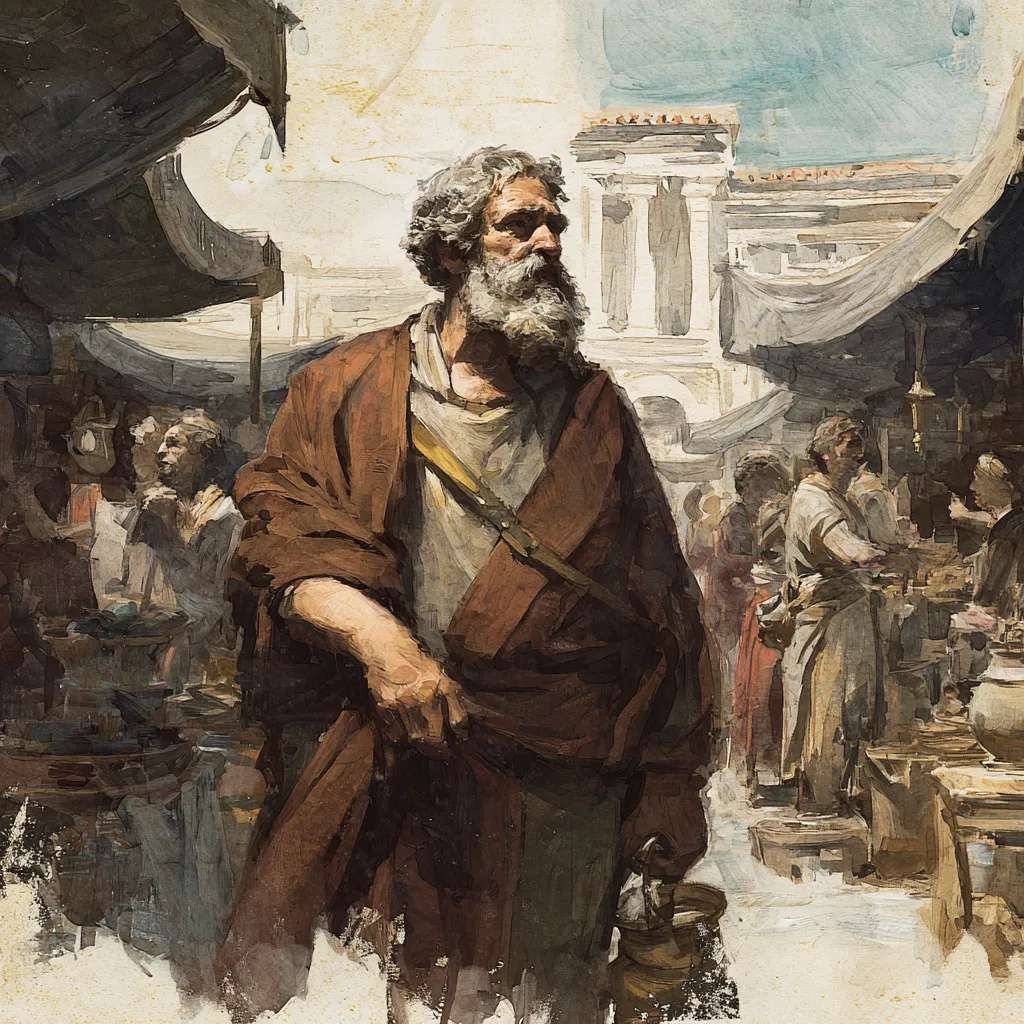
Socrates — The Man Who Taught the World to Question
Discover how Socrates challenged Athens, changed philosophy, and dared all to question.
Athens Before Socrates
Frequently Asked Questions
What was the Socratic Method and how did it work?
The Socratic Method was a form of dialogue where Socrates would ask a series of probing questions to help people examine their beliefs and discover contradictions in their thinking. Rather than providing answers directly, he would guide students to reach conclusions through systematic questioning. This method revealed the gaps in people's knowledge and encouraged deeper critical thinking about fundamental concepts like justice, virtue, and truth.
Why did Socrates claim that he knew nothing despite being considered the wisest man in Athens?
Socrates famously declared 'I know that I know nothing' after the Oracle of Delphi proclaimed him the wisest man in Athens. Through conversations with politicians, poets, and craftsmen, he discovered that while they claimed expertise, they actually knew very little about the fundamental questions they discussed. Socrates realized his wisdom came from recognizing his own ignorance, unlike others who falsely believed they possessed knowledge they did not have.
What charges led to Socrates' trial and execution in 399 BCE?
Socrates was charged with corrupting the youth of Athens and impiety, specifically not believing in the city's gods and introducing new divinities. His constant questioning of authority figures and traditional beliefs had made him enemies among powerful Athenians. Despite having the opportunity to propose exile as an alternative punishment, Socrates chose to drink poison hemlock rather than abandon his philosophical mission.
Learn more
To continue the story, download the Chunks Microlearning app
 Download on iOS
 Download on Android