
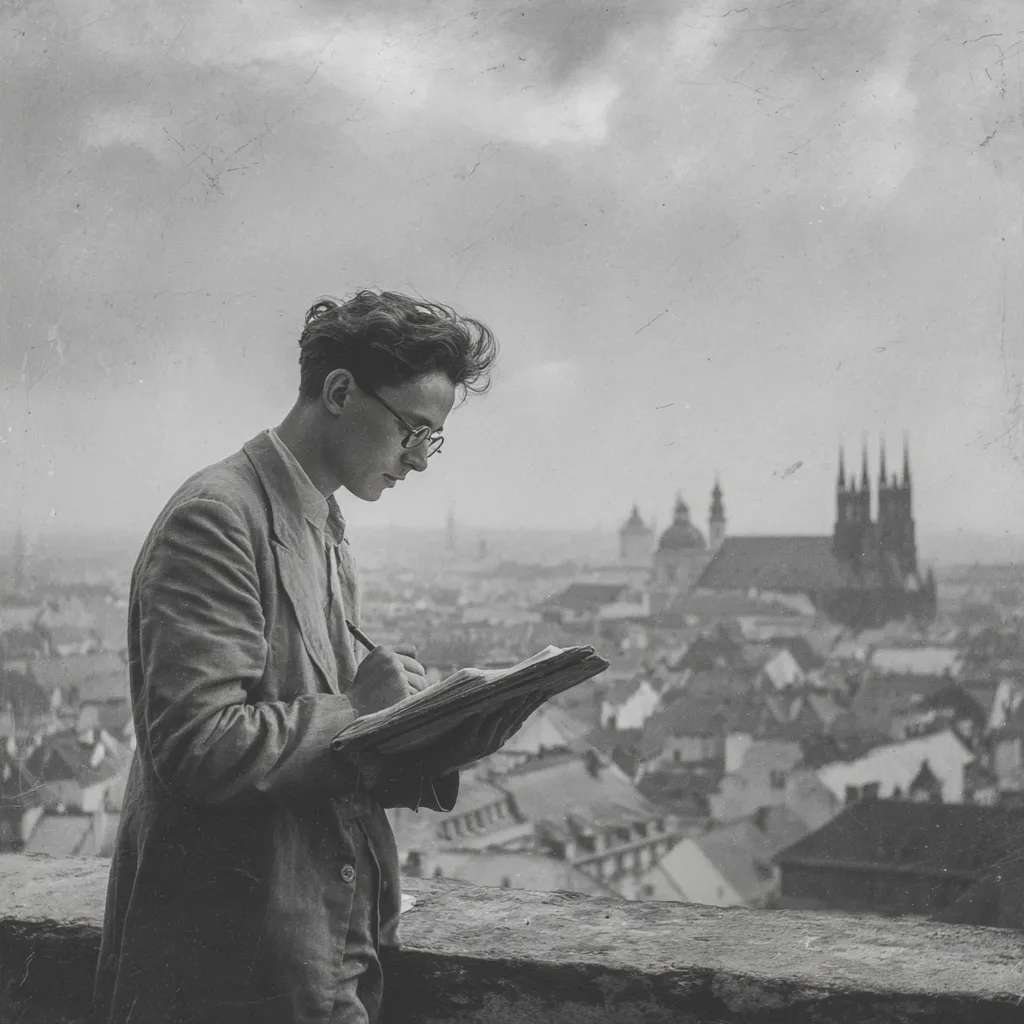
Viktor Frankl was born in 1905 in Vienna, Austria, to a Jewish family deeply rooted in culture and learning. From a young age, Frankl was captivated with the big questions of human existence. He wanted to understand what made life meaningful, what motivated people to act, and how they coped with suffering. Frankl’s curiosity led him to study medicine and psychiatry at the University of Vienna. During his studies, he corresponded with Sigmund Freud, the founder of psychoanalysis, and worked closely with Alfred Adler, another pioneer of psychology. However, Frankl often found himself at odds with their theories. Freud said humans were mainly driven by pleasure. Adler argued people sought power. Frankl disagreed with both. He believed that the core drive for humans was neither pleasure nor power, but a deep-seated will to meaning. Little did he know, his quest to understand human purpose would not only define his life; it would help millions find light in their darkest moments.
Viktor Frankl and Meaning in Suffering
Discover Viktor Frankl's journey from Vienna to Auschwitz and his quest for meaning.
A Young Doctor in Vienna
Frequently Asked Questions
What is logotherapy and how did Viktor Frankl develop this psychological approach?
Logotherapy is a form of psychotherapy developed by Viktor Frankl that focuses on finding meaning and purpose in life as the primary human drive. Frankl developed this approach before and during his imprisonment in Nazi concentration camps, observing that those who found meaning in their suffering were more likely to survive. The therapy emphasizes that humans can endure almost any suffering if they can find purpose in it.
How did Viktor Frankl's experiences in Nazi concentration camps influence his psychological theories?
Frankl's imprisonment in Auschwitz and other concentration camps from 1942 to 1945 provided him with profound insights into human nature under extreme conditions. He observed that prisoners who maintained a sense of purpose and meaning were more resilient and had better survival rates. These experiences validated and refined his logotherapy approach, leading to his famous principle that the last human freedom is the ability to choose one's attitude in any given circumstances.
What was Viktor Frankl's professional background before his imprisonment during World War II?
Viktor Frankl was a young neurologist and psychiatrist practicing in Vienna before World War II. He had already begun developing his ideas about meaning-centered therapy and had established himself in the medical community. Frankl was working with patients and formulating his psychological theories when the Nazi regime forced him and his family into concentration camps in 1942.
Learn more
To continue the story, download the Chunks Microlearning app
 Download on iOS
 Download on Android