
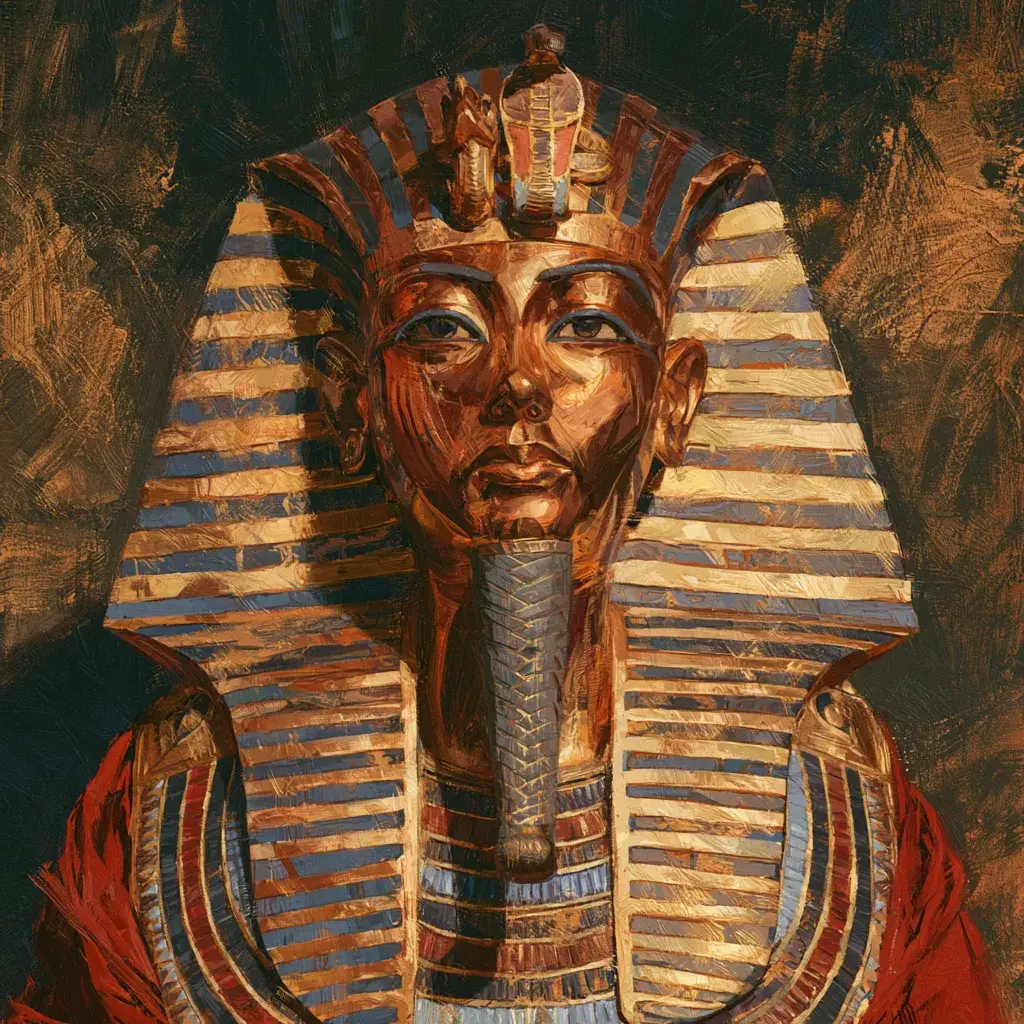
In the 14th century BCE, Egypt was in turmoil. The pharaoh Akhenaten had abandoned the old gods to worship only the sun disk, the Aten. His son was born Tutankhaten, meaning ‘Living Image of the Aten.’ The boy belonged to the powerful 18th Dynasty, but his father’s revolution had left the kingdom fractured. He ascended to the throne at approximately age nine, after the death of Akhenaten and a brief successor. The young king inherited a nation where traditional temples were neglected and, according to a later decree, ‘the gods turned their backs upon this land.’ An entire kingdom’s fate rested on the shoulders of a child. How would he restore order to a land in chaos?
Tutankhamun: The Boy King
The life and death of Tutankhamun, the boy pharaoh who restored Egypt's old gods, and Howard Carter's 1922 discovery of his nearly intact tomb in the Valley of the Kings.
Chapter 1
The Sun King's Son
0:47
People in this story
Part of
Frequently Asked Questions
Was King Tut murdered?
No. While a 1968 X-ray sparked a murder theory, a 2005 CT scan proved the skull fracture happened after death. Modern analysis suggests he died from complications of a broken leg and a severe case of malaria.
Why is Tutankhamun's tomb so famous?
His tomb, KV62, was discovered almost completely intact, unlike most other royal tombs which were looted in antiquity. It contained 5,398 artifacts, providing an unprecedented, detailed record of Egyptian royal life.
Is the 'Curse of the Pharaohs' real?
No. The curse was a media sensation following the death of Lord Carnarvon from an infected mosquito bite. A 2002 scientific study found no difference in lifespan for those who entered the tomb, and the lead archaeologist, Howard Carter, lived for 16 more years.
To continue the story, download the Chunks Microlearning app
Or get it straight away:
 Download on iOS
 Download on Android