
The legendary Trojan War began not on a battlefield, but at a wedding. When Eris, the goddess of discord, tossed a golden apple inscribed 'for the fairest' among the guests, three goddesses claimed it: Hera, Athena, and Aphrodite. Zeus, king of the gods, refused to choose and instead delegated the task to Paris, a Trojan prince. Each goddess offered a bribe: Hera promised vast power, Athena offered wisdom in war, and Aphrodite promised him the love of the world’s most beautiful woman. According to the ancient epic the Cypria, Paris chose Aphrodite. This single act won him a queen, but earned his city of Troy the unending hatred of two powerful goddesses.
The Trojan War
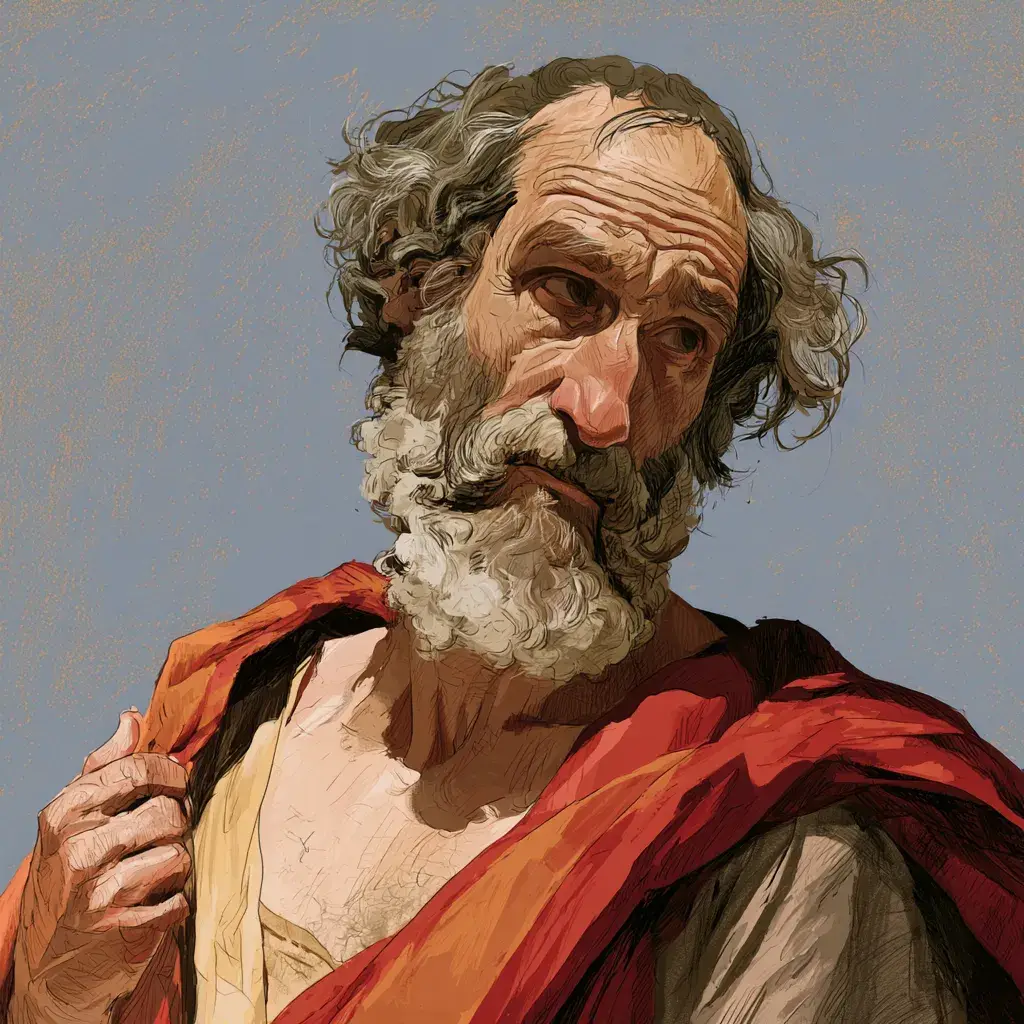
The Trojan War, a timeless tale of pride and fate, began when the prince of Troy, Paris, awarded a golden apple to the goddess Aphrodite.
Chapter 1
The Golden Apple
0:45
People in this story
Part of
Frequently Asked Questions
Did the Trojan War really happen?
Evidence suggests a historical basis. In the 1870s, excavations at Hisarlik in Turkey revealed a city matching Homer's descriptions of Troy. The layer known as Troy VIIa shows signs of a violent siege and fire around 1180 BCE, which aligns with the legendary timeframe.
What is the Iliad about?
Homer's Iliad does not cover the entire war. It focuses on a few weeks in the tenth and final year, centered on the rage of the Greek hero Achilles. The epic begins with his dispute with King Agamemnon and ends with the funeral of the Trojan hero Hector.
How did the Trojan War end?
The war ended with the trick of the Trojan Horse, a ruse devised by the Greek hero Odysseus. The Greeks pretended to sail away, leaving a giant wooden horse. The Trojans brought it into their city, allowing hidden Greek warriors to emerge at night and open the gates.
Learn more
To continue the story, download the Chunks Microlearning app
Or get it straight away:
 Download on iOS
 Download on Android