
In the mid-1700s, life moved at the pace of seasons and sunlight. Most people lived in small villages, working the land as their ancestors had for centuries. Farmers used simple tools - plows pulled by oxen, scythes to cut grain, and their own strong backs. Craftsmen like blacksmiths, weavers, and carpenters made goods by hand in small workshops. Families often worked together, spinning wool or weaving cloth in their homes during long winter evenings. Transportation was slow - horses and sailing ships carried goods across great distances. People rarely traveled far from where they were born. This was a world powered by muscle, wind, and water. But beneath this peaceful surface, new ideas were stirring. Inventors and thinkers were beginning to imagine machines that could do the work of many hands.
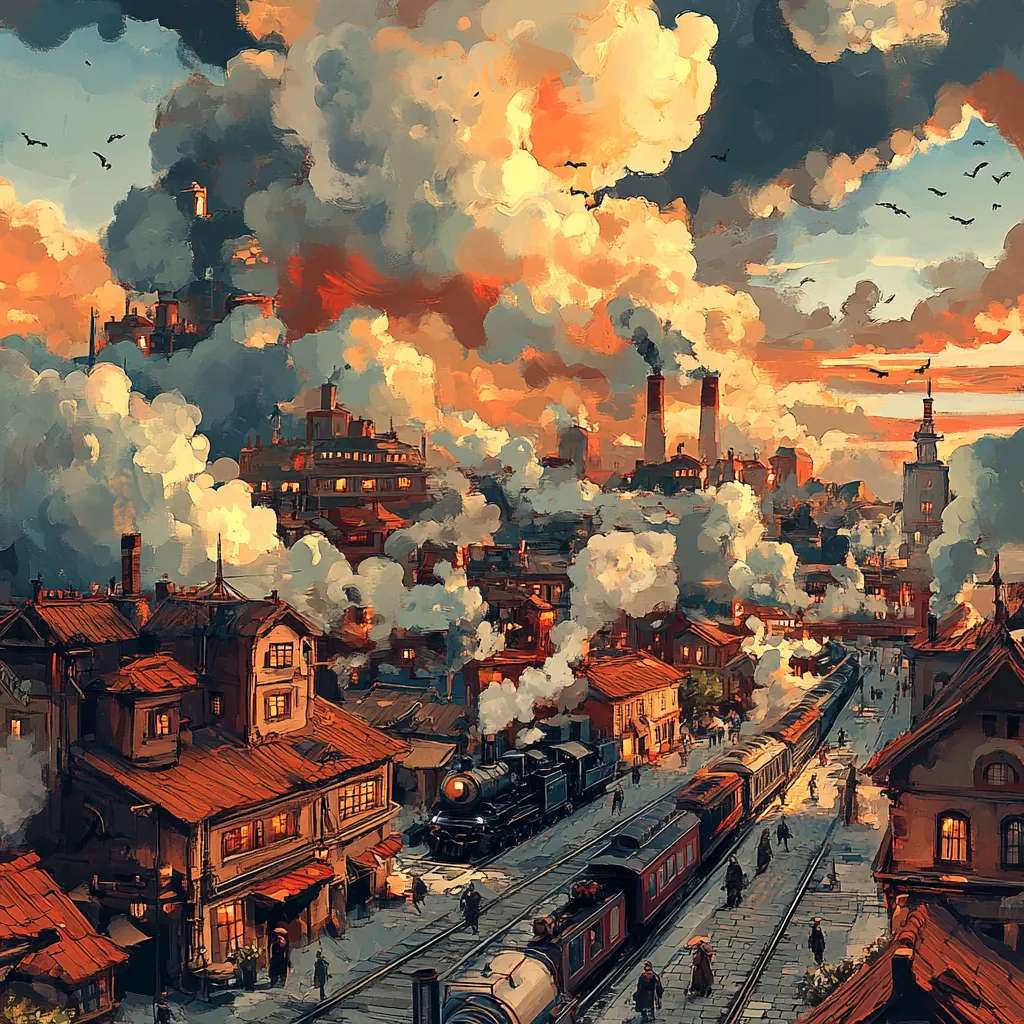
The Industrial Revolution
The transformation of society from farming to factories, changing the world forever through steam, steel, and human ingenuity.
Before the Machines
Frequently Asked Questions
What were the main technological innovations that drove the Industrial Revolution?
The Industrial Revolution was powered by several key innovations including the steam engine, which provided reliable mechanical power for factories and transportation. Iron and steel production techniques were revolutionized, enabling the construction of railways, bridges, and machinery. The development of textile machinery like the spinning jenny and power loom transformed manufacturing from hand production to mechanized processes.
How did the Industrial Revolution change where and how people lived?
The Industrial Revolution caused a massive shift from rural agricultural communities to urban industrial centers. People moved from farms to cities to work in the new factories, leading to rapid urbanization and the growth of industrial towns. This transformation changed family structures, work patterns, and social relationships as people adapted to factory schedules and city life.
What role did railways play in the Industrial Revolution?
Railways were crucial to the Industrial Revolution, earning the nickname 'iron horses' for their transformative power. They enabled the rapid transport of raw materials to factories and finished goods to markets across vast distances. Railways also facilitated the movement of people, connecting rural areas to industrial centers and creating a network that supported economic growth and social change.
Learn more
To continue the story, download the Chunks Microlearning app
 Download on iOS
 Download on Android