
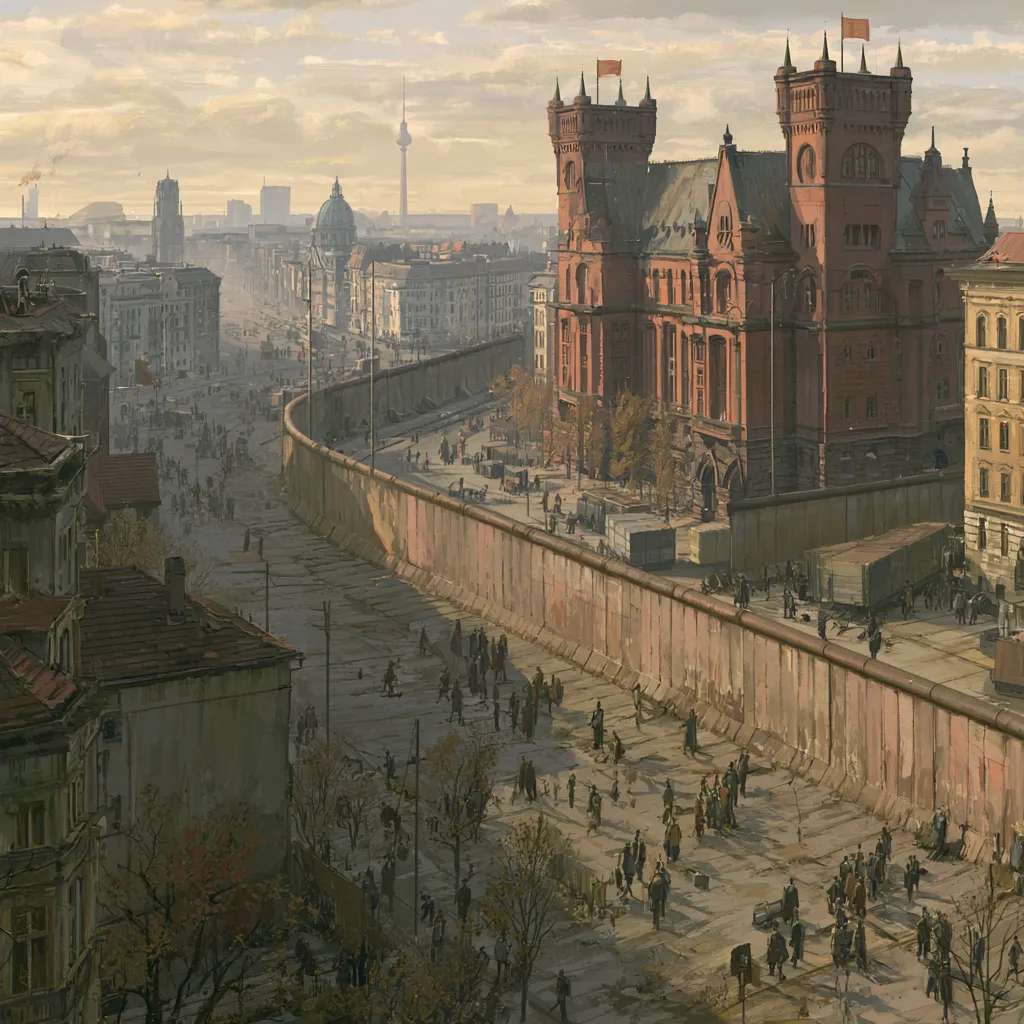
Berlin, 1961. Overnight, a city became a symbol of division. Families were separated, and neighbors became strangers as East German authorities erected the Berlin Wall. It was more than just concrete and barbed wire. The Wall stood thirteen feet high and stretched for over ninety-six miles, slicing through neighborhoods, parks, and even graveyards. For many Berliners, it was a daily reminder of the Iron Curtain that split not just their city, but the world. On one side, West Berlin thrived as a beacon of democracy and freedom, supported by Western allies. On the other, East Berlin was under strict Soviet control, where life was defined by surveillance and shortages. The Wall wasn’t just a physical barrier. It was a powerful tool of propaganda and fear. Attempts to escape were met with dire consequences, but still, many tried. Some dug tunnels, others flew hot air balloons, risking everything for a chance at freedom. As years passed, the Wall became a canvas for protest, its gray surface marked by art and slogans that dared to dream of unity. The seeds of change had been planted.
The Fall of the Berlin Wall
Discover the dramatic events, people, and turning points behind the fall of the Berlin Wall in 1989.
A City Divided
Frequently Asked Questions
What caused the Berlin Wall to finally fall in 1989?
The Berlin Wall fell due to a combination of factors including mounting political pressure from East German citizens, economic difficulties in East Germany, and changing policies under Soviet leader Mikhail Gorbachev. On November 9, 1989, East German officials mistakenly announced immediate border openings during a press conference, leading thousands of citizens to rush to the wall and demand passage.
How long did the Berlin Wall divide the city and why was it built?
The Berlin Wall divided East and West Berlin for 28 years, from 1961 to 1989. East German authorities built the wall to stop the massive exodus of East Germans fleeing to West Berlin and the West, which was causing significant economic and political problems for the communist state.
What happened to Germany after the Berlin Wall came down?
After the fall of the Berlin Wall in November 1989, East and West Germany began the process of reunification. The two German states officially reunified on October 3, 1990, ending decades of division and creating a single, democratic Germany within the Western alliance.
Learn more
To continue the story, download the Chunks Microlearning app
Or get it straight away:
 Download on iOS
 Download on Android