
On July 14, 1518, in the city of Strasbourg, a woman known as Frau Troffea stepped out of her house onto a narrow cobblestone street and began to dance. With an expressionless face and no musical accompaniment, she kept up her silent, repetitive steps for six straight days until she finally collapsed from exhaustion. Her husband and neighbors watched on, bewildered, assuming it was some strange act of penance or that she was under a spell. They couldn't have known that this was just the beginning. Within days, dozens more would join her, seized by the same inexplicable compulsion. What had taken hold of Frau Troffea, and how far would it spread?
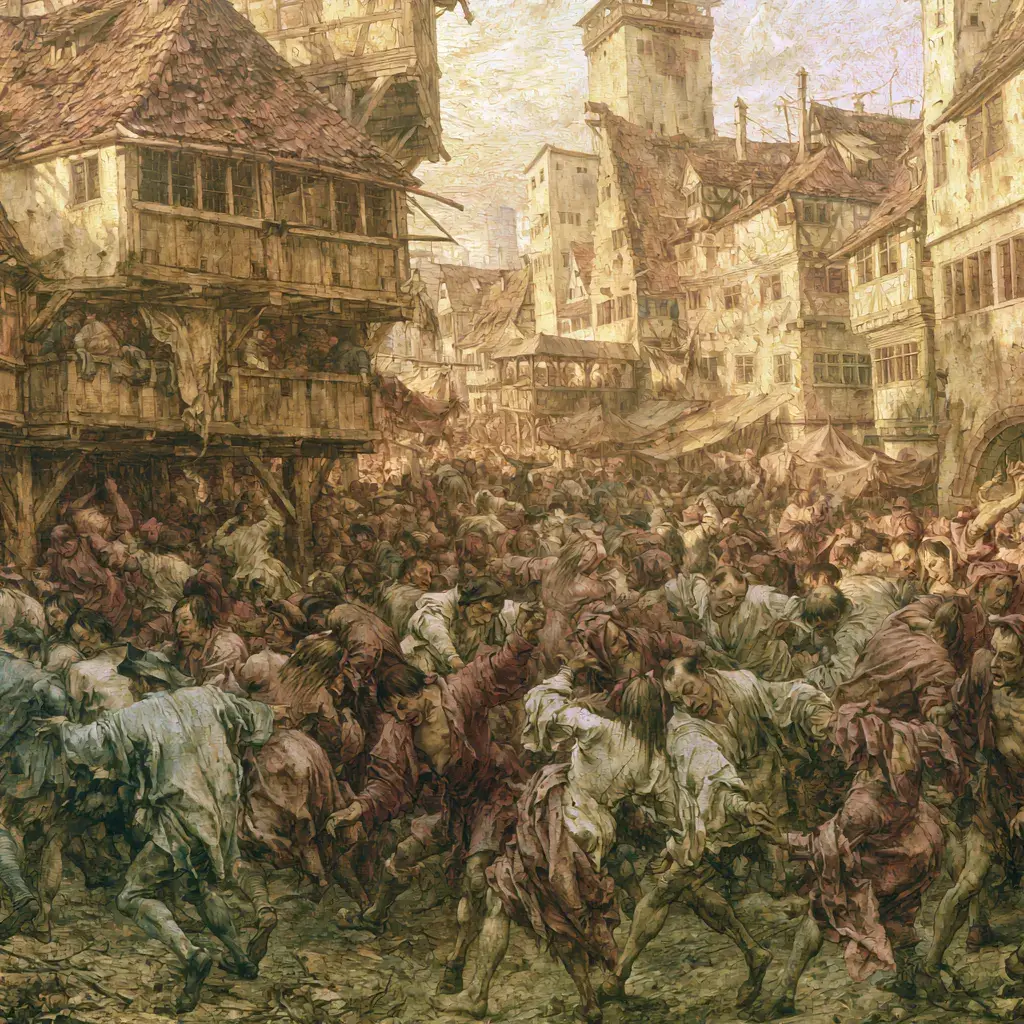
The Dancing Plague of 1518
The Dancing Plague of 1518: hundreds of people in Strasbourg danced for weeks, the city's strange cure, and how historians explain it today.
Chapter 1
The First Dancer
0:45
Frequently Asked Questions
What was the Dancing Plague of 1518?
It was a social phenomenon in Strasbourg where hundreds of people were seized by an uncontrollable urge to dance for weeks. The mania began with a single woman, Frau Troffea, in July 1518 and spread rapidly through the city.
Did people really die from the dancing plague?
While chronicles written decades later claimed up to fifteen people died per day, contemporary records from 1518 do not mention a single fatality. Modern historians believe the high death toll is likely a later embellishment to the story.
What caused the Dancing Plague?
Historian John Waller argues it was a case of mass psychogenic illness. He proposes that extreme stress from famine and disease, combined with a deep-rooted cultural fear of a dancing curse from St. Vitus, induced a collective trance state.
To continue the story, download the Chunks Microlearning app
Or get it straight away:
 Download on iOS
 Download on Android