
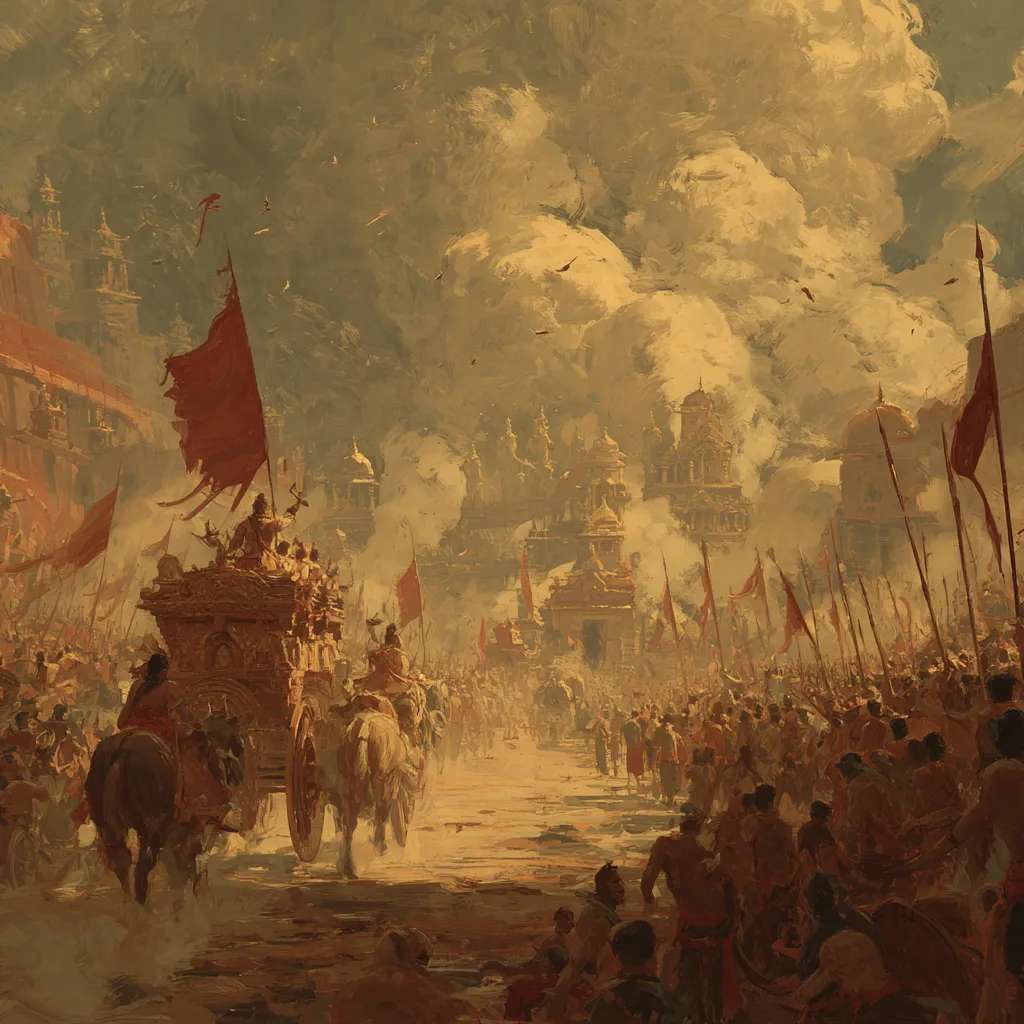
The Bhagavad Gita opens on the vast plains of Kurukshetra, where two mighty armies gather for battle. The air is tense, filled with the anticipation of war. In the midst of this chaos stands Arjuna, a great warrior and prince. As he surveys the battlefield, Arjuna sees friends, teachers, and family on both sides. His heart fills with doubt and sorrow. How can he fight against those he loves? He turns to his charioteer, Krishna, for guidance. Arjuna’s hands tremble, his bow slipping from his grip. He confesses his fears, feeling lost and overwhelmed by the moral conflict. Krishna listens patiently. The world seems to pause as Arjuna seeks answers to the deepest questions of duty, life, and righteousness. This moment of hesitation marks the beginning of a profound conversation that will shape not only the fate of the battle but also the spiritual destiny of countless seekers. The stage is set for wisdom to unfold.
The Bhagavad Gita
An engaging story journeying through the teachings, dilemmas, and wisdom of the Bhagavad Gita.
A Battlefield of Dilemma
Frequently Asked Questions
What is the main conflict that Arjuna faces in the Bhagavad Gita?
Arjuna faces a profound moral dilemma on the battlefield of Kurukshetra when he must fight against his own relatives, teachers, and friends in a great war. He becomes overwhelmed with doubt and despair about the righteousness of fighting, even though it is his duty as a warrior. This crisis of conscience leads him to seek guidance from Krishna, who serves as his charioteer and spiritual teacher.
What does Krishna teach about selfless action in the Bhagavad Gita?
Krishna teaches the concept of karma yoga, which emphasizes performing one's duties without attachment to the results or fruits of action. He explains that actions should be offered to the divine and performed as service rather than for personal gain. This path of selfless action allows individuals to fulfill their responsibilities while remaining spiritually detached and free from the bondage of desires.
How many main paths to spiritual realization are described in the Bhagavad Gita?
The Bhagavad Gita describes three primary paths to spiritual realization: karma yoga (the path of selfless action), bhakti yoga (the path of devotion), and jnana yoga (the path of knowledge and wisdom). Krishna explains that these paths are not mutually exclusive but can be combined according to an individual's temperament and circumstances. Each path ultimately leads to the same goal of self-realization and union with the divine.
Learn more
To continue the story, download the Chunks Microlearning app
 Download on iOS
 Download on Android