
In the early 1970s, Silicon Valley buzzed with the dreams of young inventors. Among them was Steve Jobs, a curious and passionate teenager from Mountain View, California. Jobs was fascinated by electronics, spending hours tinkering with gadgets in his parents’ garage. At high school, he befriended a shy and brilliant engineer named Steve Wozniak. The two Steves bonded over their love for technology, practical jokes, and a desire to change the world. Jobs was the visionary, always thinking big and dreaming of creating products that could shape the future. Wozniak, or "Woz," was the technical genius, capable of building almost anything out of spare parts. Together, they attended meetings at the Homebrew Computer Club, a gathering of hobbyists eager to build the first personal computers. The energy and optimism of this era laid the foundation for something extraordinary. It was here, in this vibrant community, that the idea for a new kind of computer—a personal computer for ordinary people—began to take root in their minds.
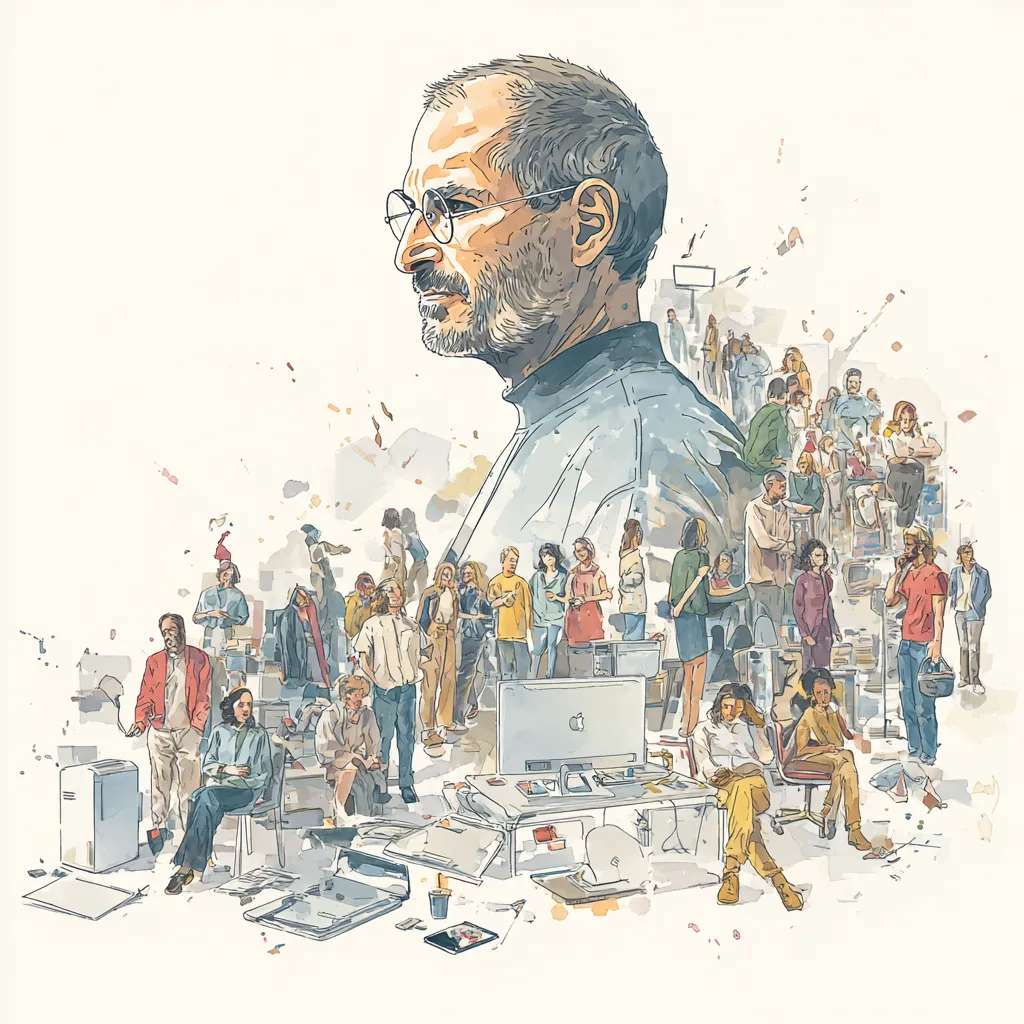
Steve Jobs and the Birth of Apple
Discover how Steve Jobs and his friends turned a garage dream into Apple, one of the world’s most influential tech companies.
Seeds of Innovation
Frequently Asked Questions
Where did Steve Jobs and his co-founders start Apple Computer?
Steve Jobs, along with Steve Wozniak and Ronald Wayne, founded Apple Computer in the Jobs family garage in Los Altos, California in 1976. The garage served as their initial workshop and headquarters where they assembled the first Apple I computers by hand.
What was Apple's first major commercial success after the Apple I?
The Apple II, launched in 1977, became Apple's first major commercial breakthrough. It was one of the first successful mass-produced microcomputers, featuring color graphics, sound capabilities, and a sleek plastic case that appealed to both hobbyists and mainstream consumers.
How did Steve Jobs transform Apple from a garage startup into a major technology company?
Jobs combined technical innovation with exceptional marketing vision and design sensibility. He focused on creating user-friendly products with elegant designs, established strong branding, and built a company culture centered on perfectionism and revolutionary thinking that distinguished Apple from other computer manufacturers.
Learn more
To continue the story, download the Chunks Microlearning app
 Download on iOS
 Download on Android