
Sigmund Freud was born in 1856 in the small town of Freiberg, which is now a part of the Czech Republic. Raised in a Jewish family, Freud’s early life was marked by migration. Due to changing fortunes, the family moved to Vienna when he was a young boy. Vienna at that time was a bustling center for art, science, and strict social order. As a student, Freud quickly stood out. He excelled in languages, philosophy, and the new field of biology. Though initially attracted to the study of law, he shifted his focus to medicine, setting his sights on neurology. At the University of Vienna, Freud studied under Ernst Brücke, one of the top physiologists in Europe. Brücke demanded rigor and precision, impressing upon Freud a deep respect for scientific thinking. This early mixture of cultures, ideas, and strictness would lay the foundation for Freud’s later groundbreaking discoveries about the mind.
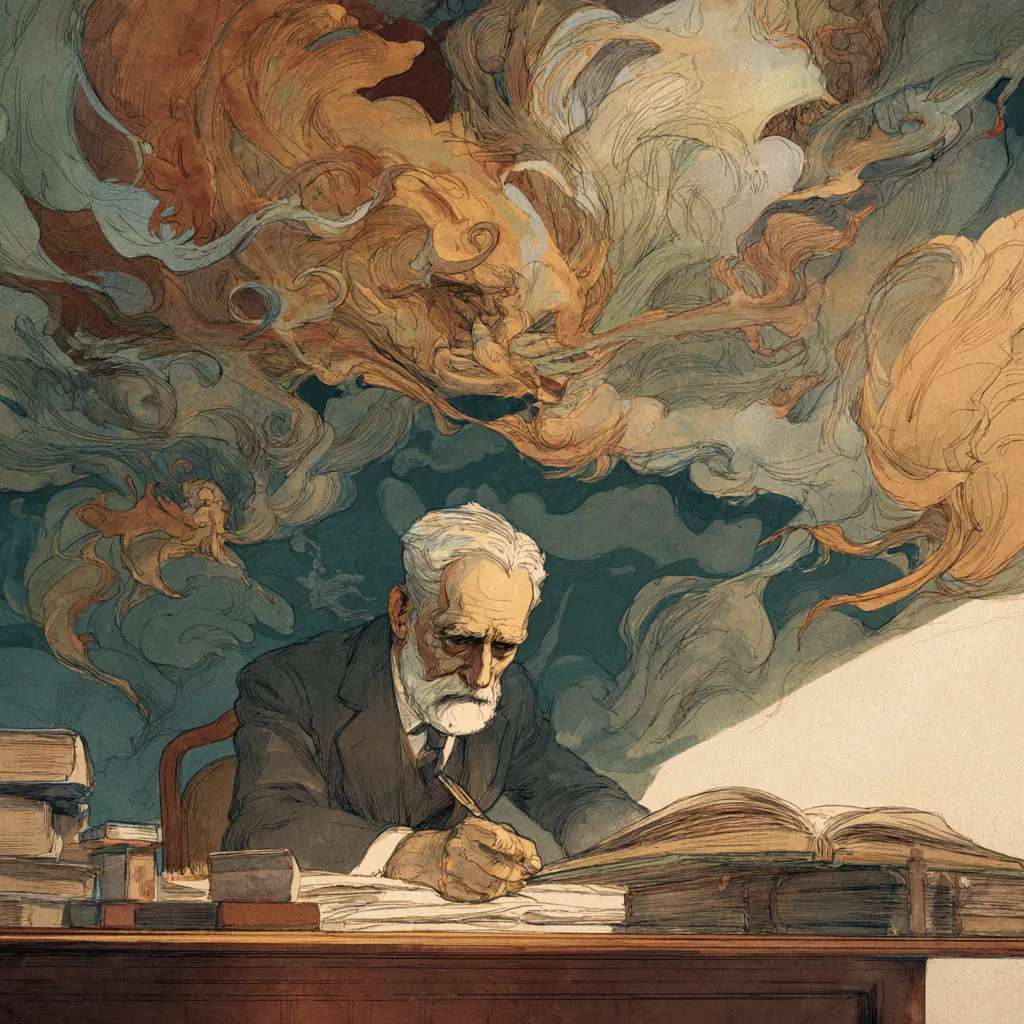
Sigmund Freud — The Man Who Mapped the Mind
How Freud explored the mind, pioneered psychoanalysis, and reshaped psychology.
A Child of Many Worlds
Frequently Asked Questions
What revolutionary method did Sigmund Freud develop to explore the human mind?
Sigmund Freud developed psychoanalysis, a revolutionary method for exploring the unconscious mind through techniques like free association and dream analysis. This approach allowed patients to uncover repressed memories and unconscious desires that Freud believed influenced their behavior and mental health. Psychoanalysis became the foundation for modern psychotherapy and fundamentally changed how people understand the human psyche.
How did Freud's theories about dreams change our understanding of the unconscious mind?
Freud proposed that dreams were the "royal road to the unconscious," revealing hidden desires and repressed thoughts through symbolic imagery. He believed dreams allowed the unconscious mind to express forbidden wishes in a disguised form while people slept. This theory suggested that much of human behavior was driven by unconscious forces, challenging the prevailing view that people were fully aware of their motivations.
What was the relationship between Sigmund Freud and Carl Jung in the early days of psychoanalysis?
Carl Jung was initially one of Freud's most promising disciples and closest collaborators in developing psychoanalytic theory. The two men worked together to expand and refine psychoanalysis, with Jung contributing significant insights about the human psyche. However, they eventually had a famous falling out over theoretical differences, particularly regarding the nature of the unconscious and the role of sexuality in human behavior.
Learn more
To continue the story, download the Chunks Microlearning app
 Download on iOS
 Download on Android