
In 1904, Salvador Dalí is born in the small Catalonian town of Figueres. His very name is a haunting inheritance: he is called Salvador after his older brother, who died months before Dalí’s birth. His parents tell him he is the reincarnation of that lost child, passing an unsettling torch that shadows his earliest memories. Dalí’s childhood is filled with both adoration and confusion. He grows up both spoiled and isolated, idolized yet burdened with a phantom’s legacy. This mysterious origin leaves Dalí obsessed with himself, yet unsure of his place in the world. From a young age, his intense, theatrical temperament stands out. He throws wild tantrums and demands attention with elaborate stunts. But alongside the chaos, an extraordinary artistic talent flourishes. Dalí quickly discovers something important: to be seen is to have power. This belief will shape the rest of his wild, unforgettable life.
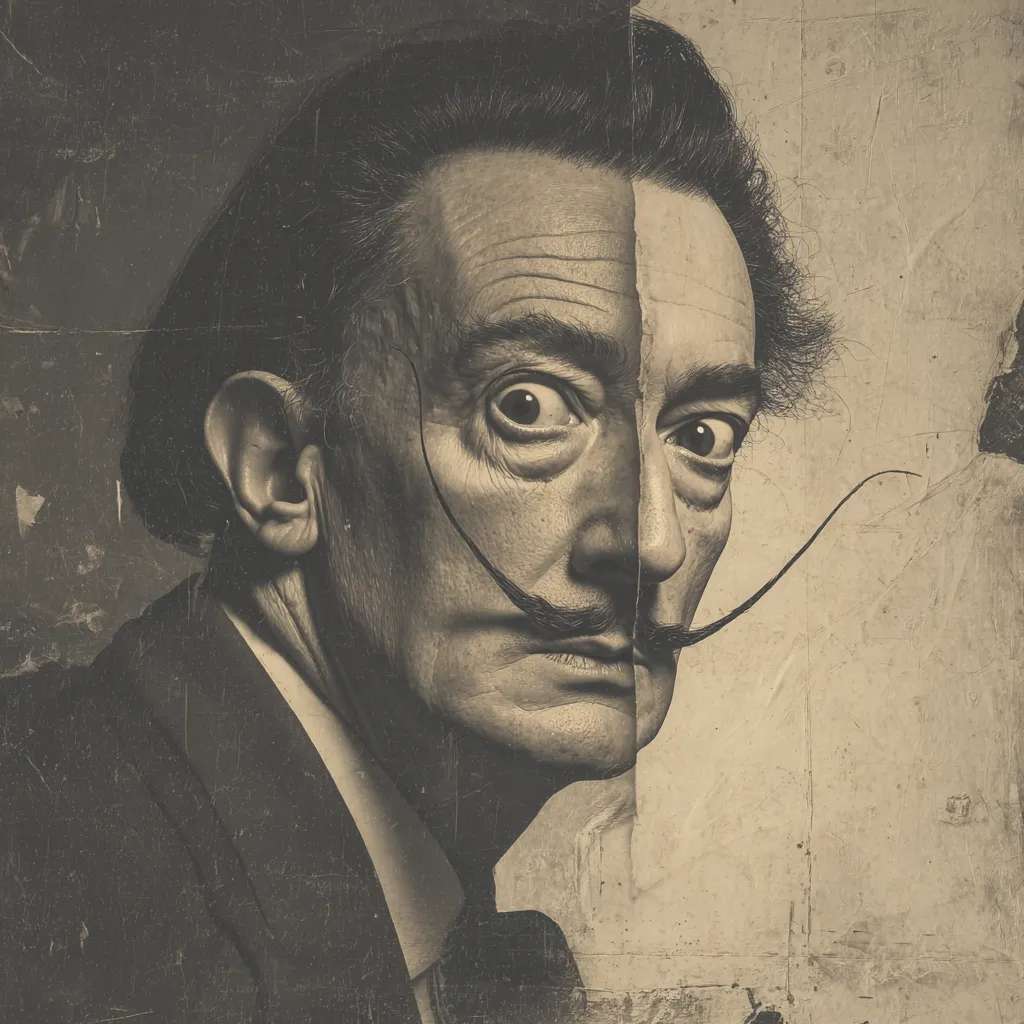
Salvador Dalí — Madness, Ego, and Surrealism
The wild life, art, and influence of Dalí
A Child Named for the Dead
Frequently Asked Questions
What was Salvador Dalí's connection to Surrealism and how did he become part of the movement?
Salvador Dalí joined the Surrealist movement in Paris in the late 1920s, where he met André Breton and other leading Surrealists. Dalí developed his distinctive "paranoiac-critical method" of painting, which involved accessing his subconscious to create dreamlike images with meticulous technical precision. His flamboyant personality and shocking imagery made him one of the most famous faces of Surrealism, though he was eventually expelled from the group due to political disagreements.
How did Salvador Dalí's childhood influence his later artistic work and eccentric personality?
Dalí was named after his older brother who had died before his birth, creating a complex psychological situation that haunted him throughout his life. This early trauma, combined with his parents' indulgent treatment of his dramatic behaviors, helped shape both his artistic obsessions with death and identity and his lifelong need for attention. His childhood experiences in Catalonia also influenced his recurring artistic motifs and his deep attachment to his homeland.
What artistic techniques made Salvador Dalí's paintings so distinctive and memorable?
Dalí combined hyperrealistic painting techniques with bizarre, dreamlike subject matter, creating what he called "hand-painted dream photographs." He meticulously rendered impossible scenes with melting clocks, distorted figures, and symbolic imagery drawn from his subconscious mind. His technical mastery of traditional painting methods, learned through classical training, allowed him to make surreal visions appear convincingly real and gave his work its distinctive visual impact.
Learn more
To continue the story, download the Chunks Microlearning app
 Download on iOS
 Download on Android