Nelson Mandela was born in 1918 in the rural village of Mvezo, South Africa. Growing up as part of the Thembu royal family, he learned the values of leadership and community from an early age. His father, a respected tribal chief, instilled in him a strong sense of justice and dignity. When his father died, Mandela was just nine years old, and he was sent to live with Chief Jongintaba Dalindyebo, the acting regent of the Thembu people. This move exposed Mandela to traditional African leadership and the importance of listening to others. He attended missionary schools, where he first encountered the harsh realities of apartheid. Even as a child, he questioned why black South Africans were treated as second-class citizens. These early experiences shaped Mandela’s deep sense of fairness and his determination to fight for equality. Little did anyone in his village know that this quiet boy would one day lead a nation to freedom and inspire the world.
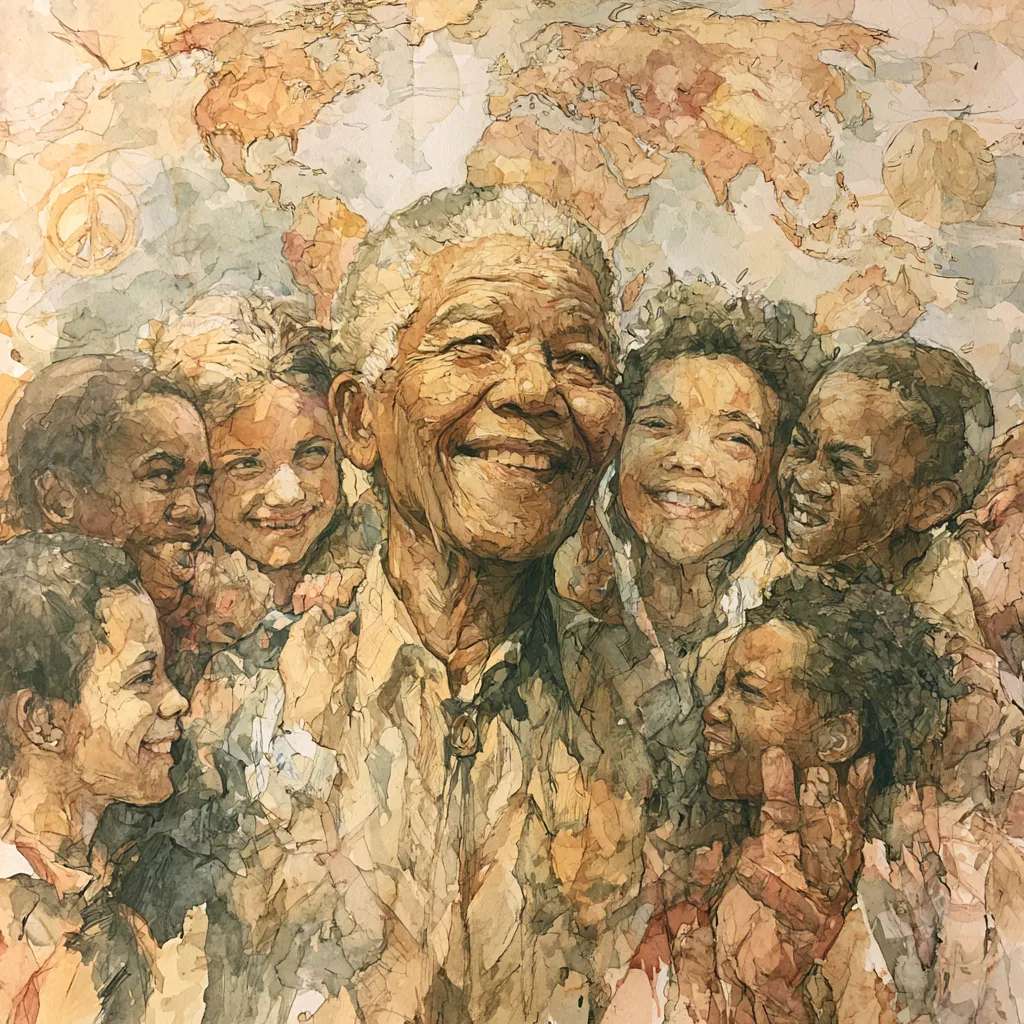
Nelson Mandela
Journey through the remarkable life and impact of Nelson Mandela, from his early years to his global legacy.
Roots of a Leader
Frequently Asked Questions
How long was Nelson Mandela imprisoned and what was he convicted of?
Nelson Mandela was imprisoned for 27 years, from 1962 to 1990. He was convicted of sabotage and conspiracy to overthrow the apartheid government in South Africa. Most of his imprisonment was spent on Robben Island, where he became a symbol of resistance to racial oppression worldwide.
What was apartheid and how did it affect black South Africans during Mandela's lifetime?
Apartheid was a system of institutionalized racial segregation and discrimination that governed South Africa from 1948 to 1994. Under apartheid, black South Africans were denied basic rights including voting, owning land in most areas, and accessing quality education and healthcare. The system forced racial groups to live in separate areas and severely restricted movement and economic opportunities for non-white citizens.
What role did Mandela play in South Africa's transition to democracy after his release from prison?
After his release in 1990, Mandela led negotiations with the apartheid government to establish a democratic South Africa. He became the country's first black president in 1994 after winning the nation's first multiracial elections. Mandela emphasized reconciliation rather than revenge, helping to prevent a civil war and establishing the Truth and Reconciliation Commission to address past injustices peacefully.
Learn more
To continue the story, download the Chunks Microlearning app
Or get it straight away:
 Download on iOS
 Download on Android