
For most of human history, the ocean was a mystery. Early sailors gazed at endless horizons, sensing the world beneath was vast and unexplored. Ancient maps showed only coastlines, leaving the seas blank or filled with mythical creatures. People imagined monsters lurking in the depths, and feared the unknown. Despite these fears, the ocean drew explorers forward. Some believed that riches and new lands waited beyond the waves, while others were simply captivated by curiosity. The ocean’s surface was a barrier, hiding what lay beneath. For centuries, people wondered: What secrets did the deep hold? This curiosity set the stage for a journey that would span centuries. From early explorers to modern scientists, the quest to map the ocean became one of humanity’s greatest adventures. The story of mapping the deep is a tale of courage, curiosity, and discovery—a journey that continues to this day. In this series, we’ll plunge beneath the waves, tracing humanity’s ongoing quest to illuminate the darkness below.
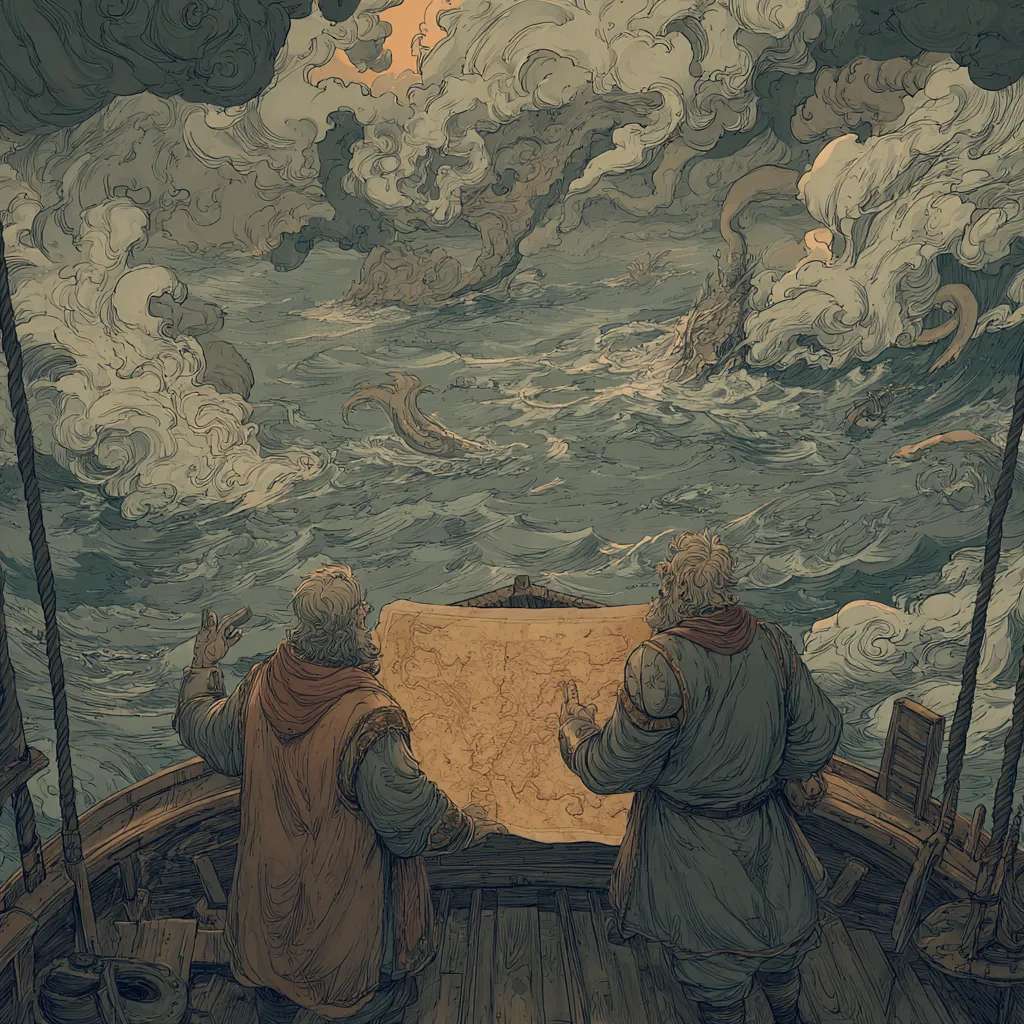
Mapping the Deep: The Quest to Understand the Ocean
Dive into the hidden world beneath the waves, from ancient maps to modern deep-sea robots.
The Great Unknown
Frequently Asked Questions
How did early explorers first begin mapping the ocean depths before modern technology?
Early ocean mappers used simple tools like weighted ropes and lead lines to measure depth by lowering them until they touched the seafloor. Ancient civilizations created the first nautical charts by recording coastal features, currents, and shallow water areas they could observe directly. These primitive methods only revealed surface features and very shallow depths, leaving the deep ocean a complete mystery for centuries.
What revolutionary technology allowed scientists to finally see the ocean floor without diving?
Sonar technology, developed during World War II, revolutionized ocean exploration by using sound waves to map the seafloor. Ships would emit sound pulses downward and measure how long the echoes took to return, revealing the ocean's depth and bottom topography. This breakthrough allowed scientists to discover underwater mountain ranges, deep trenches, and other features that had been completely unknown to humanity.
What major discoveries about Earth's geology came from deep ocean exploration?
Deep ocean mapping revealed the mid-ocean ridge system, a 40,000-mile underwater mountain chain that proved the theory of continental drift and plate tectonics. Scientists discovered that new seafloor forms at these ridges and spreads outward, explaining how continents move over geological time. These findings revolutionized our understanding of how Earth's surface has changed over millions of years.
Learn more
To continue the story, download the Chunks Microlearning app
 Download on iOS
 Download on Android