Around 460 BCE on the Greek island of Cos, a boy named Hippocrates was born into the Asclepiad guild, a family of healers claiming descent from Asclepius, the god of medicine. For generations, the Asclepiads had guarded their knowledge as a private family secret, passing medical skills from father to son. But Hippocrates II, as he was known, chose a different path. The philosopher Plato, his contemporary, described him as a famous teacher who accepted payment to instruct others in medicine. He helped transform the craft from a guarded family secret into a rational skill that could be systematically taught, learned, and practiced.
Hippocrates
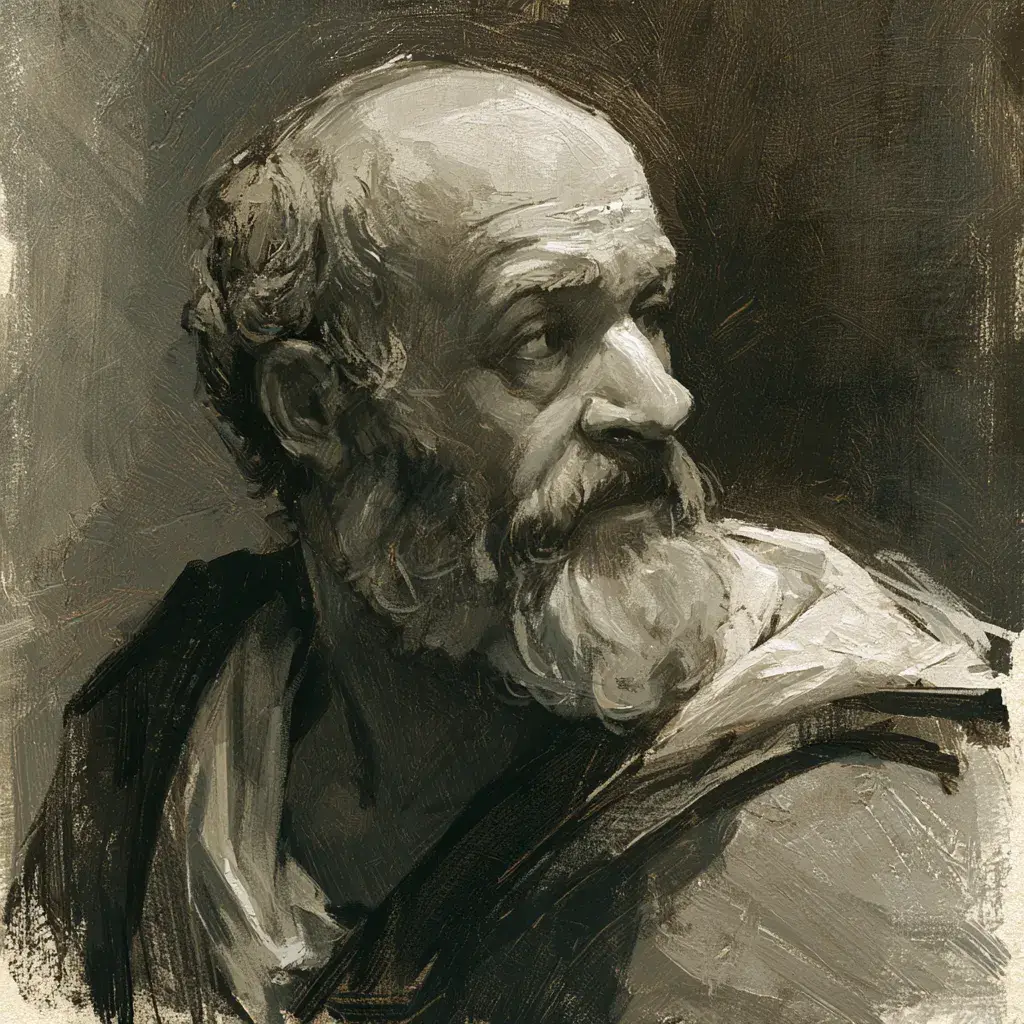
Hippocrates of Cos, the Greek physician who taught that illness has natural causes and whose name is on medicine's most famous oath.
Chapter 1
The Teacher on Cos
0:42
People in this story
Part of
Frequently Asked Questions
What was the Hippocratic Oath?
The Hippocratic Oath was a professional code of ethics for doctors. It required them to act for the benefit of the sick, keep them from harm, avoid performing surgeries they were not trained for, and maintain patient confidentiality. The original oath also forbids providing deadly drugs, even if requested.
Did Hippocrates really say 'First, do no harm'?
No, that exact phrase is not in the original Greek text of the Hippocratic Oath. The oath instead states that a physician will use their skills 'for the benefit of the sick' and will 'keep them from harm and injustice.' The principle is similar, but the famous wording is a later summary.
How did Hippocrates view diseases like epilepsy?
In the treatise 'On the Sacred Disease,' Hippocrates argued that epilepsy was not a divine curse but a physical disorder. He proposed that the brain was the center of consciousness and that seizures were caused by a blockage of 'pneuma' (breath) by an excess of phlegm.
Learn more
To continue the story, download the Chunks Microlearning app
Or get it straight away:
 Download on iOS
 Download on Android