
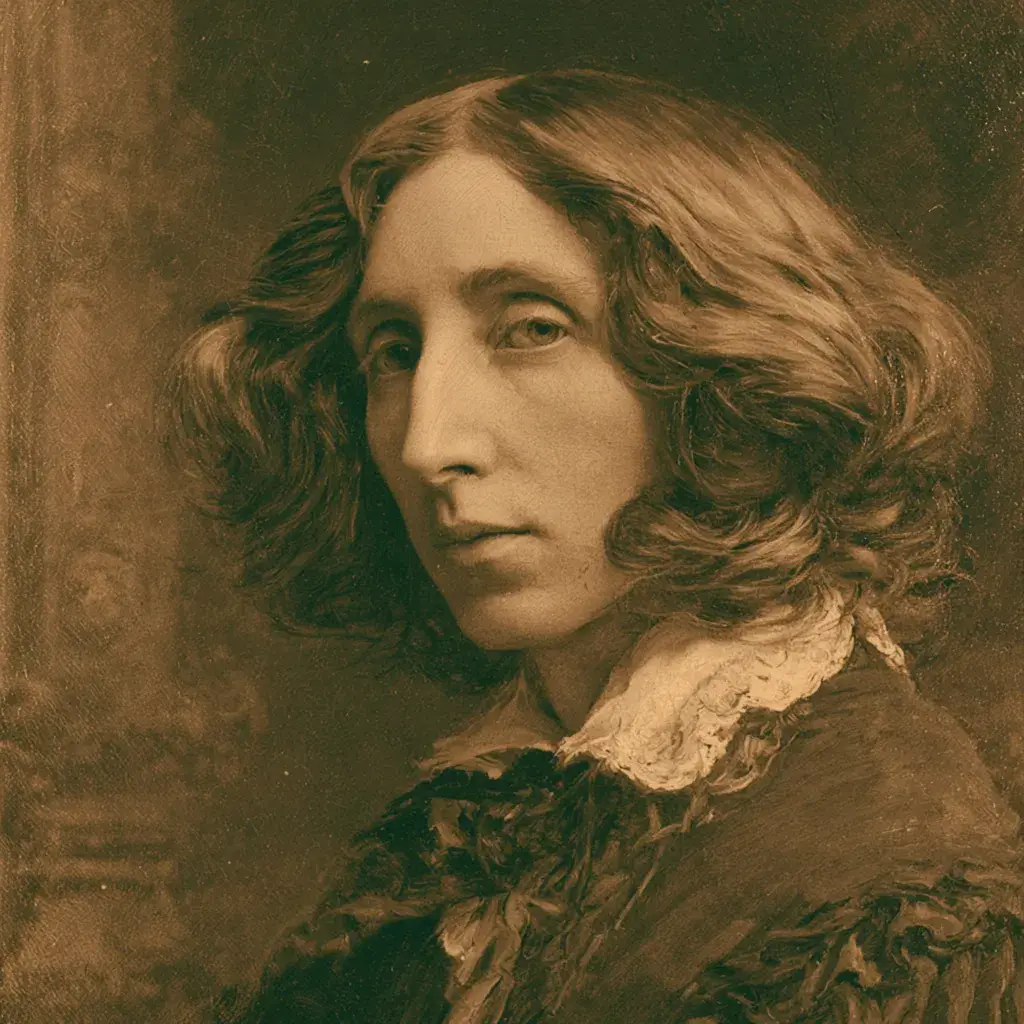
In 1842, twenty-two-year-old Mary Ann Evans made a decision that would define her life. After intense reading challenged her faith, she refused to attend church, an act of rebellion against her strict father. He was an estate manager who, as her biographer Kathryn Hughes notes, reacted with a 'cold and sullen rage,' leading to a period of total silence between them. This conflict, which Evans termed her ‘holy war,’ marked her decisive break from evangelical piety. Though she eventually agreed to attend services to keep the peace, she had won the freedom to think for herself. This private battle for intellectual liberty was a crucial step towards her future career as a novelist.
George Eliot
The life of Mary Ann Evans, who wrote as George Eliot, from her break with her father's church to Adam Bede, Middlemarch and her unconventional partnership with George Henry Lewes.
Chapter 1
The Holy War
0:46
People in this story
Part of
Frequently Asked Questions
Why did Mary Ann Evans use the pen name George Eliot?
She chose a male pseudonym to ensure her work would be judged on its own merits and taken seriously, separate from her controversial personal life. She also wanted to escape the stereotype that female authors only wrote lighthearted romances, ensuring her novels of psychological realism were given a fair hearing.
What is 'Middlemarch' about?
'Middlemarch: A Study of Provincial Life' examines the interconnected lives of residents in a fictional English town. It explores themes of ambition, social change, political reform, and the frustrating realities of marriage and women's intellectual lives in the 19th century.
Was George Eliot ever legally married?
Yes, but only very late in life. Her primary, lifelong partnership was with George Henry Lewes, but they could not legally marry. After Lewes died, Eliot married John Cross in May 1880, just seven months before her own death in December of that year.
Learn more
To continue the story, download the Chunks Microlearning app
Or get it straight away:
 Download on iOS
 Download on Android