
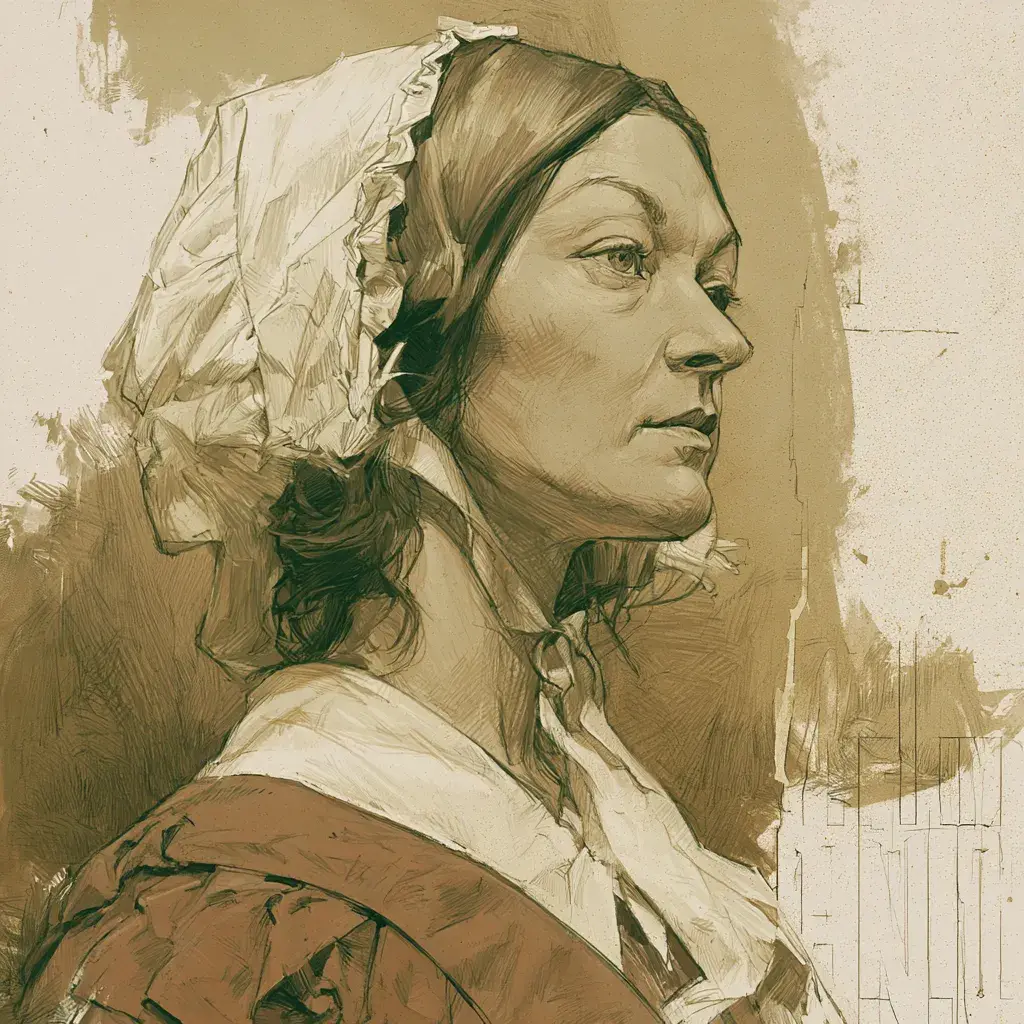
In October 1854, the British government faced a crisis. Its soldiers in the Crimean War were dying in vast numbers, but not just from battle. The Secretary at War, Sidney Herbert, took an unprecedented step. He wrote to a woman, Florence Nightingale, asking her to lead a team of nurses to the military hospitals in Turkey. It was the first time a woman had ever been officially sanctioned by the government for such a mission. Nightingale accepted immediately, gathering 38 nurses from London. On October 21, she departed for Scutari, a place she would soon describe as 'the Kingdom of Hell'. What horrors were waiting for her there?
Florence Nightingale’s War for Clean Hospitals
Florence Nightingale's work in the Crimean War hospitals at Scutari, and how she used statistics to show that most soldiers' deaths came from preventable disease, changing nursing and hospital sanitation.
Chapter 1
The Call to Scutari
0:44
People in this story
Part of
Frequently Asked Questions
What was the 'Lady with the Lamp'?
This was the name given to Florence Nightingale during the Crimean War. She was known for making rounds through the dark hospital corridors at night, carrying a lamp to check on the thousands of wounded and sick soldiers in her care.
What did Florence Nightingale's 'Rose Diagram' show?
Her diagram, also called a Polar Area Graph, used colored wedges to show causes of death over time. It visually proved that deaths from preventable diseases, shown in blue, vastly outnumbered deaths from battle wounds and shrank dramatically after a sanitary commission cleaned the hospital.
Did Florence Nightingale invent modern nursing?
She is considered the founder of modern nursing. Her book 'Notes on Nursing' established hygiene as a core principle, and she founded the world's first secular nursing school in 1860, transforming nursing into a respected, scientific profession.
Learn more
To continue the story, download the Chunks Microlearning app
Or get it straight away:
 Download on iOS
 Download on Android