
Born in 1938 in the bustling city of Lagos, Fela Anikulapo Kuti was surrounded by creative energy and political fervor from an early age. His mother, Funmilayo Ransome-Kuti, was a renowned activist and educator, while his father was a strict school principal. This unique mix of discipline and rebellion shaped Fela’s outlook. As a child, he was exposed to traditional Yoruba music, British colonial rule, and the rapid changes sweeping Nigeria. Lagos was alive with the sounds of drums, laughter, and the chatter of markets. But beneath the surface, tensions simmered. By the time Fela was a teenager, Nigeria was on the cusp of independence. Fela’s musical journey began with piano lessons and trumpet practice, but it was the rhythm of Lagos itself that truly captured his soul. He saw music as more than entertainment; it was a way to express hope, frustration, and the dreams of a nation yearning to be free. Little did he know, this energy would soon erupt into a sound that would shake the world.
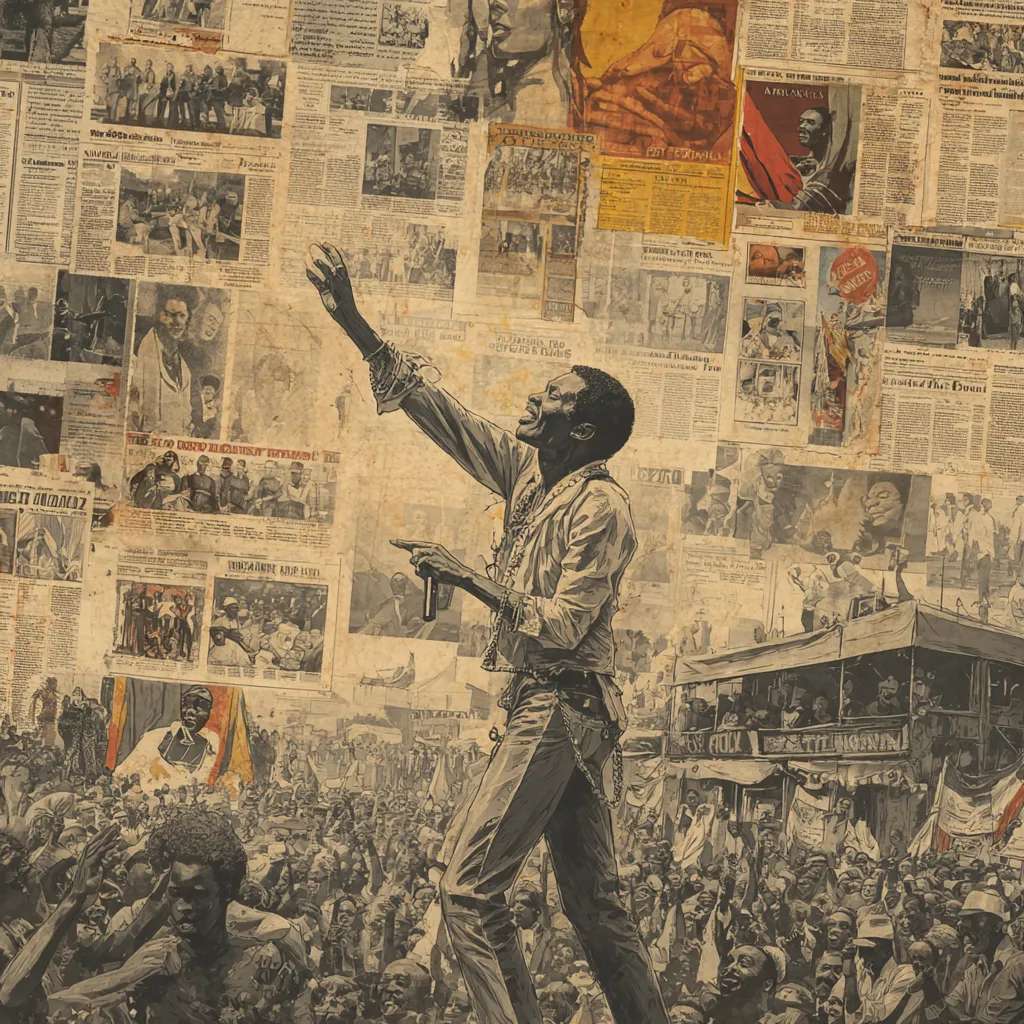
Fela Kuti and the Sound of Revolution
How Afrobeat became a roar for freedom and shook Nigeria’s rulers.
A Childhood in Lagos
Frequently Asked Questions
What is Afrobeat and how did Fela Kuti create this musical genre?
Afrobeat is a musical genre that combines traditional African rhythms with jazz, funk, and highlife music. Fela Kuti developed this distinctive sound in the late 1960s by blending Yoruba music traditions with American jazz and funk influences he encountered during his time studying in London and visiting the United States. The genre features complex polyrhythmic patterns, extended instrumental solos, and politically charged lyrics sung in Pidgin English.
What was the Kalakuta Republic and why did Fela Kuti establish it?
The Kalakuta Republic was Fela Kuti's compound in Lagos, Nigeria, which he declared an independent state in the 1970s. Kuti established this commune as a form of protest against Nigeria's military government and as a sanctuary for artists, musicians, and political dissidents. The compound housed his recording studio, living quarters for his large family and followers, and served as headquarters for his political activism until it was brutally raided and destroyed by Nigerian soldiers in 1977.
How did the Nigerian government respond to Fela Kuti's political activism through music?
The Nigerian military government responded to Fela Kuti's political criticism with systematic harassment, arrests, and violence. Authorities frequently raided his performances, detained him on various charges including currency smuggling, and subjected him to beatings while in custody. The most severe retaliation came in 1977 when soldiers attacked and burned down his Kalakuta Republic compound, seriously injuring his elderly mother who later died from her wounds.
Learn more
To continue the story, download the Chunks Microlearning app
Or get it straight away:
 Download on iOS
 Download on Android